Children's Hats Guide
Children's hats cover more distinct jobs than any other single category in this guide: shade in summer, warmth in winter, protection for a newborn's head, a uniform requirement, a costume finishing touch and a fashion statement a child chooses entirely for themselves. Because the jobs differ so completely, there is no single 'best' children's hat - there is only the right hat for the season, the activity and the head it has to stay on.
Shop Children's Hats Now
Shop Children's Hats on Amazon Shop Children's Hats on eBayThe Amazon and eBay links on this page are affiliate links. If you make a purchase through them, Apparel Search may earn a commission.
Children's hats cover more distinct jobs than any other single category in this guide: shade in summer, warmth in winter, protection for a newborn's head, a uniform requirement, a costume finishing touch and a fashion statement a child chooses entirely for themselves. Because the jobs differ so completely, there is no single 'best' children's hat - there is only the right hat for the season, the activity and the head it has to stay on.
That last point is the one that decides success. Headwear is the one garment a child cannot ignore: a hat that is too tight gives headaches, one that is too loose slides over eyes and comes off at the first run, and one that itches will be refused no matter how sensible it is. Fit and comfort therefore run through every section of this guide, ahead of style - though the best children's hats manage both, which is why a favourite cap can become as treasured as a favourite toy.
Hat Types Through the Year
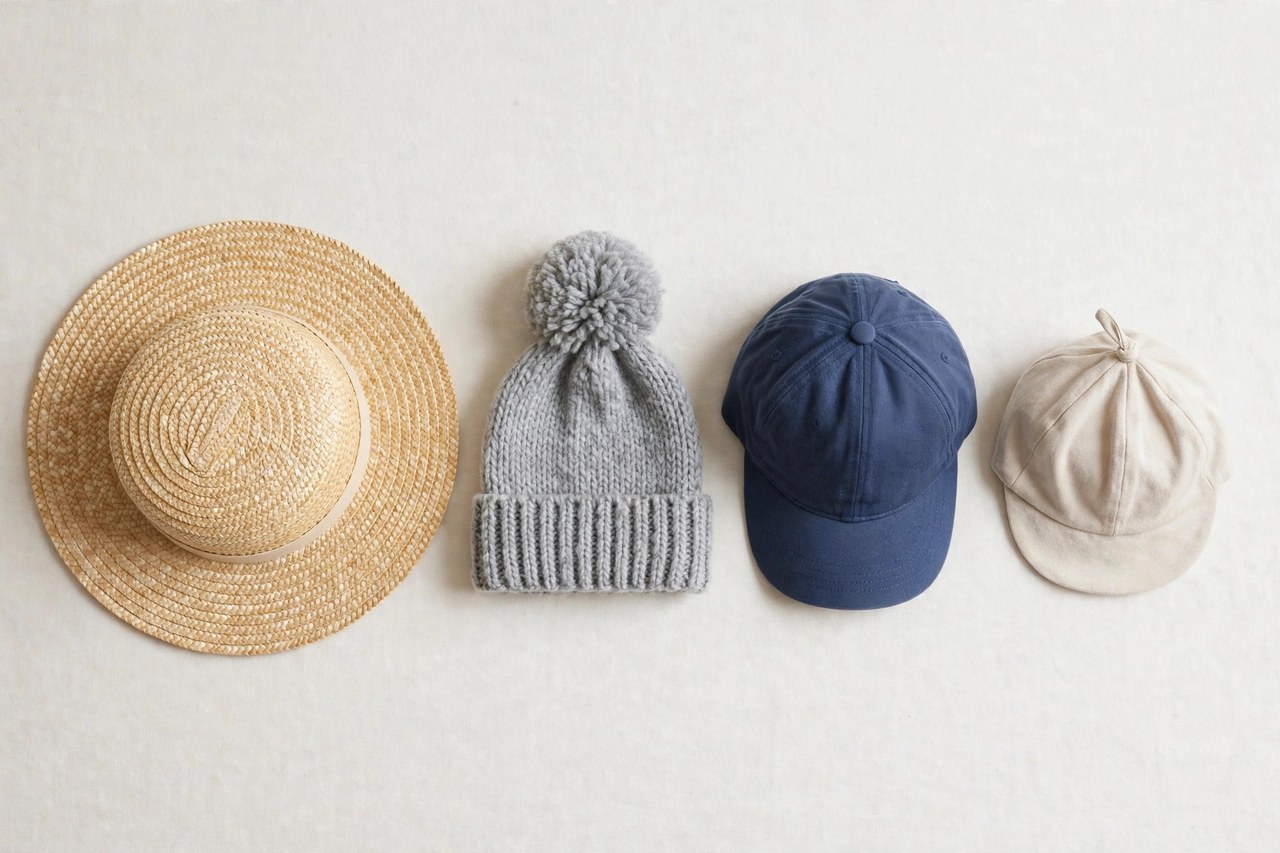
Summer hats are about shade coverage. A wide-brim hat shades the face, ears and neck in one piece and is the strongest choice for long outdoor days; legionnaire-style caps add a neck flap to a peaked front; and the ordinary baseball cap, covered in its own guide in the B section of this directory, shades the face but leaves ears and neck to sunscreen. Look for lightweight, breathable fabric, a soft or foldable brim for packing, and a chin strap or toggle for toddlers and windy beaches.
Winter hats are about insulation and coverage of the ears. Knitted beanies are the default: acrylic is cheap and washable, wool blends are warmer, and a fleece lining band stops the forehead itch that makes children pull hats off. Balaclavas and trapper-style hats with ear flaps serve genuinely cold weather and skiing, and a hat that covers the ears fully will always outperform a prettier one that sits above them. Cold-weather hats are sold through ordinary children's hat stores alongside the summer range, so one shop usually covers the year.
Measuring and Sizing a Child's Head
Hat sizes are sold by age, by head circumference in centimetres or inches, or in small-medium-large bands, and the three systems do not line up neatly between brands. Measure properly: wrap a soft tape around the head at its widest point, just above the eyebrows and ears, and compare the measurement with the maker's chart. If a tape is unavailable, use a string and measure it against a ruler. A correct fit sits level, stays put when the child shakes their head, and leaves room for a finger between band and forehead.
Growth is the complicating factor. Children's heads grow fastest in the first two years and steadily after that, so a hat bought exactly to size in September may be snug by spring. Adjustable designs - drawstring crowns, elasticated backs, snapback and strapback caps, ties on baby hats - stretch the useful life of a purchase, and sizing up is safe only where an adjustment can take up the slack: an oversized rigid hat simply falls off.
Care, Labelling and Keeping Hats On Heads
Care follows fabric. Knitted hats wash gently and dry flat to keep their shape; structured caps and brimmed hats prefer spot cleaning or a careful hand wash, because machine cycles crush brims and crowns; straw and paper-braid summer hats should never be soaked. Whatever the fabric, dry hats fully before storing them, and store winter hats with the gloves they belong with, so the first cold morning does not start with a search.
Loss is the predictable end of most children's hats, usually at school. Name labels inside the band, a distinctive colour or decoration your child can identify in a pile, and a spare everyday hat bought at the same time as the main one are the three measures that work. Treat the hat as part of the outfit system - sun hat living with the sunscreen bag, beanie living in the coat pocket - and the category that looks like a minor accessory becomes one of the most-used purchases in a child's wardrobe.
Common Questions
How do you measure a child for a hat?
Wrap a soft tape around the widest part of the head, just above the eyebrows and ears, and match that measurement to the maker's chart. Age labels alone are unreliable between brands.
Which hat gives a child the best sun protection?
A wide-brim hat, because it shades the face, ears and neck together. A legionnaire cap with a neck flap is the next best; a baseball cap leaves the ears and neck exposed.
How can you stop children's hats getting lost at school?
Put a name label inside the band, choose a colour your child can pick out of a pile, and keep a spare. Storing each hat with its kit - beanie in the coat pocket, sun hat with the sunscreen - helps too.
More in Children's Clothes Guide H
The H letter hub and the guides closest to this one:
Looking for Children's Clothing Stores?
This guide helps you choose children's hats. To browse where to buy, visit our children's clothing store directory, where you can find retailers that carry them.