Children's Christmas Hats Guide
Children's Christmas hats are the season's smallest and hardest-working accessory: the Santa hat worn from the first school party to Christmas morning, the elf hat, the reindeer-antler headband, and the festive knitted hat with its snowflake or reindeer design that does double duty as real winter wear. Christmas-design hats are their own small category of children's fashion accessories; this guide covers how they are made, how they should fit a head that will wear one all day, and which ones survive to a second Christmas.
Shop Children's Christmas Hats Now
Shop Children's Christmas Hats on Amazon Shop Children's Christmas Hats on eBayThe Amazon and eBay links on this page are affiliate links. If you make a purchase through them, Apparel Search may earn a commission.
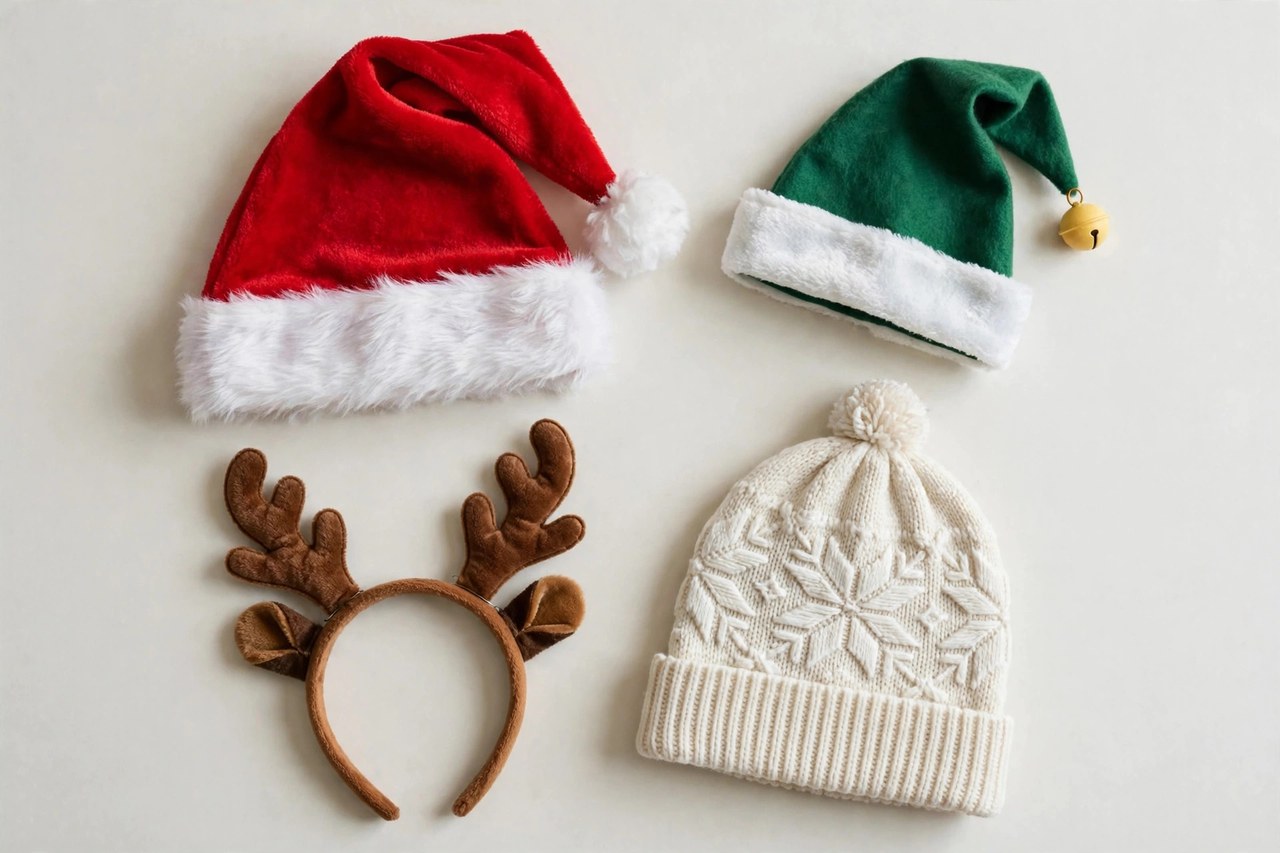
Children's Christmas hats are the season's smallest and hardest-working accessory: the Santa hat worn from the first school party to Christmas morning, the elf hat, the reindeer-antler headband, and the festive knitted hat with its snowflake or reindeer design that does double duty as real winter wear. Christmas-design hats are their own small category of children's fashion accessories; this guide covers how they are made, how they should fit a head that will wear one all day, and which ones survive to a second Christmas. This guide covers the styles worth knowing, the fit points that decide comfort, the fabrics and construction that separate a good buy from a regret, and the simple care that makes the garment last.
Styles and Construction
The families divide by ambition. The classic Santa hat - red body, white band and pom - is sold at every quality level from party-bag novelty to plush velour, and the difference is the band: a soft, slightly elasticated band that grips gently survives a school day, while a stiff novelty band is on the floor by the first photograph. Elf hats add ears and bells; antler headbands move the whole problem to a band that must grip without pinching. The knitted festive hat is the serious purchase of the group: a real winter hat whose design happens to be merry.
Children's accessories succeed on safety and simplicity: no small detachable parts for the youngest children, no long cords or ties that can catch on playground equipment, and closures a child can work alone. Materials should tolerate the child's real life - washable, chew-resistant for toddlers, and free of rough edges against skin. An accessory that needs adult help every time it is worn will simply stop being worn, however handsome it looks in the shop.
Fit and Sizing
Fit is by head circumference, and children's Christmas hats are notoriously sold as one-size hopes. For a hat that must stay on - the concert, the pageant, the party - look for a band with some give, an inner drawstring or grip strip, or sizing in honest bands. For the very young, a soft Santa hat with a shallow fit is safer than any headband. Bells, sequins and battery lights all raise the same question: are they sewn and secured, or glued and waiting? Pull-test every attachment before the season starts.
Accessories fit by measurement, not by age label: head circumference for hats, waist for belts measured over the trousers the belt will hold up, and hand length for gloves. Makers' charts vary more for accessories than for clothing, so measure and read the chart every time. Anything worn at the neck or head must fit close enough to stay put in play and loose enough to pull off easily - if a child cannot remove it alone, it does not fit yet.
Wearing and Care
Store the set together in the Christmas box, hats uncrushed with the decorations in the same bag, and the collection compounds: this year's pageant hat is next year's dress-up, and the knitted snowflake hat simply goes into the winter rotation. The one rule of care is dryness - a hat put away damp from a snowy school run will greet December smelling of its storage. Air everything before the box closes in January.
Store children's accessories where the child can reach them - a low basket for hats and gloves, a hook for the belt - because an accessory with a home is an accessory that gets worn and does not get lost. Wash hats and soft accessories on the gentle cycle inside a mesh bag, reshape while damp, and check straps, buckles and fasteners monthly for cracks or looseness. Keep a spare pair of gloves and a spare hat from the start; winter loses them on schedule.
Common Questions
What size Christmas hat does a child need?
Measure head circumference just above the ears and match it to the maker's sizing; where a hat is sold one-size, try it for the two failure modes - sliding over the eyes, or a band tight enough to leave a mark within minutes. For hats that must stay on through a concert or party, choose one with an elasticated band, an inner drawstring or a grip strip, and for toddlers choose a soft shallow Santa hat over any headband.
Are Christmas hats warm enough as winter hats?
The festive knitted hats - wool or acrylic knits with snowflake, reindeer or fair-isle designs, ideally with a fleece band lining - are genuine winter hats and the best value in this guide. The Santa and elf styles are costume pieces: a thin velour Santa hat is a party accessory, not cold-weather equipment, and a child going caroling needs the knitted hat under the festivities or instead of them.
How do you keep a Santa hat on a child's head all day?
Start with the band: soft and slightly elastic beats stiff and shiny. Inside tricks that work are a strip of foam sizing tape, a few stitches taking the band in at the back, or - for the pageant emergency - hair grips through the band into the hair. Weigh the other direction too: an over-decorated hat with heavy trim pulls itself off; the hat that stays on is usually the lighter one.
More in Children's Clothes Guide C
The C letter hub and the guides closest to this one:
More to Explore on Apparel Search
Looking for Children's Clothing Stores?
This guide helps you choose children's christmas hats. To browse where to buy, visit our children's clothing store directory, where you can find retailers that carry them.