Children's Christmas Socks Guide
Children's Christmas socks are the season's most joyful small purchase: novelty socks carrying Santa Claus, snowmen, candy canes and reindeer, alongside striped and fair-isle pairs in red and green. They are also a gift children genuinely enjoy opening: a new pair of Christmas socks in a stocking or a package is a small, wearable piece of the season. This guide covers the types sold, what makes a novelty sock comfortable rather than merely funny, and how the season's sock drawer is built.
Shop Children's Christmas Socks Now
Shop Children's Christmas Socks on Amazon Shop Children's Christmas Socks on eBayThe Amazon and eBay links on this page are affiliate links. If you make a purchase through them, Apparel Search may earn a commission.
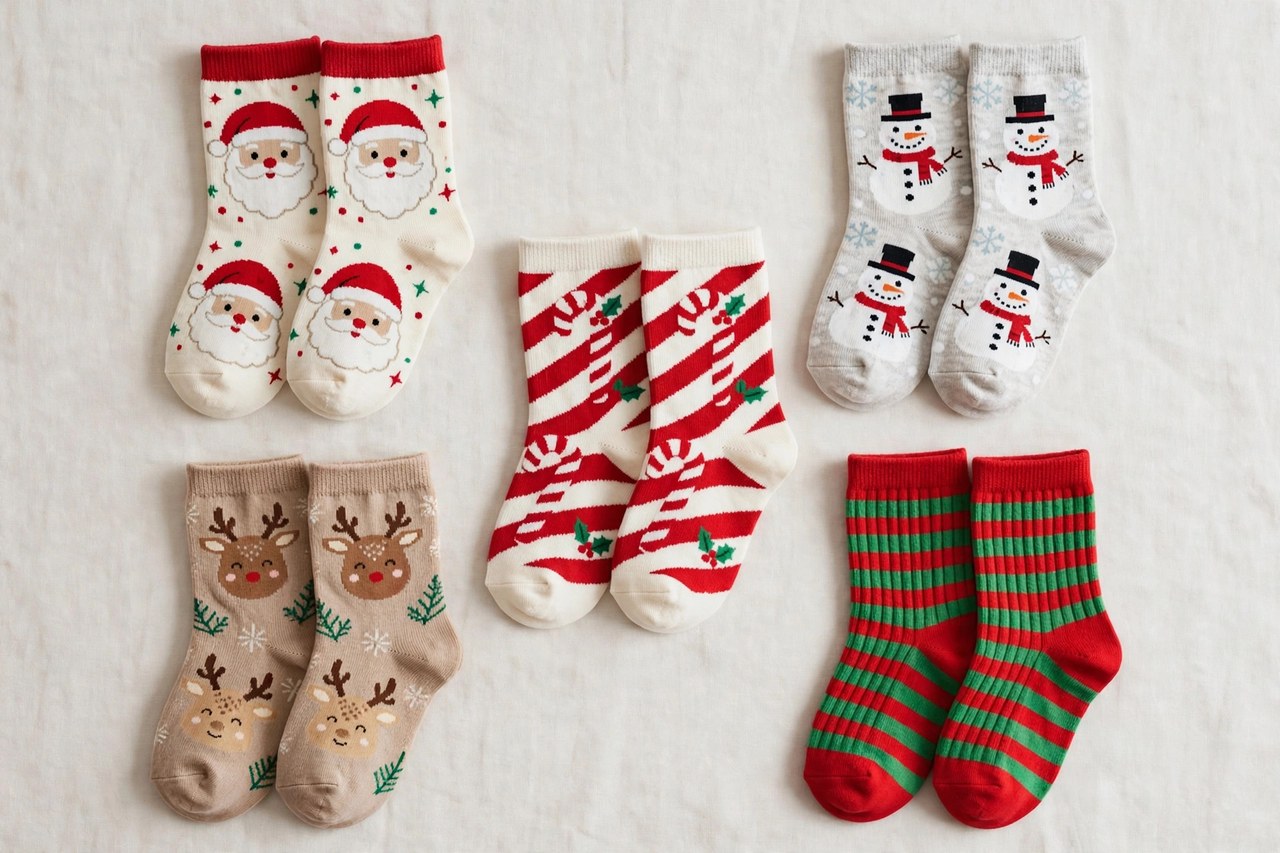
Children's Christmas socks are the season's most joyful small purchase: novelty socks carrying Santa Claus, snowmen, candy canes and reindeer, alongside striped and fair-isle pairs in red and green. They are also a gift children genuinely enjoy opening: a new pair of Christmas socks in a stocking or a package is a small, wearable piece of the season. This guide covers the types sold, what makes a novelty sock comfortable rather than merely funny, and how the season's sock drawer is built. This guide is built around the questions buyers actually ask: which style, which size, which fabric, and what will it look like after a season of real use - answered in order, with the trade-offs stated plainly.
Styles and Construction
The construction question is the print's effect on the foot. The best novelty socks weave the design into the knit - intarsia or jacquard - so the inside is as smooth as the outside; cheaper socks print the design onto a plain sock, which is softer inside but fades and cracks with washing. Embroidered and appliqued motifs add texture a sensitive foot may reject outright - check the inside of the sock against a wrist before committing to a week of school runs in them. Cuff ribbing should hold the sock up without marking the leg, the heel should be a real shaped heel, and the toe seam should be flat.
Children's accessories succeed on safety and simplicity: no small detachable parts for the youngest children, no long cords or ties that can catch on playground equipment, and closures a child can work alone. Materials should tolerate the child's real life - washable, chew-resistant for toddlers, and free of rough edges against skin. An accessory that needs adult help every time it is worn will simply stop being worn, however handsome it looks in the shop.
Fit and Sizing
Sizes in socks are the most honest in the wardrobe - sold by shoe-size ranges - and the most ignored; a novelty sock bought by age alone slides, bunches and teaches a child to hate the very socks bought to delight. Buy the shoe-size range the child is in, in cotton-rich blends for breathability with enough nylon and elastane to hold shape. For the season's rhythm, three to five festive pairs carry December: school days, party days, and the pair reserved pristine for Christmas morning itself.
Accessories fit by measurement, not by age label: head circumference for hats, waist for belts measured over the trousers the belt will hold up, and hand length for gloves. Makers' charts vary more for accessories than for clothing, so measure and read the chart every time. Anything worn at the neck or head must fit close enough to stay put in play and loose enough to pull off easily - if a child cannot remove it alone, it does not fit yet.
Wearing and Care
Christmas socks wash inside out, with the woven designs protected from the hot dryer that fades them; the printed kind keeps its face longest on low heat. Store them in the Christmas box as the season's advance guard - they are traditionally the first decoration out and the first garment on. A pair that survives December joins the ordinary drawer in January without ceremony; festive socks in February are simply socks, and children, sensibly, wear them until they are outgrown.
Store children's accessories where the child can reach them - a low basket for hats and gloves, a hook for the belt - because an accessory with a home is an accessory that gets worn and does not get lost. Wash hats and soft accessories on the gentle cycle inside a mesh bag, reshape while damp, and check straps, buckles and fasteners monthly for cracks or looseness. Keep a spare pair of gloves and a spare hat from the start; winter loses them on schedule.
Common Questions
What are the best Christmas sock designs for children?
The classics - Santa Claus, snowmen, candy canes and reindeer - plus stripes and fair-isle patterns that read festive without a character. Judge by construction before design: woven-in jacquard or intarsia motifs stay smooth inside and out; printed designs are softer but fade; heavy embroidery and applique can rub. The best design is the one still comfortable at the end of a school day.
How do you size children's Christmas socks?
By shoe size, not age: socks are sold in shoe-size ranges, and the range the child's shoes are in is the range to buy. A sock too large bunches in the shoe and wears holes at the folds; a sock too small rides down all day. Check for a shaped heel, a flat toe seam and a cuff that holds without marking - and put a hand inside to feel the reverse of any motif before the first school day.
How many pairs of Christmas socks does a child need?
Three to five pairs carry the season comfortably: enough for the school week's festive rotation, a party pair, and one pair kept pristine for Christmas morning. Socks are the cheapest full-strength Christmas garment there is - a complete seasonal signal for the price of a stocking filler - no other piece of the Christmas wardrobe delivers as much December per dollar.
More in Children's Clothes Guide C
The C letter hub and the guides closest to this one:
More to Explore on Apparel Search
Looking for Children's Clothing Stores?
This guide helps you choose children's christmas socks. To browse where to buy, visit our children's clothing store directory, where you can find retailers that carry them.