Children's Coats Guide
Children's coats are the heavy outer layer for sustained cold and wet weather - longer, warmer and more protective than a jacket, which is the lighter in-between layer covered in its own K guide. The original coats page linked readers to a plain-language explanation of the difference between a coat and a jacket, and that reference is carried in this page's links: in short, coats are built for the coldest part of the year and jackets for everything around it, and most children need the coat to be right first because it faces the worst weather.
Shop Children's Coats Now
Shop Children's Coats on Amazon Shop Children's Coats on eBayThe Amazon and eBay links on this page are affiliate links. If you make a purchase through them, Apparel Search may earn a commission.
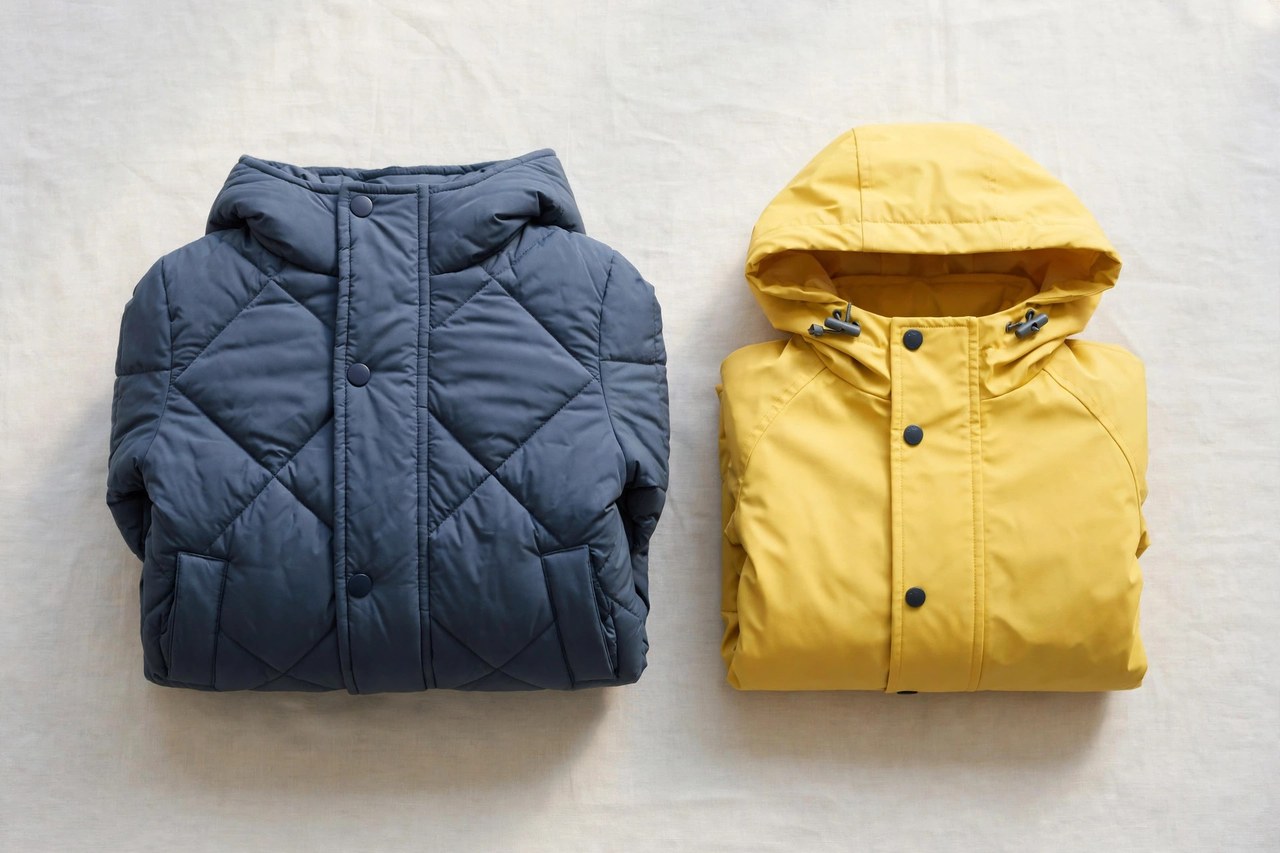
Children's coats are the heavy outer layer for sustained cold and wet weather - longer, warmer and more protective than a jacket, which is the lighter in-between layer covered in its own K guide. The original coats page linked readers to a plain-language explanation of the difference between a coat and a jacket, and that reference is carried in this page's links: in short, coats are built for the coldest part of the year and jackets for everything around it, and most children need the coat to be right first because it faces the worst weather.
A children's coat has three jobs at once: keep the child warm while standing at a bus stop or in a playground line, keep them dry when the school run turns wet, and survive being hung, dropped, sat on and stuffed into a school peg area every day for a whole winter. Warmth ratings, waterproof claims and fabrics all matter, but only after the coat passes the practical tests of fit, closure and weight.
Types of Children's Coats
Padded and puffer coats insulate with down or synthetic fill quilted into baffles; synthetic fill is usually the practical family choice because it keeps insulating when damp and washes more easily. Parkas add length, a hood and storm details for the coldest climates. Wool and wool-blend coats are the smart, formal option for occasions, warm but heavier and usually dry-clean or gentle-wash. Rain coats and waterproof shells trade insulation for complete weather sealing and are often worn over a fleece or knit layer.
Two-in-one and three-in-one coats zip a fleece inner into a waterproof outer, giving three combinations across autumn, winter and spring. They cost more up front and earn it back in months of use if the zips are strong - the zip-in mechanism is the part to test hardest in the shop, because a failed connector zip strands you with two half-coats.
Fit, Closures and Warmth
Size a coat over a typical winter layer: the child should zip it fully over a sweater, raise both arms without the hem riding to the waist, and sit without the front straining. Sleeves should reach the wrist with arms down and not swallow the hand. A hood must stay up in wind without blocking side vision, and lie flat under a backpack when down. Drawcords should be short and secured as designed, and reflective trim is a genuine safety feature on dark winter afternoons.
Closures decide daily success. A two-way zip with a chin guard and a pull a mittened hand can grip, sometimes backed by a snap storm flap, is the standard to aim for. Younger children manage large snaps better than buttons; toggles look classic on wool coats but are the slowest in cold fingers. Weigh the coat: modern synthetic fills give real warmth without the burden that makes children carry rather than wear their coats.
Care and Storage
Check the label before the first wash - fills, coatings and wool all have different rules. Waterproof coats often regain their water-beading finish with a warm tumble dry or re-proofing spray once rain starts soaking the outer fabric instead of rolling off. Zip coats closed, empty pockets and wash on the gentle cycle the label allows; dry padded coats thoroughly, ideally with tumble cycles that re-loft the fill, before storing.
Name-label the coat inside the back - coats are the highest-value item in school lost property. Store it clean and dry on a sturdy hanger through summer, with a note of the size and any repairs needed, so the autumn check is quick. A coat bought with room over layers, a closure the child can work and a weight the child will wear usually serves two winters and passes on in good condition.
Common Questions
What is the difference between a children's coat and a jacket?
Length, weight and warmth. A coat is longer, heavier and insulated for sustained cold; a jacket is lighter and shorter, for cool and in-between weather and layering. The coats guide covers the heavy winter layer; the K jackets guide covers the lighter one.
Is down or synthetic fill better for a child's coat?
For most families, synthetic. It insulates nearly as well in modern forms, keeps working when damp, tolerates washing and costs less. Down is warmer for its weight in dry, very cold climates but loses insulation when wet and needs more careful drying.
How much growing room should a winter coat have?
Enough to zip over a sweater and still reach the wrist and cover the seat at the start of winter, with sleeves not covering the hand. Bought in early autumn, that fit usually lasts the season and often a second; much more room makes the coat cumbersome and colder, because warm air escapes.
More in Children's Clothes Guide K
The K letter hub and the guides closest to this one:
More to Explore on Apparel Search
Looking for Children's Clothing Stores?
This guide helps you choose children's coats. To browse where to buy, visit our children's clothing store directory, where you can find retailers that carry them.