Children's Jackets Guide
Children's jackets are the light-to-medium outer layer for the in-between weather that makes up most of the school year: cooler than a sweatshirt handles, warmer than a full winter coat needs. This page is the K letter's jacket guide, complementing the same guide in the J letter and linking onward to the children's outerwear guide in the O letter, carried in this page's links. The jacket is also the most-used and most-lost garment in a child's wardrobe, grabbed daily, shed at lunchtime and carried home - so daily practicality outranks every other quality here.
Shop Children's Jackets Now
Shop Children's Jackets on Amazon Shop Children's Jackets on eBayThe Amazon and eBay links on this page are affiliate links. If you make a purchase through them, Apparel Search may earn a commission.
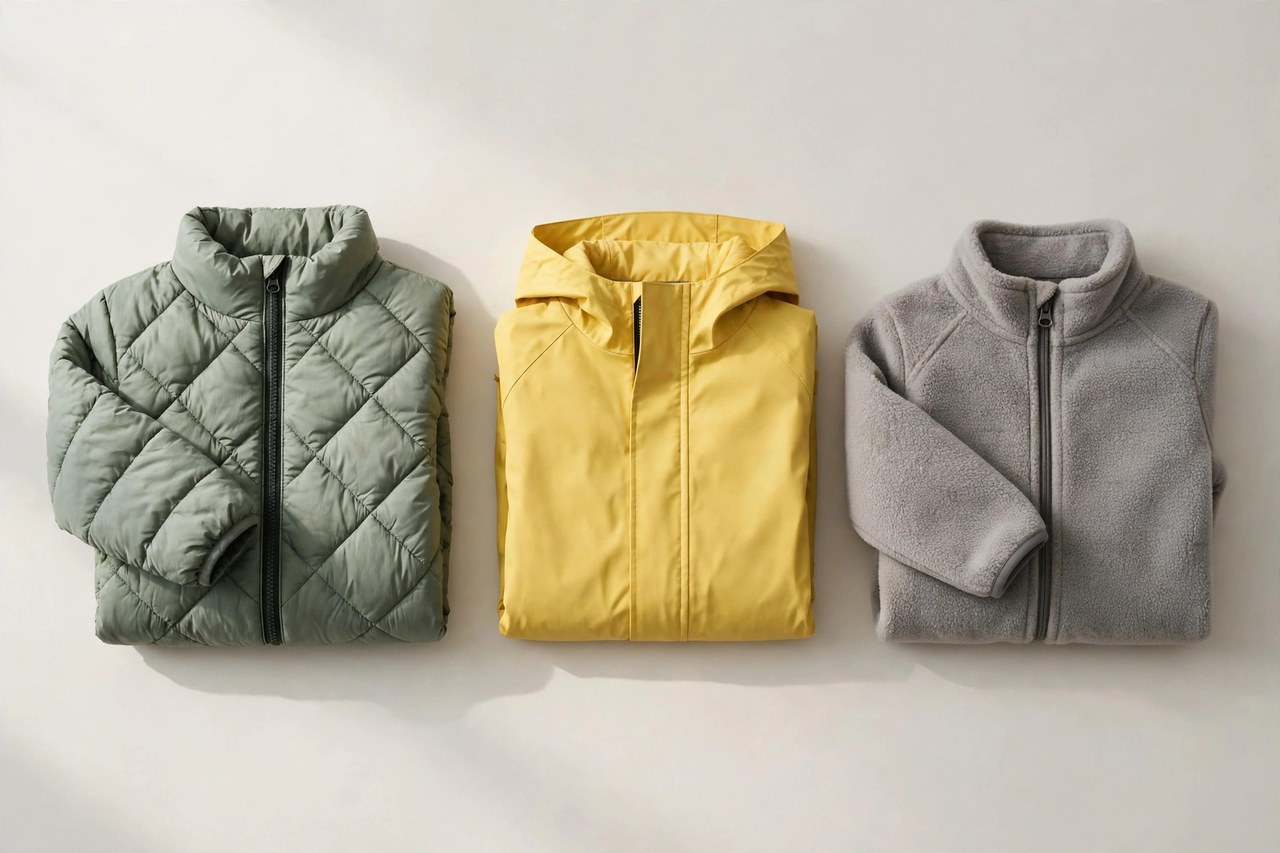
Children's jackets are the light-to-medium outer layer for the in-between weather that makes up most of the school year: cooler than a sweatshirt handles, warmer than a full winter coat needs. This page is the K letter's jacket guide, complementing the same guide in the J letter and linking onward to the children's outerwear guide in the O letter, carried in this page's links. The jacket is also the most-used and most-lost garment in a child's wardrobe, grabbed daily, shed at lunchtime and carried home - so daily practicality outranks every other quality here.
Start from the job. A lightweight jacket blocks wind and light showers in spring and autumn. A fleece jacket adds warmth as a main layer on dry chilly days or a mid-layer under a shell. An insulated jacket bridges toward coat territory for cold days without deep-winter severity, and a rain jacket is a waterproof shell whose only job is keeping the clothes beneath dry. No single jacket does all four jobs well, and most families land on two.
Styles and Construction
Shell jackets in nylon or polyester are the lightest and pack smallest - some fold into their own pocket, which suits school bags. Fleece jackets are the comfort choice, warm and soft with no rustle, but they let wind through and soak up rain. Softshell jackets split the difference with a smooth, water-resistant face bonded to a fleece back, and are the best single-jacket compromise for active children. Denim and canvas jackets borrow the work-jacket shape as a sturdy fashion layer for dry days.
Construction details that matter daily: a smooth two-way or chunky main zip with a chin guard, sleeves lined smoothly enough to slide over sweaters, pockets deep enough for gloves, a hanging loop that can actually take the jacket's weight on a school peg, and reflective trim for dark afternoons. Shoulder seams sit where backpack straps rub, so flat, strong stitching there is worth more than decorative detail anywhere else.
Fit and Closures
Size a jacket over the layers it will cover: zipped over a typical sweater, the child should raise both arms without the hem climbing to the waist and sit without the front pulling. A little body length is useful growing room; sleeves that cover the whole hand are not - they get chewed, dragged and soaked. Hoods should stay up in a breeze without covering side vision and lie flat under a backpack when down.
Closures decide independence. A large-toothed zip with a pull a small hand can grip is manageable for most school-age children; snaps are next easiest; buttons are slowest. Test the full routine - zip up, zip down, pockets, hood - with the child doing it unaided, because the jacket that needs an adult at both ends of the school day creates two daily queues. Weight counts too: a warm jacket a child finds heavy will be carried, and a carried jacket warms nobody.
Care and Lost-Property Insurance
Most children's jackets wash gently at home; waterproof shells often revive their beading finish with a warm tumble dry or re-proofing spray once water stops rolling off. Zip jackets closed before washing, empty the pockets - which will contain stones, conkers and important notes - and hang them to dry by the loop rather than over a radiator that can damage coatings and elastic.
Name-label inside the back or on the loop without fail: jackets are the single most common lost-property item because every child removes theirs in the same places. Bought with a child-proof closure, room for layers and a tolerable weight, a jacket earns its place by the door for seasons - and stands a fair chance of still being there at the end of term.
Common Questions
How many jackets does a child need?
Usually two: a warm or fleece jacket for dry cold days and a waterproof shell for wet ones - or a softshell that compromises between them. A single jacket rarely does both jobs well, because waterproof shells feel clammy as warm layers and warm jackets soak through in steady rain.
Which jacket closure is easiest for a young child?
A chunky zip with a grippable pull and a chin guard, followed by snaps. Buttons are the slowest for small fingers. Whatever the closure, have the child open and close it unaided before buying - independence at the zip is what gets the jacket worn properly.
Should I size up a child's jacket for growing room?
Slightly, in body length only. The jacket should zip over a sweater and still cover the hips with arms raised, but sleeves covering the whole hand are a daily nuisance, not growing room. Check the fit over layers, not over a t-shirt on a warm shop floor.
More in Children's Clothes Guide K
The K letter hub and the guides closest to this one:
Looking for Children's Clothing Stores?
This guide helps you choose children's jackets. To browse where to buy, visit our children's clothing store directory, where you can find retailers that carry them.