Children's Kids Clothes Guide
This guide is the K letter's overview of kids clothes as a whole wardrobe: the everyday system of tops, bottoms, layers, footwear and accessories that has to cover school, play, weather and occasions for a fast-growing child. Where the other K guides go deep on one garment - shirts, jeans, knitwear, shoes - this page covers how the pieces fit together: what a workable children's wardrobe actually contains, how sizing systems move from toddler to teen, and how to buy so garments get worn rather than outgrown in a drawer.
Shop Children's Kids Clothes Now
Shop Children's Kids Clothes on Amazon Shop Children's Kids Clothes on eBayThe Amazon and eBay links on this page are affiliate links. If you make a purchase through them, Apparel Search may earn a commission.
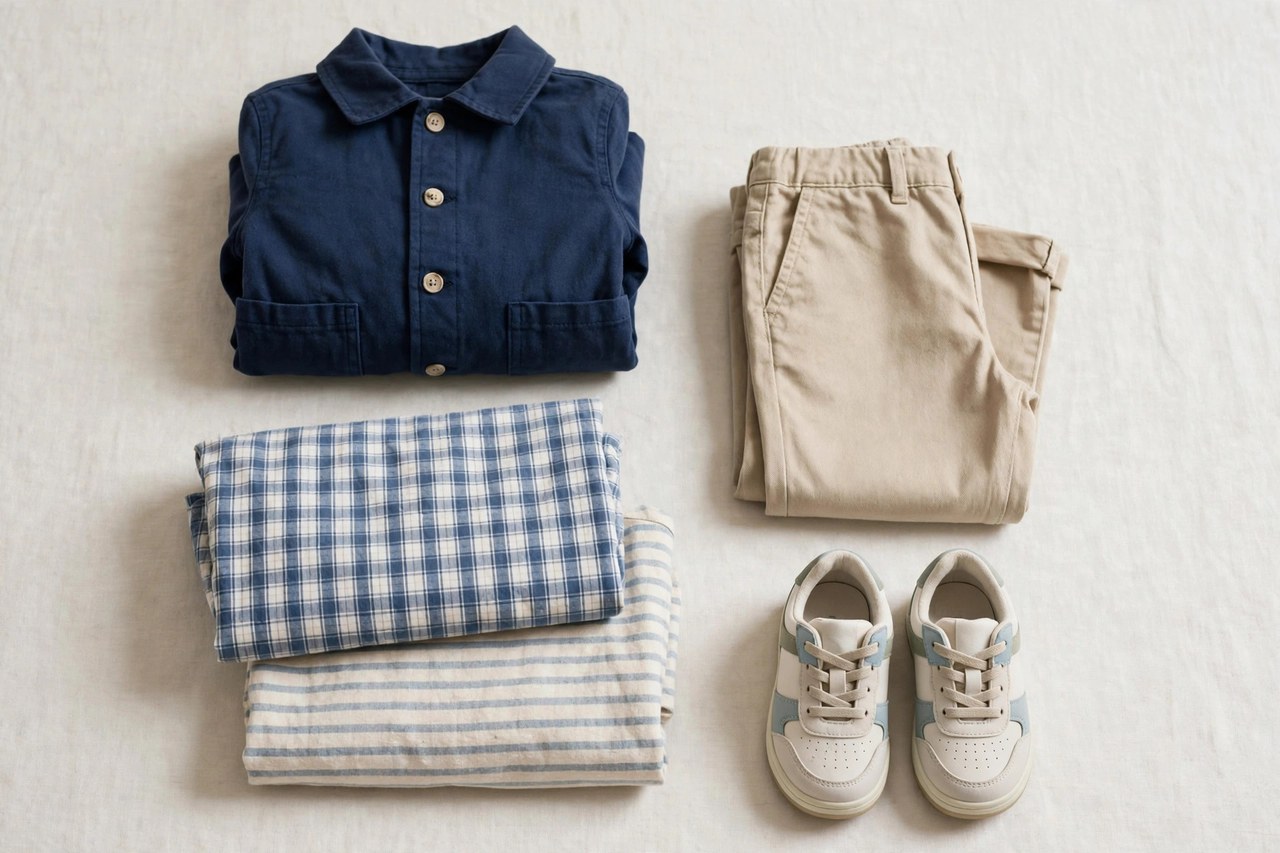
This guide is the K letter's overview of kids clothes as a whole wardrobe: the everyday system of tops, bottoms, layers, footwear and accessories that has to cover school, play, weather and occasions for a fast-growing child. Where the other K guides go deep on one garment - shirts, jeans, knitwear, shoes - this page covers how the pieces fit together: what a workable children's wardrobe actually contains, how sizing systems move from toddler to teen, and how to buy so garments get worn rather than outgrown in a drawer.
Children's clothes differ from adult clothes in three practical ways. Growth makes every size temporary, so fit systems - adjustable waists, generous hems, stretch - matter more than in adult garments. Wear is harder: knees, seats, cuffs and fronts take playground, floor and food contact daily. And the wearer often has strong opinions and limited dressing skills, so closures, comfort and independence are buying criteria, not afterthoughts.
Building a Workable Wardrobe
A functional kids wardrobe is smaller than most parents expect: enough school or everyday tops and bottoms for the laundry cycle, one warm layer and one waterproof layer, shoes for everyday and for sport, and one smarter outfit for occasions. Within that frame, the K letter's categories divide the jobs - shirts and knit tops for the top half, pants, jeans and shorts below, coats and jackets against the weather, and knitwear as the adjustable warmth layer between seasons.
Buy for the life the clothes will actually lead. Playground-heavy children need reinforced knees, darker practical colors for bottoms and washable everything; the smart outfit can be the one delicate exception rather than the rule. Hand-me-down and passing-on value is real in children's clothes - well-made garments in classic colors routinely serve two or three children - so construction quality at the seams and knees is worth more than a fashionable print that dates in one season.
Sizing From Toddler to Teen
Children's sizing runs in overlapping systems: baby and toddler sizes by age and weight, children's sizes by age or by height, and then teen or young adult ranges. Height is the most reliable single measurement across brands, with chest and waist deciding between adjacent sizes. Adjustable waistbands on pants and jeans, extendable cuffs on coats and two-way stretch in knitwear all widen the window in which a garment fits, which is where the real value sits in a category the child will leave within a year or two.
Fit checks are physical, not visual: the child should sit, bend, climb, reach overhead and walk in a garment before the tags come off. Clothes that pass standing still but fail in motion get avoided, and an avoided garment is a wasted purchase however good the price. Keep a note of the child's current height, chest, waist and inside leg - four numbers make every later purchase in this letter faster and more accurate.
Care, Rotation and Passing On
Wash children's clothes for the soil they actually carry: everyday play clothes tolerate regular washing, and modern detergents handle playground dirt at cool temperatures that preserve elastic and prints. Name-label school and nursery pieces - identical shirts, pants and knitwear converge in every classroom - and rotate two or three core sets so no single garment wears out early from constant washing.
When a garment is outgrown, check it over before passing it on or storing it for a sibling: knees, seat, elastic recovery, zips and buttons decide whether it has a second life. Storing clean, repaired clothes by size makes the next growth spurt a drawer-opening exercise instead of an emergency shop. A wardrobe run this way - measured, motion-tested, rotated and passed on - is the system every other guide in this letter plugs into.
Common Questions
How many clothes does a child actually need?
Enough everyday tops and bottoms to cover your laundry cycle - typically five to seven sets - plus one warm layer, one waterproof layer, everyday and sports shoes, and one smarter outfit. More than that mostly means more outgrown unworn clothes, because growth, not wear, ends most garments' first life.
What is the most reliable children's size measurement?
Height. Brands differ in how their age sizes run, but height, backed up by chest for tops and waist for bottoms, transfers across brands best. Keep those numbers noted and compare them with each maker's chart instead of trusting the age on the label.
How do I make kids clothes last longer?
Buy construction where wear lands - reinforced knees, double stitching, working adjustable waists - wash cool, rotate a few core sets rather than washing one favorite daily, and repair small damage early. Fit checked in motion also lasts longer, because comfortable clothes are worn evenly instead of fought.
More in Children's Clothes Guide K
The K letter hub and the guides closest to this one:
More to Explore on Apparel Search
Looking for Children's Clothing Stores?
This guide helps you choose children's kids clothes. To browse where to buy, visit our children's clothing store directory, where you can find retailers that carry them.