Children's Shirts Guide
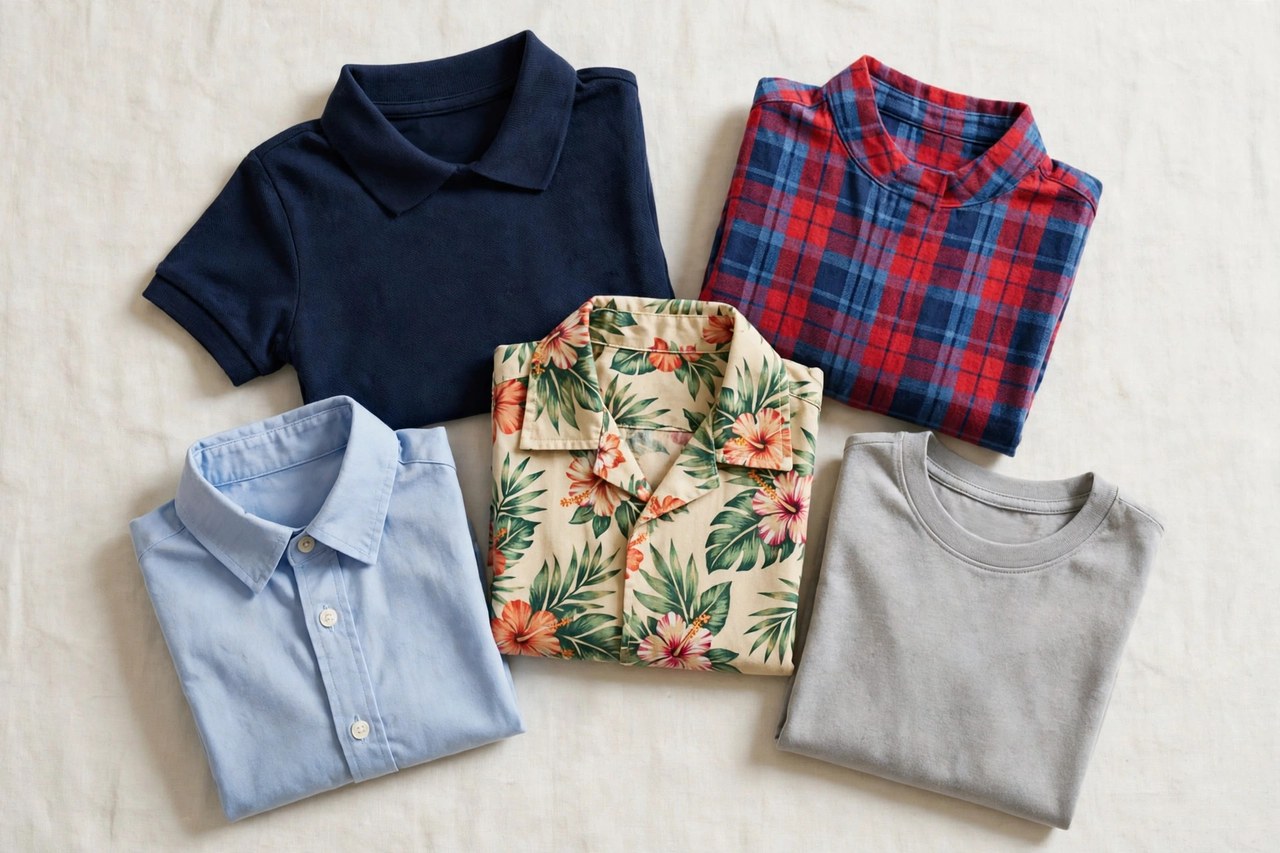
This is the K letter's hub guide to children's shirts as a family - the category page the original built by linking to its own specialists: polo shirts, t-shirts, plaid, oxford, dress, Hawaiian and bowling shirts, all of which have their own guides in this letter and are linked from this page. Shirts are the most varied category in a child's wardrobe, running from a school polo worn four days a week to a tuxedo shirt worn twice a year, and this guide's job is to map the family so the specialist pages are easy to choose between.
Shop Children's Shirts Now
Shop Children's Shirts on Amazon Shop Children's Shirts on eBayThe Amazon and eBay links on this page are affiliate links. If you make a purchase through them, Apparel Search may earn a commission.
This is the K letter's hub guide to children's shirts as a family - the category page the original built by linking to its own specialists: polo shirts, t-shirts, plaid, oxford, dress, Hawaiian and bowling shirts, all of which have their own guides in this letter and are linked from this page. Shirts are the most varied category in a child's wardrobe, running from a school polo worn four days a week to a tuxedo shirt worn twice a year, and this guide's job is to map the family so the specialist pages are easy to choose between.
Every shirt decision reduces to three questions: how formal, how hard-wearing, and who fastens it. Formality runs t-shirt, polo, casual button shirts, oxford, dress and tuxedo. Hard wear runs the other way, roughly. And fastenings - pull-on, snaps, buttons, plackets - decide whether the shirt supports a child's independence or requires an adult at both ends of the day.
The Shirt Family, Mapped
At the everyday base sit t-shirts and polos: knitted, pull-on, washable without thought. Above them, the casual button shirts - plaid, gingham, denim, Hawaiian and bowling shirts - add woven fabrics, patterns and collars while staying playful. The smart tier is oxford and dress shirts, with tuxedo shirts alone at the formal peak. Sleeve length cuts across all of it: short sleeves for summer and layering ease, long sleeves for warmth, coverage and formality, each with its own guide in this letter.
Most children need depth at the base and one or two pieces at the top: several everyday knits in rotation, two or three casual button shirts for variety and events, and one smart shirt that fits right now. Buying heavily at the formal end wastes money on unworn formality; buying nothing there guarantees a panic before the first wedding photograph.
Fabrics: Knits vs Wovens
Knitted shirts - jersey and piqué - stretch, forgive fit and need no ironing; they are the right default for daily wear and younger children. Woven shirts - cotton poplin, oxford, flannel, denim, gingham - hold structure, collars and creases, photograph smarter and demand a little more care. The weave also sets the season: flannel and denim for cold months, madras, gingham and lightweight cotton for warm ones. Blends with polyester trade a little softness for wash-and-wear behavior that school life rewards.
Inside finishing matters across the family because shirts touch skin all day: feel for scratchy seams, stiff labels and rough embroidery backings, and prefer taped neck seams and tagless designs for children with sensory sensitivities. A shirt that itches is a shirt that gets 'lost' before school.
Fit and Buying Across the Family
Shared fit rules: shoulders on the point, room to sit and reach without pulling or climbing, sleeves ending where the style intends - wrist for long, mid-arm for short - and fastenings the child can operate at the speed the morning requires. Measure chest and height, keep the numbers noted, and apply each specialist guide's details per style: collar fit for dress shirts, pattern matching for plaid and Hawaiian, collar behavior for polos.
Rotation is the family's durability strategy: several shirts worn in turn outlast one favorite worn daily, and a named, labeled school set prevents the identical-shirt mix-ups of classrooms. Choose the level of formality the child's real calendar needs, buy the base deep and the peak carefully, and the shirt wardrobe covers everything from mud to weddings.
Common Questions
What shirts does a child actually need?
Depth at the everyday end - several t-shirts and polos in rotation - plus two or three casual button shirts such as plaid or gingham, and one smart shirt, usually an oxford, that fits now. Formal pieces beyond that are bought per event, close to the date.
What is the difference between knitted and woven shirts?
Knits - t-shirts and polos - stretch, forgive fit and need no ironing, suiting daily wear. Wovens - oxford, plaid, denim, dress shirts - hold collars and structure, look smarter and need slightly more care. Most wardrobes need both, weighted toward knits.
Which shirt is smartest below a dress shirt?
The oxford shirt: its textured weave and button-down collar read as properly dressed for almost every family occasion while washing easily and resisting wrinkles. Below that sits the polo, the smartest of the comfortable knits.
More in Children's Clothes Guide K
The K letter hub and the guides closest to this one:
More to Explore on Apparel Search
Looking for Children's Clothing Stores?
This guide helps you choose children's shirts. To browse where to buy, visit our children's clothing store directory, where you can find retailers that carry them.