Children's T-Shirts Guide
Children's t-shirts are the most-worn garment in the modern child's wardrobe: a knitted pull-on top with short sleeves and no collar fastenings, worn alone in summer, layered under everything in winter, and bought in multiples because it is washed in multiples. Because t-shirts are so familiar, they are bought carelessly - and the differences between a tee that survives a year of weekly washing and one that twists, fades and sags in a month are all visible before purchase, if you know where to look.
Shop Children's T-Shirts Now
Shop Children's T-Shirts on Amazon Shop Children's T-Shirts on eBayThe Amazon and eBay links on this page are affiliate links. If you make a purchase through them, Apparel Search may earn a commission.
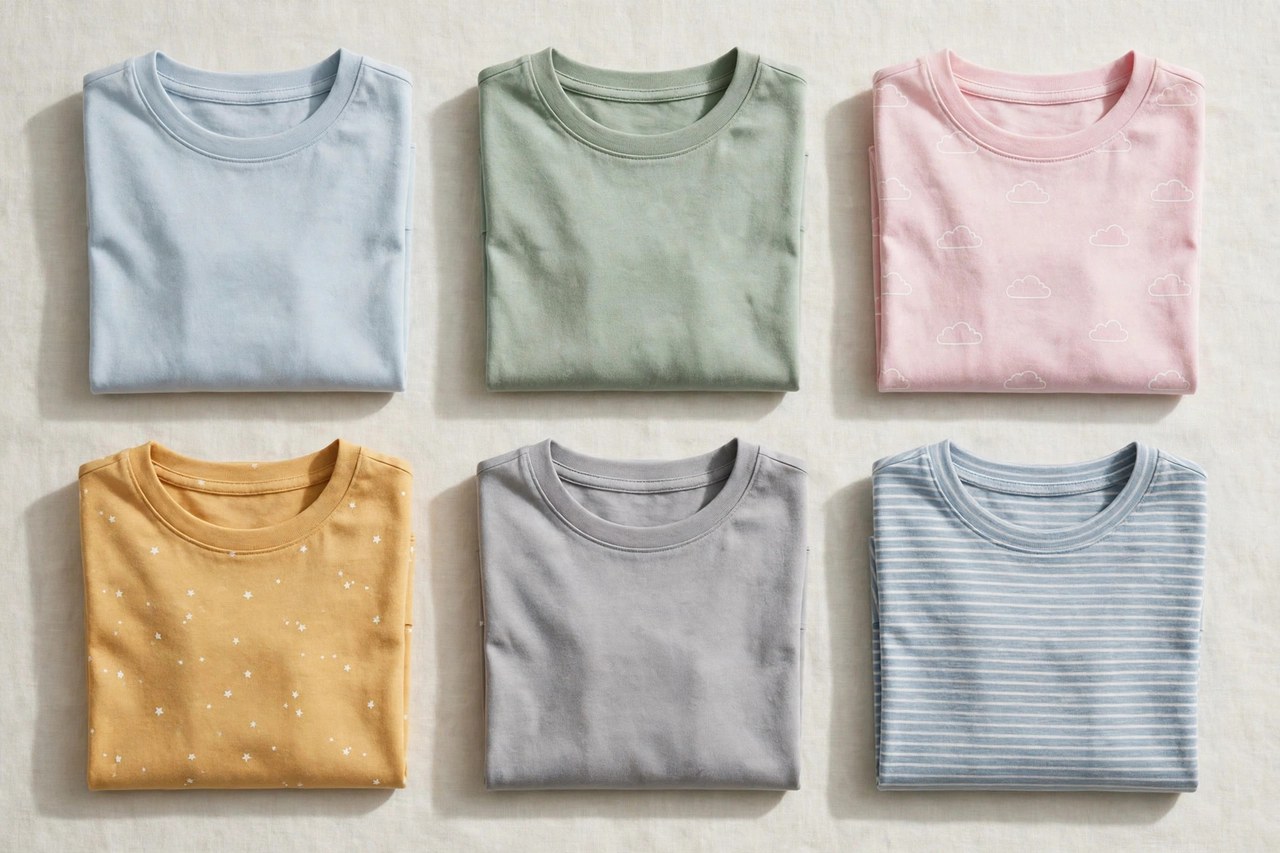
Children's t-shirts are the most-worn garment in the modern child's wardrobe: a knitted pull-on top with short sleeves and no collar fastenings, worn alone in summer, layered under everything in winter, and bought in multiples because it is washed in multiples. See the site's types-of-t-shirts and types-of-shirts references and a novelty t-shirt guide for more detail. Because t-shirts are so familiar, they are bought carelessly - and the differences between a tee that survives a year of weekly washing and one that twists, fades and sags in a month are all visible before purchase, if you know where to look.
This guide is the buying discipline for the wardrobe's highest-rotation garment: fabric weight and composition, the construction tells of a straight-grained tee, fit without drama, and the print question - how decoration is applied decides whether the shirt's picture outlives its fabric or cracks across a favorite design by half-term.
Fabrics and Weights
Cotton jersey is the standard: soft, breathable, kind to skin. Within cotton, weight is destiny - a substantial mid-weight jersey holds its shape, resists twisting and survives washing; the lightest, cheapest jerseys go limp and skew quickly. Ring-spun and combed cottons feel softer because their fibres are finer and more aligned. Cotton-polyester blends keep color and shape through relentless washing at a small cost in softness, and are the pragmatic school-and-rotation choice.
The skew test: a t-shirt cut off-grain twists after washing so the side seams spiral toward the front. You cannot see grain perfectly on the rail, but a shirt whose print or stripes sit level and whose folded shape is symmetrical is a good bet, and the first wash of a new brand should be a trial before you buy multiples. Neck ribbing quality is the other early failure - a wide, firm rib with elastane recovers; a thin one becomes a wavy collar by the fifth wash.
Prints and Decoration
Screen prints sit on the fabric surface - durable in quality inks, cracking when cheap. Heat-transfer and vinyl designs can peel at edges with heat and washing. Embroidered motifs last longest but need a smooth, soft backing inside for young children, because the reverse of embroidery scratches. Novelty and character tees live on their design, so buy those by the decoration method first: a beloved picture that cracks is a heartbreak with a date on it.
Inside-out washing, cool, is the universal print preserver, and tumble drying is the universal print destroyer; if the household reality is heavy tumble drying, choose embroidery or quality screen prints and expect transfers to age fastest. Glow, sequin and interactive elements have their own care labels - read them before the shirt becomes a favorite, not after the first wash incident.
Fit, Rotation and Value
T-shirts fit forgivingly by design: shoulder on the point, chest easy, length to the hip for untucked wear, sleeves mid upper-arm without gripping. For layering under sweaters and dungarees, a slightly trimmer fit prevents bunching; for summer-alone wear, an easier cut breathes better. Children with sensory sensitivities do well in tagless tees with taped neck seams - the neck label is the most-hated square inch in children's clothing.
Value is rotation arithmetic: several decent tees worn in turn outlast the same money spent on one premium tee worn constantly or many flimsy ones failing in sequence. Buy the size that fits now, verify a new brand through one wash, then stock it in the colors that hide the child's particular menu. A t-shirt wardrobe built that way stops being a weekly laundry emergency and becomes the reliable base every other guide in this letter layers on.
Common Questions
Why do children's t-shirts twist after washing?
The fabric was cut off-grain or the jersey is too light to hold its structure: the side seams spiral as the knit relaxes. Mid-weight jersey from straighter cutting twists far less - trial-wash a new brand before buying multiples.
Which t-shirt print method lasts longest?
Embroidery outlasts everything but needs a soft backing inside. Quality screen printing is next; heat-transfer and vinyl designs peel and crack fastest, especially with tumble drying. Whatever the method, wash prints inside out and cool.
How many t-shirts does a child need?
Enough to cover the laundry cycle with rotation - typically five to eight in regular use, so no single shirt is washed to death weekly. Rotation, not price, is the biggest lever on how long t-shirts last.
More in Children's Clothes Guide K
The K letter hub and the guides closest to this one:
Looking for Children's Clothing Stores?
This guide helps you choose children's t-shirts. To browse where to buy, visit our children's clothing store directory, where you can find retailers that carry them.