Children's Short Sleeve Shirts Guide
Children's short sleeve shirts are the warm-weather half of the woven shirt family: button-front and camp-collar shirts whose sleeves end mid upper-arm, in cottons, ginghams, madras plaids and prints. This guide complements the letter's long sleeve guide, and this letter's own shirt specialists - gingham, plaid, Hawaiian and bowling shirts are all, in their commonest forms, short sleeve shirts wearing particular patterns.
Shop Children's Short Sleeve Shirts Now
Shop Children's Short Sleeve Shirts on Amazon Shop Children's Short Sleeve Shirts on eBayThe Amazon and eBay links on this page are affiliate links. If you make a purchase through them, Apparel Search may earn a commission.
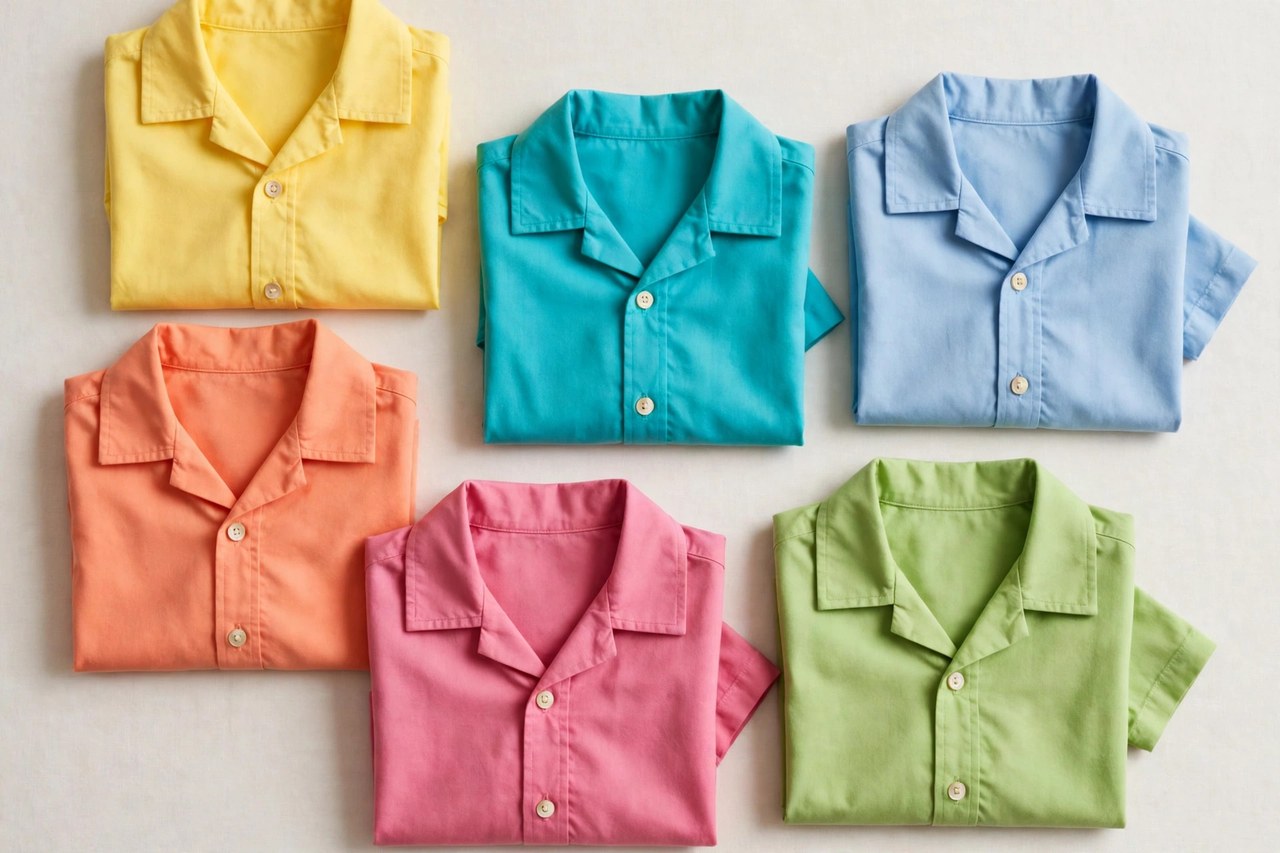
Children's short sleeve shirts are the warm-weather half of the woven shirt family: button-front and camp-collar shirts whose sleeves end mid upper-arm, in cottons, ginghams, madras plaids and prints. This guide complements the letter's long sleeve guide, and this letter's own shirt specialists - gingham, plaid, Hawaiian and bowling shirts are all, in their commonest forms, short sleeve shirts wearing particular patterns.
The short sleeve shirt's job is to be smarter than a t-shirt without surrendering the t-shirt's ease: it covers school dress codes that ban sleeveless or collarless tops, photographs well at summer events, and keeps a child cooler than any long sleeve while still presenting a collar and a proper front.
Styles Within the Family
Camp-collar shirts - the bowling and Hawaiian shapes - are the relaxed pole: flat open collars, straight hems, roomy cuts. Classic button-front shirts with a pointed collar and a curved hem to tuck are the smarter pole, in gingham, madras and plain cotton, and can carry a blazer for a summer occasion. Cuban-collar shirts sit between, with the camp collar's ease and a cleaner front. Sleeve finish varies too: a simple hemmed sleeve is standard; a banded or cuffed sleeve looks neater on older children.
Fabric decides the shirt's temperature honestly: plain-weave cotton and linen blends breathe best; madras is the traditional hot-weather weave; seersucker's puckered stripes lift fabric off the skin and are a genuinely functional summer cloth for children at outdoor events. Avoid heavy twills in this category - a short sleeve shirt in a hot fabric serves no season.
Fit and Comfort
Sleeves should end around the mid upper-arm and be wide enough that the arm moves without the sleeve gripping - a tight short sleeve rides into the armpit and stays there. The body should button without pulling when the child sits, and the hem choice matters: straight camp hems wear untucked at hip length; curved hems should be long enough to stay tucked through a school day of reaching and bending.
For younger children, snaps disguised as buttons or a short placket reduce morning friction. Check inside seams and the underarm area especially, since bare arms meet the shirt's inner construction directly in this style; soft finishing is the difference between a shirt worn all summer and one rejected after the first hot day.
Care and Rotation
Short sleeve shirts wash like other cotton shirts - inside out, cool - and mostly iron themselves acceptable on a hanger if removed promptly, though camp collars lie flattest with one press of a cool iron. Summer shirts take sunscreen, ice lollies and grass as their occupational hazards: treat stains before washing, when they are fresh, rather than baking them in with a hot cycle.
Two or three short sleeve shirts in rotation cover a summer of events and school days, especially mixed across the letter's patterns - one gingham, one madras, one print. Bought breathable, soft inside and easy to fasten, they become the shirts children choose themselves when they want to look like they tried.
Common Questions
When is a short sleeve shirt better than a t-shirt for a child?
When a collar and a proper front are wanted - school dress codes, family events, photographs, religious occasions - without giving up warm-weather comfort. It presents as a shirt while wearing almost as easily as a tee.
Which fabric keeps a child coolest in a short sleeve shirt?
Lightweight plain-weave cotton, linen blends and seersucker. Seersucker's puckered weave holds fabric off the skin and is a genuinely functional hot-weather cloth; madras is the traditional lightweight option. Avoid heavy twills in summer shirts.
How should short sleeves fit on a child?
Ending around the mid upper-arm, wide enough not to grip or ride into the armit. Hemmed sleeves are standard; banded cuffs look neater on older children. If the sleeve binds when the child raises an arm, the shirt is too small.
More in Children's Clothes Guide K
The K letter hub and the guides closest to this one:
Looking for Children's Clothing Stores?
This guide helps you choose children's short sleeve shirts. To browse where to buy, visit our children's clothing store directory, where you can find retailers that carry them.