Children's Sportswear Guide
Children's sportswear is clothing engineered for movement: athletic tops, shorts, leggings, tracksuits and training layers in fabrics that stretch, breathe and manage sweat. Sportswear is the fastest-growing part of most children's wardrobes - PE kits, clubs, training and everyday athleisure all draw from the same rails - and it rewards buying by fabric technology rather than by team colors.
Shop Children's Sportswear Now
Shop Children's Sportswear on Amazon Shop Children's Sportswear on eBayThe Amazon and eBay links on this page are affiliate links. If you make a purchase through them, Apparel Search may earn a commission.
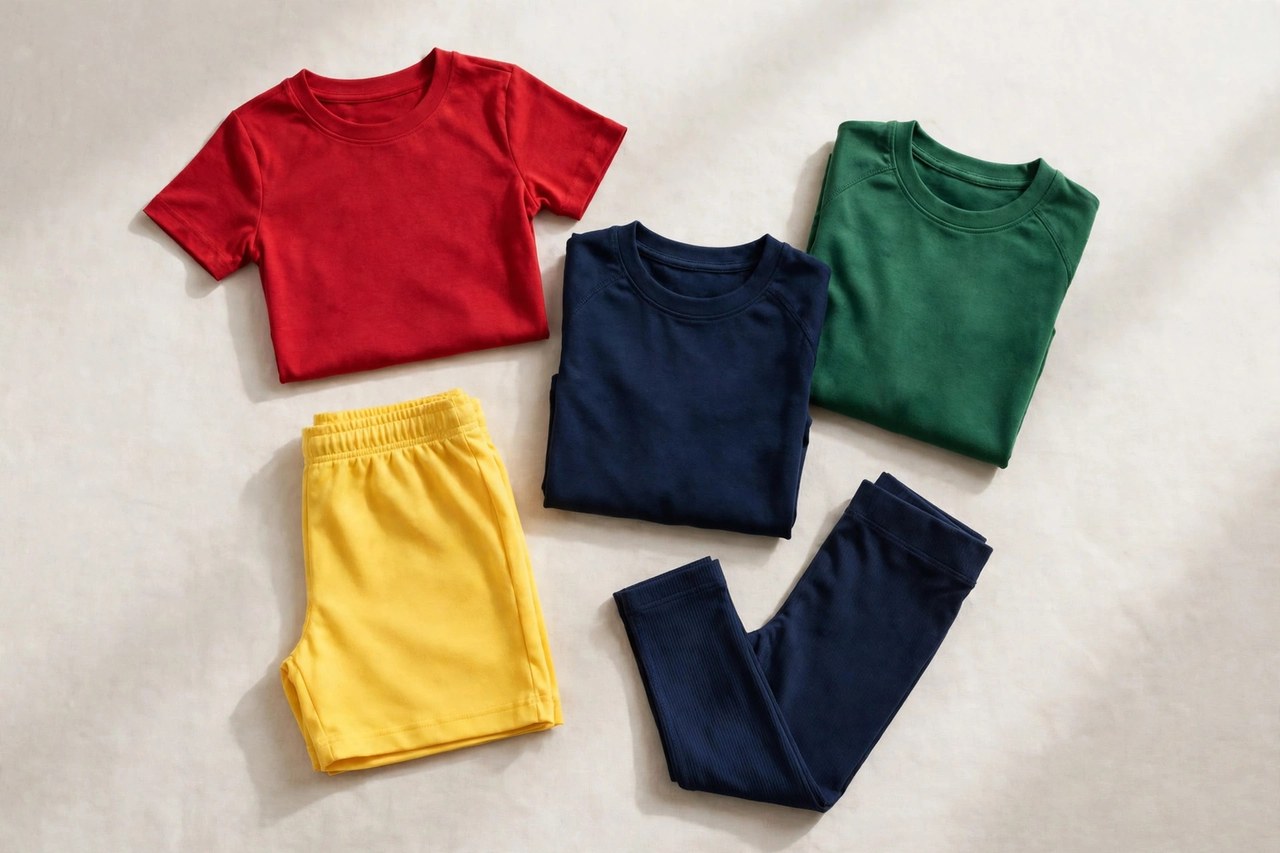
Children's sportswear is clothing engineered for movement: athletic tops, shorts, leggings, tracksuits and training layers in fabrics that stretch, breathe and manage sweat. See the main children's sportswear guide in the S letter and the site's sportswear explainer for more detail. Sportswear is the fastest-growing part of most children's wardrobes - PE kits, clubs, training and everyday athleisure all draw from the same rails - and it rewards buying by fabric technology rather than by team colors.
The category's promise is comfort in motion, and its failures are all comfort failures: seams that chafe at the tenth minute, fabrics that stay cold and wet, waistbands that migrate during drills. A PE kit or training outfit a child dreads wearing defeats its purpose, so this guide tests sportswear the way sport does - in movement, under effort, over a full session.
Fabrics and What They Actually Do
Synthetic performance fabrics - polyester and nylon with elastane - dominate for good reasons: they move sweat off the skin to evaporate, dry fast, hold shape and survive weekly washing. Mesh panels place ventilation where heat builds. Cotton, by contrast, absorbs sweat, stays wet and heavy and chills after exercise, which is why cotton t-shirts are the wrong tool for sustained sport despite being the everyday default; cotton blends soften that flaw for low-intensity activity only.
Construction separates real sportswear from sporty-looking clothes: flatlock seams that lie flat against moving skin, gussets at the underarm and crotch that free the stride and reach, waistbands that are wide, elastic and drawstring-backed so they stay put at speed, and reflective details for outdoor training in dim months. Four-way stretch should recover instantly when you stretch and release a handful of fabric in the shop.
Kit by Activity and Season
For PE and general training, the core kit is a performance top, shorts or leggings, and a mid-layer for warm-ups and cool-downs - the tracksuit's enduring logic. Team sports add their own requirements - shin-guard-compatible socks, specific shorts, sometimes named kit - so check the club's list before improvising. Cold-weather training needs a base layer under the kit: a close, wicking long-sleeve that turns a summer kit into a winter one more cheaply than a second wardrobe.
Size sportswear close but not compressive unless the sport specifies it: kit should allow a full stride, a deep lunge and arms overhead without riding or binding, and shorts and leggings must pass the bend test for coverage. Unlike school clothes, sportswear bought with generous growing room actively misbehaves - loose kit catches, twists and chafes - so buy the current size and expect sport to wear it out on schedule.
Care and Kit Discipline
Wash performance fabrics cool, inside out, without fabric softener, which coats the fibres and kills the wicking you paid for; a sports-specific or plain detergent keeps the technology working. Hang dry - synthetics dry in hours anyway - and keep a strict kit-bag routine: kit out to air the moment the child gets home, because sportswear left sealed in a bag becomes a science project by Thursday.
Keep the PE and club kit as a labeled, dedicated set, washed and re-packed in one cycle, so no morning starts with a missing top. Inspect monthly for the category's wear signatures: waistband elastic giving up, inner-thigh abrasion on leggings and shorts, and seam splits at gussets. Bought by fabric and seam quality, sportswear makes children faster only in one way that matters - they stop thinking about their clothes entirely.
Common Questions
Why is cotton bad for children's sportswear?
Cotton absorbs sweat and holds it: the garment gets heavy, stays wet, rubs and chills the child when activity stops. Polyester and nylon performance fabrics move moisture to the surface to evaporate and dry quickly, which is the entire point of sportswear.
Should children's sportswear fit tight or loose?
Close but not tight for most sports: a full stride, lunge and overhead reach without riding, binding or excess fabric to catch and chafe. Unlike school clothes, sportswear is not a category to buy with generous growing room.
Can I use fabric softener on sportswear?
No - softener coats the fibres and disables the moisture-wicking finish that makes the garment work. Wash cool with ordinary or sports detergent, inside out, and hang dry.
More in Children's Clothes Guide K
The K letter hub and the guides closest to this one:
Looking for Children's Clothing Stores?
This guide helps you choose children's sportswear. To browse where to buy, visit our children's clothing store directory, where you can find retailers that carry them.