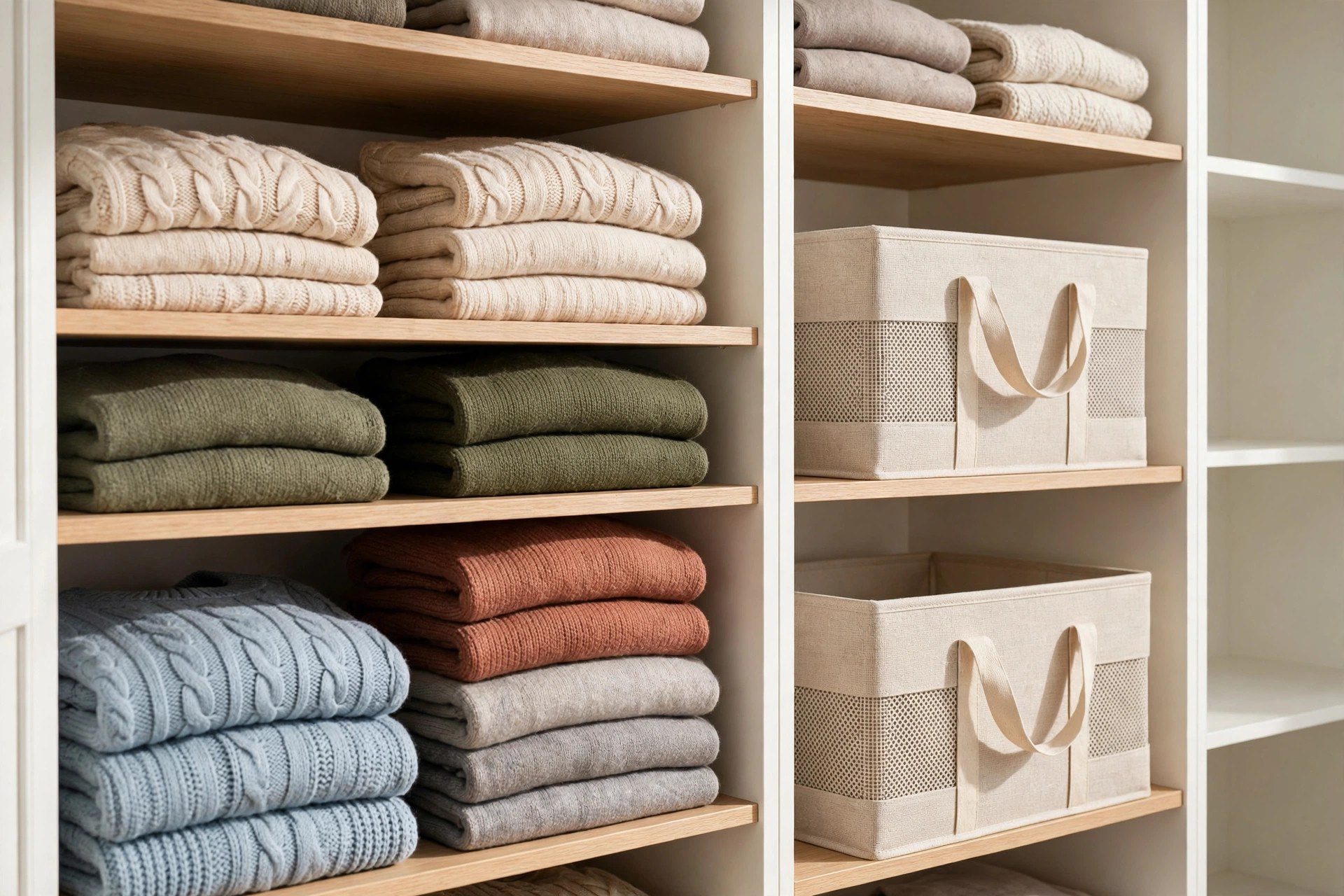
Storing sweaters well is mostly about gravity, moisture, and moths. Knits stretch under their own weight, so sweaters belong folded on shelves or in drawers, never on hangers — a season on a hanger leaves permanent bumps and drooping shoulders. Before any sweater is put away for the season it should be clean, because clothes-moth larvae feed on soiled natural fibers. Storage should be breathable or deliberately sealed, cool and dry, with cedar as a deterrent. These habits take minutes and are the difference between a sweater that comes out of storage ready to wear and one that comes out stretched, musty, or holed.
Fold, Don't Hang — Everyday Storage
Fold sweaters in thirds — sleeves across the body, then fold up — and stack them no more than a few high so the bottom sweaters are not crushed. Shelves and drawers both work; dividers or individual breathable cotton bags keep stacks tidy and protect fine knits from snagging on rougher neighbors. If you must hang a lightweight, tightly knit cardigan for a short time, use a padded hanger and fold the sweater over the bar rather than hanging it by the shoulders — but as a rule, the drawer is the sweater's home. Between wearings, resting a sweater flat for a day lets the fibers recover, part of the same care routine covered in washing wool sweaters.
Seasonal Storage, Step by Step
Wash or dry clean every sweater first — this is the single most important step, because moth larvae target soiled fibers. Make sure each piece is completely dry before it is packed; even slight dampness invites mildew and odor in a closed container. Fold with acid-free tissue in the folds to soften creases, and pack into breathable cotton storage bags or clean containers. For long storage in a moth-prone home, airtight containers add real protection. Add fresh cedar blocks or rings, whose scent deters moths, and refresh or sand them each season.
Store containers somewhere cool, dry, and dark inside the living space — a closet shelf or under-bed box beats a damp basement or a hot attic, where heat and humidity degrade fibers and encourage pests. Midway through the season, open the storage, refold sweaters along different lines so creases do not set, and check for any sign of moths. When the season turns, air sweaters before wearing, remove any surface pills with the methods in how to remove pilling, and they are ready.
Common Questions
- Why can't I hang my sweaters?
- A knit stretches under its own weight, and on a hanger that weight pulls from the shoulders — leaving stretched shoulders, hanger bumps, and a lengthened body that do not fully recover. Folding distributes the weight evenly, so the sweater keeps its shape.
- Should sweaters be stored in plastic bins?
- Sealed containers protect well against moths and dust, and they are fine for clean, completely dry sweaters kept in a dry room. For everyday in-season storage, breathable cotton bags or open shelving are better, because trapped moisture invites mildew. Never pack a sweater away damp or unwashed.
- Do I really need to wash sweaters before storing them?
- Yes — it is the most important storage step. Moth larvae feed preferentially on fibers carrying food, sweat, and body oils, including soil you cannot see. A sweater stored clean is a far less attractive target, and it comes out fresher.
- Where is the worst place to store sweaters?
- Damp basements and hot attics. Humidity encourages mildew and pests; heat dries and degrades fibers and glues and finishes. A cool, dry spot inside the main living space — a closet shelf or under-bed container — is ideal.
Garment Care & Clothing Storage Guides
This page is part of the Apparel Search garment care series — practical guides to washing, finishing, and storing the clothes you own. Browse the full series below.