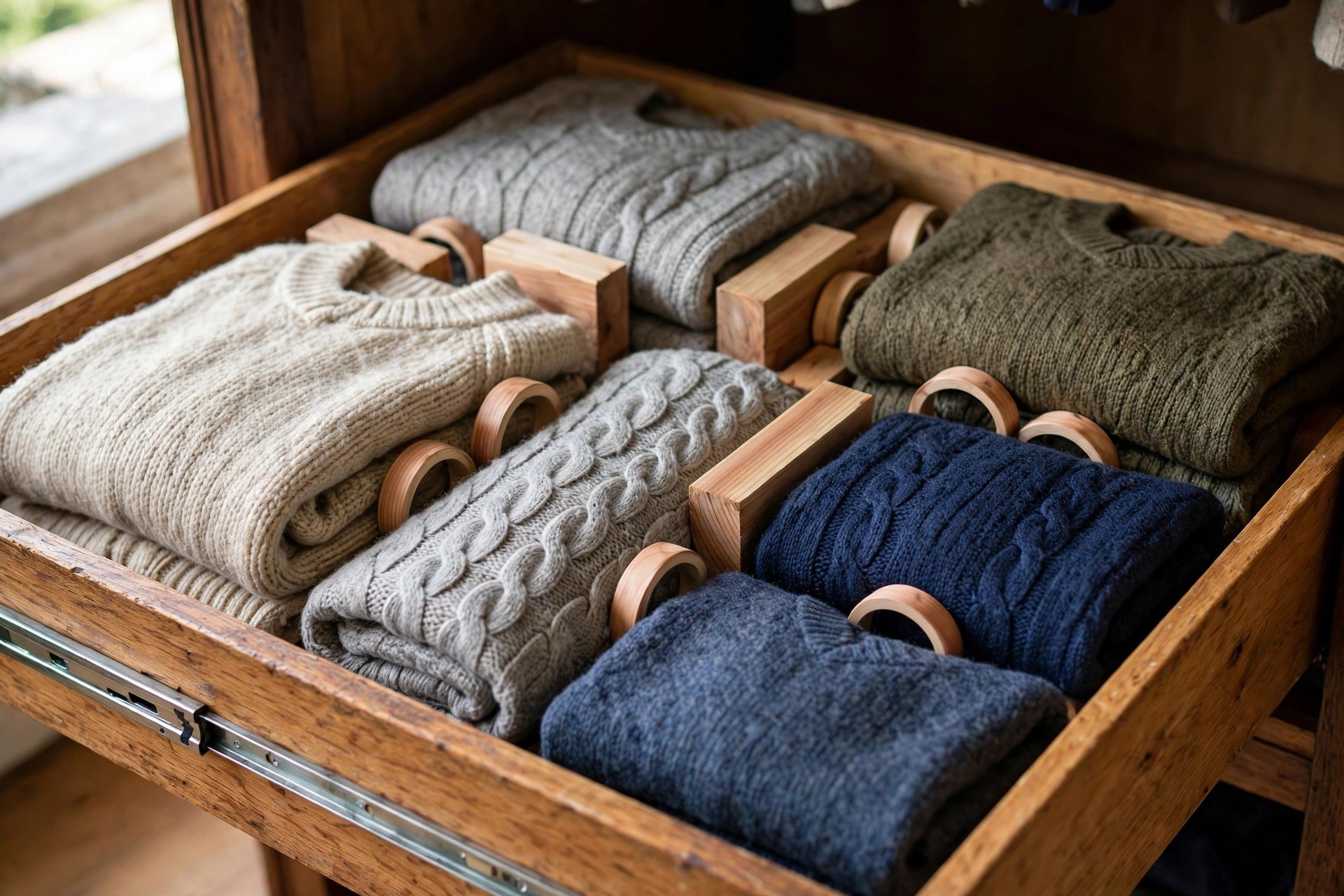
Clothes moth prevention starts with understanding the pest: it is the larva of the webbing clothes moth, not the adult, that feeds — and it feeds on keratin, the protein in wool, cashmere, fur, feathers, and silk blends. Larvae are drawn to fibers soiled with food, sweat, and body oils, which is why the sweater that gets holed is almost always one put away unwashed. Prevention is a routine, not a product: clean everything before storage, store it sealed or with fresh cedar, vacuum and wipe the closet, monitor with pheromone traps, and inspect stored clothes a few times a year.
Clean First — the Step That Matters Most
Wash or dry clean natural-fiber clothing before it goes into storage, even if it looks clean. Invisible soil is what larvae feed on most eagerly, and a season in a dark drawer gives them undisturbed time. While the closet is empty, vacuum it thoroughly — along baseboards, corners, and carpet edges where larvae hide — and wipe shelves. Store cleaned clothes folded with acid-free tissue in breathable cotton bags for a season, or in airtight containers for longer storage; airtight storage both shuts moths out and keeps an unnoticed infestation from spreading. Our guide to storing sweaters covers folding and containers in detail.
Cedar, Traps, and Other Deterrents
Cedar blocks, rings, and balls give off oils whose scent deters adult moths from laying eggs — but cedar is a deterrent, not an insecticide, and its oils fade. Refresh cedar every season or two by lightly sanding the surface or using cedar oil, and do not expect it to rescue an existing infestation. Pheromone traps catch adult male webbing clothes moths and are best used as an early-warning system: a rising catch tells you to inspect and clean before damage spreads. Lavender and herbal sachets smell pleasant and may mildly deter, but they are no substitute for cleaning and sealing. Avoid old-style mothballs in living spaces: they are pesticides, they must be used only in tightly sealed containers to work at all, and they leave a persistent odor in garments.
If You Find Holes or Larvae
Act on the whole storage area, not just the damaged piece. Remove everything, vacuum thoroughly, and wash or dry clean what can be cleaned. Infested knits can be frozen: seal the garment in a plastic bag and keep it in a freezer at 0°F (−18°C) or colder for at least several days — a week is the commonly advised margin — then thaw it still bagged so condensation forms on the bag, not the garment. Badly infested or valuable items (fur, antique textiles) are a job for a professional conservator or pest specialist. Afterwards, store everything cleaned and sealed, and keep a trap in the closet to confirm the problem is gone. Prevention is also part of everyday care for the fibers moths love most — see cashmere care.
Common Questions
- Do cedar blocks actually stop moths?
- Cedar deters adult moths from settling and laying eggs, and fresh cedar in a closed drawer or container is a useful layer of protection. It does not kill larvae already in a garment, and its oils fade over time — refresh it by light sanding. Clean storage does more than cedar alone.
- Why do moths only attack some of my clothes?
- Larvae feed on animal fibers — wool, cashmere, fur, feathers, silk — especially where they are soiled with food or body oils. Cotton and synthetics are mostly ignored unless blended with wool or stored dirty against infested pieces.
- Can freezing really kill clothes moths?
- Yes — sustained deep cold kills all life stages. Seal the garment in a bag and freeze at 0°F (−18°C) or colder for at least several days; a week is the commonly advised safe margin. Thaw the garment still sealed so moisture condenses on the bag.
- Are mothballs a good idea?
- They are a poor default. Mothball chemicals only work at concentrations reached inside a tightly sealed container, they are toxic pesticides to handle with care around children and pets, and they leave a strong odor in clothes. Cleaning, sealing, cedar, and traps cover most wardrobes safely.
Garment Care & Clothing Storage Guides
This page is part of the Apparel Search garment care series — practical guides to washing, finishing, and storing the clothes you own. Browse the full series below.