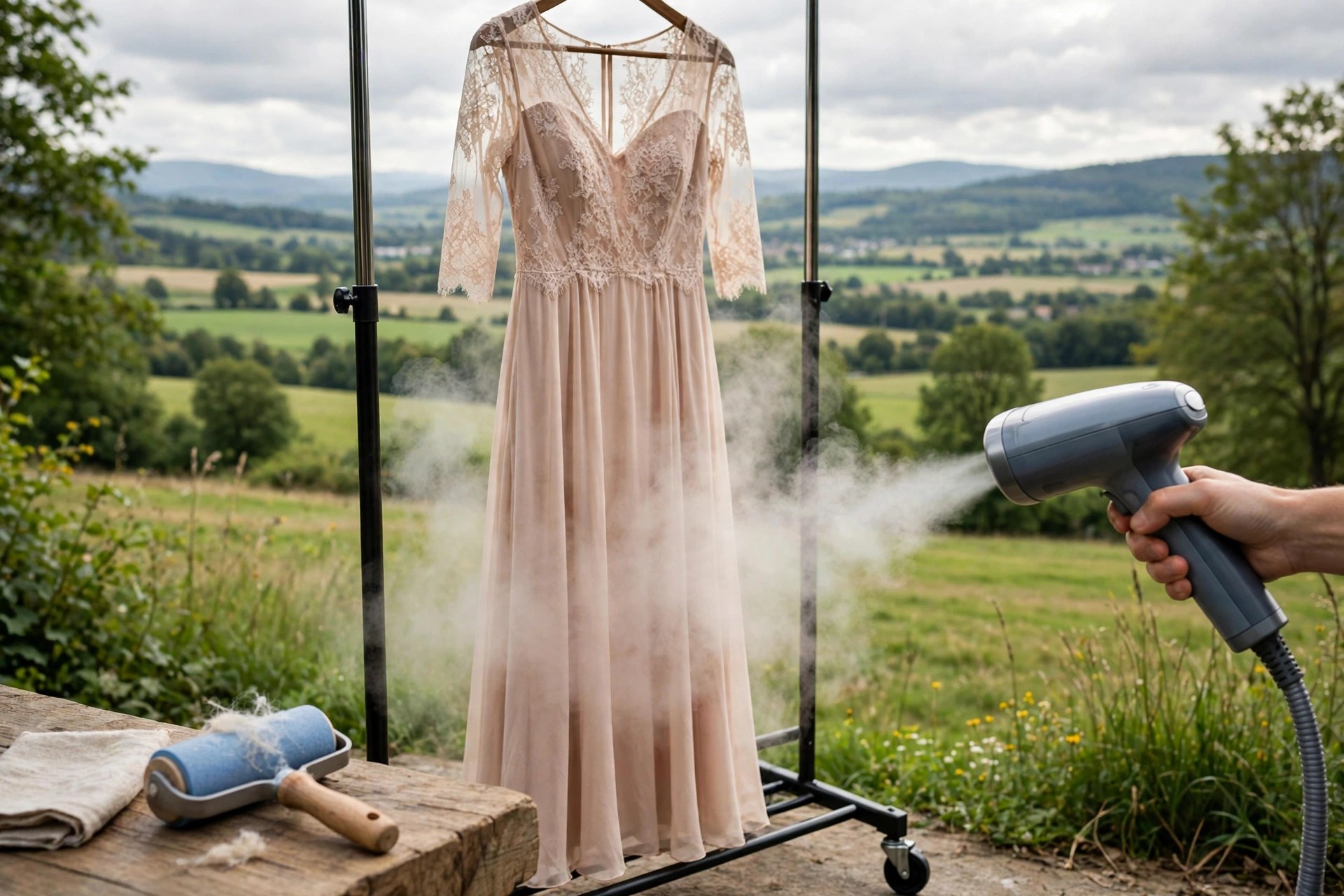
Garment steamers and lint rollers are the finishing tools of clothing care — they do not wash anything, but they make clean clothes look finished. A garment steamer relaxes wrinkles with hot steam while the garment hangs, which suits delicate fabrics, pleats, and structured pieces that are awkward or risky to iron. A lint roller — sticky sheets on a handle — picks up lint, hair, and dust in seconds; its reusable cousins, lint brushes and fabric combs, do the same job without consumables. Used well, these tools extend the fresh life of a garment between washes, which is itself a form of care: less washing means less wear.
Steaming: How to Do It Well
Hang the garment, fill the steamer (distilled water reduces mineral buildup in the tank and spitting), and let it reach full steam. Hold the head close to — just touching — the fabric and move slowly downward, letting the weight of the garment and gentle tugs with your free hand pull wrinkles out. Work in sections, inside as well as out for lined pieces, and let the garment dry and cool for a few minutes before wearing, because freshly steamed fabric re-creases easily. Steam also freshens: a thorough steaming relaxes fibers and helps release the day's odors from a garment that does not yet need washing.
Steamer or iron? Irons win for crisp cotton shirts, sharp creases, and heavy linen. Steamers win for delicates, pleats, draped fabrics, embellishment, and anything structured — blazers and tailored dresses keep their shape on a hanger rather than under a board. Some fabrics need caution: steam velvet only from the reverse side or at a distance so the pile is not crushed (see party fabric care), test silk in a hidden spot, and never steam leather, suede, or waxed fabrics.
Lint Rollers, Brushes, and Where They Fit
The sticky-sheet lint roller is the fastest lint remover ever made — a few passes over a dark coat or sweater before leaving picks up hair, fluff, and dust that brushing misses. Keep one by the door and one in a travel bag. Reusable lint brushes (a fabric pad that grips lint in one direction) and electric fabric shavers cover heavier jobs: brushes for daily lint on wool coats, shavers when the fluff is actually pilling. Rollers are for surface debris only — they will not fix pills, shine, or wrinkles, which is why the three tools sit together in a care kit rather than replacing one another.
Common Questions
- Is steaming better than ironing?
- Neither is better overall — they suit different jobs. Steamers are gentler and better for delicates, pleats, draped and structured garments. Irons give crisper results on cotton, linen, and anywhere a sharp crease or flat finish is the goal.
- Can I steam any fabric?
- Most, with care — but test delicate silk first, steam velvet only from the back or at a distance so the pile is not crushed, and never steam leather, suede, or waxed fabrics. When a care label says do not steam, follow the label.
- Does steaming clean clothes?
- Steaming refreshes — it relaxes wrinkles and helps release light odors — but it does not remove soil or stains. A steamed garment looks and smells fresher between washes, which is valuable, but it is not a substitute for washing when the garment is actually dirty.
- Lint roller or lint brush — which should I buy?
- Both earn their place. A sticky roller is fastest for quick passes and travel; a reusable brush costs nothing per use and handles everyday lint on coats and knits. If your problem is pills rather than loose lint, you want a fabric shaver instead.
Garment Care & Clothing Storage Guides
This page is part of the Apparel Search garment care series — practical guides to washing, finishing, and storing the clothes you own. Browse the full series below.