Clothing Care and Fiber Content Labels
The label is the first authority on what a stain treatment may do
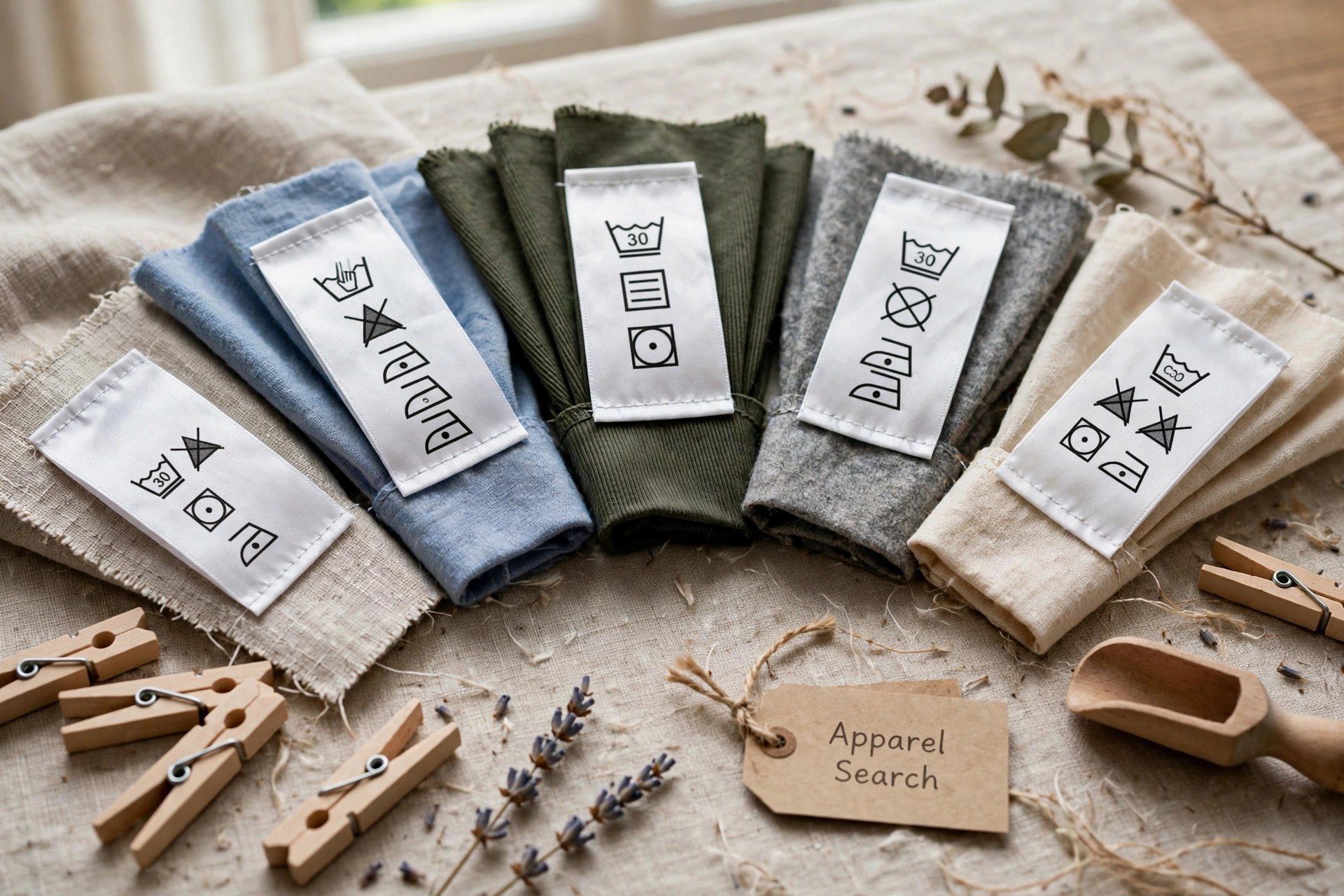
You know if a fabric is washable by reading its care label — and the label also carries warnings, such as 'do not use chlorine bleach,' that directly forbid whole classes of stain treatment. This sheet of the Ohio stain-removal series explains the two label systems a stain treater depends on: care labels, which manufacturers are required to provide with a safe care method for the garment, and fiber content labels, which name the fibers the treatment will touch. Together they set the boundaries inside which every other sheet in the series operates.
Clothing Care and fiber Content Labels
Quick and Easy Stain Removal Clothing & fabrics Fact Sheet Directory Stain Removal Care Labels Fashion Education Directory Apparel Research Fashion Schools Apparel Textile fibers
Clothing Care and fiber Content Labels
You know if a fabric is washable by reading the care label. If the label has warnings such as "do not use chlorine bleach," then you cannot safely use liquid chlorine bleach in stain removal.
Clothing manufacturers are required to tell you the recommended care procedure on a "permanent care label." These labels often appear at the neckline of garments, but sometimes they are in a side seam. These labels tell if the manufacturer recommends home laundering or drycleaning for routine care of the clothing. A recommendation for drycleaning may relate to the component parts of the garment such as interfacings and trim, rather than to the basic fiber content of the garment. Tailored clothes of wool are often "dry-clean only" while wool sweaters are often "hand washable."
Hang tags or other labels on clothing tell the fiber content. If you understand fiber characteristics, this information can help you decide about the best stain removal procedure. For example, wool or silk can be severely damaged by liquid chlorine bleach, so this bleach should be avoided. Hang tags may also tell about fiber finishes such as soil release or durable press that are not visible on clothing but can make stain removal easier or more difficult. For example, oily stains bond more firmly with durable press fabrics than with untreated fabrics, making removal more difficult.
Special thanks to Iowa State University for allowing us to reproduce this information.
Reproduced with permission from the Cooperative Extension Service, Iowa State University, Ames, Iowa, 50011.
Prepared by: Janis Stone,
Textiles and Clothing Specialist,
Iowa State University
One Label, Whole-Garment Meaning
A care label is not written for the shell fabric alone. Manufacturers must base it on the most sensitive part of the garment — a lining, trim, interfacing or dye can be the reason for 'dry clean' on a washable-looking piece. That is why the series treats the label as binding rather than advisory in stain work: a treatment the label forbids may succeed on the fabric and still ruin the garment by shrinking a lining or stripping a trim dye.
Fiber Content Predicts Treatment Behavior
The fiber label tells the treater what chemistry the fabric tolerates: protein fibers such as wool and silk are damaged by chlorine bleach and strong alkali; cellulose fibers accept more vigorous treatment; synthetics are heat-sensitive and attract oil. Reading fiber and care labels together — thirty seconds before any solvent is opened — is the series' most repeated instruction, and it appears again on sheet after sheet because most home stain disasters are label problems, not technique problems.
Common Questions
What does a care label actually guarantee?
Manufacturers are required to give a care method that is safe for the whole garment — fabric, trims, linings and dyes included — so its warnings override general stain advice.
Why does fiber content matter in stain removal?
Fibers differ in what they tolerate: chlorine bleach destroys wool and silk, heat threatens synthetics, and oil clings to synthetic fibers — the fiber label predicts these reactions.
What if the label says do not use chlorine bleach?
Then chlorine bleach is off the table for that garment regardless of the stain; the series directs treaters to oxygen bleach or other label-safe methods instead.