What to Do if You Don't Know What the Stain Is
An extension fact sheet on identifying an unknown stain by its clues and treating it in a safe order
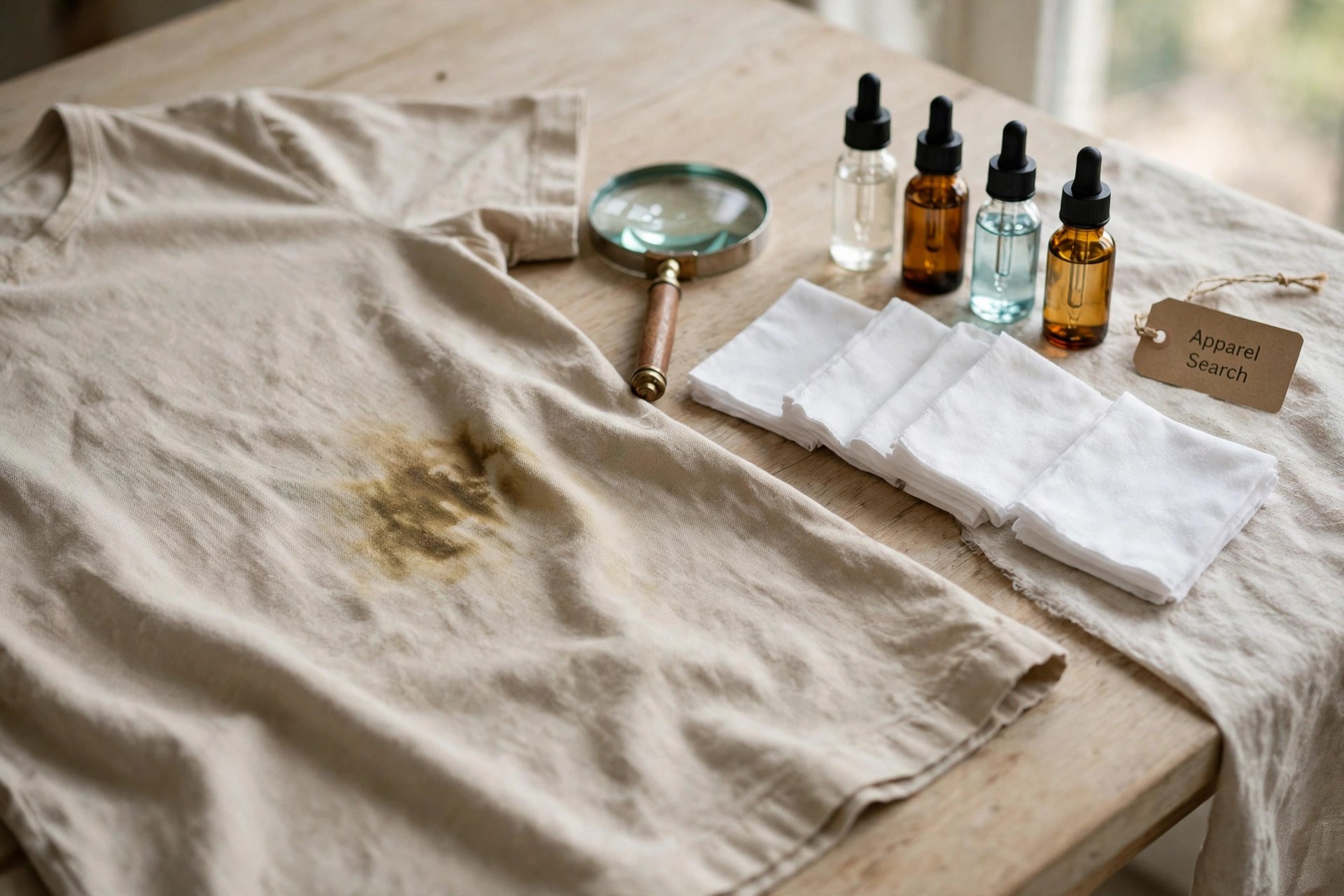
When a stain cannot be named, its odor, location and color may give a clue. Old oil stains may smell rancid but appear dry. Food stains are often on the front of garments, perspiration stains around collars and underarms, and black grease often on pants or skirts at car-door latch level. Color alone can mislead: a rust-colored mark may be coffee, tea, caramelized sugar from old lemonade stains, cosmetics containing benzoyl peroxide, felt marker, crayon, aged baby formula or several other things. Because the right removal method varies with the stain, treatment starts with the least destructive methods first and steps upward only as needed.
What to Do if You Don't Know What the Stain Is
Quick and Easy Stain Removal Clothing & fabrics Fact Sheet Directory Stain Removal Care Labels Fashion Education Directory Apparel Research Fashion Schools Apparel
What to Do if You Don't Know What the Stain Is
If you don't know what the stain is, its odor, location, and color may give you a clue. Old oil stains may smell rancid, but appear dry. Food stains are often on the front of garments; perspiration stains around collars and underarms; black grease is often on pants or skirts at car-door latch levels.
Stain color may be a misleading clue. For example, rust-colored stains may be coffee, tea, old lemonade stains (carmelized sugar), cosmetics containing benzoil peroxide (which can bleach many colors to look rusty), felt marker, crayon, aged baby formula, or a number of other things. If a heavy waxy or gummy residue is present, you may be dealing with a stain that will respond best to spot treatment with a drycleaning fluid.
Since the appropriate removal method varies with the stain, start by using the least destructive stain removal methods first. If the whole garment can be submerged, start by soaking the garment in cold water (as for protein stains). If not, use warm water and spot treatment technique. Next, use liquid detergent and lukewarm or hot water, rinse and let air dry (as for oil stains). If you suspect the stain is iron rust, treat with rust remover before bleach. If stain persists, use a pretreatment spray or solvent (as for combination stain) and all-fabric bleach. If the all-fabric bleach is ineffective on the stain and the garment is colorfast or white, finally try a dilute solution of liquid chlorine bleach.
Special thanks to Iowa State University for allowing us to reproduce this information.
Reproduced with permission from the Cooperative Extension Service, Iowa State University, Ames, Iowa, 50011.
Prepared by: Janis Stone,
Textiles and Clothing Specialist,
Iowa State University
Reading the Clues Before Treating
An unknown stain is a small investigation before it is a laundry task. Location narrows the field quickly — fronts suggest food, collars and underarms suggest perspiration, and a band at car-door latch height on pants or skirts suggests black grease. Odor adds a second check: old oil can smell rancid even when the mark looks dry, which points toward the oil-stain methods rather than the protein-stain ones. Residue adds a third: a heavy waxy or gummy feel suggests a stain that will respond best to spot treatment with a drycleaning fluid. Color is deliberately treated as the weakest clue on the sheet, because so many unrelated substances dry to the same rusty shade, and acting on color alone can pick exactly the wrong method.
The Ladder of Least Destructive Methods
The treatment sequence is a ladder, climbed only as far as the stain requires. If the whole garment can be submerged, it starts with a soak in cold water, as for protein stains; if not, warm water and the spot treatment technique are used instead. Next comes liquid detergent in lukewarm or hot water, a rinse and air drying, as for oil stains — air drying matters, because machine heat can set whatever remains and end the investigation badly. A suspected iron rust stain is treated with rust remover before any bleach. If the stain persists, a pretreatment spray or solvent follows, as for a combination stain, together with all-fabric bleach. Only at the top of the ladder, if all-fabric bleach is ineffective and the garment is colorfast or white, is a dilute solution of liquid chlorine bleach tried.
Why the Order Cannot Be Reversed
Each rung is safe for the stains the lower rungs were meant for, but the reverse is not true. Chlorine bleach used first could destroy the color of a garment whose stain would have left in a cold soak; hot water used first can set a protein stain that cold water would have removed. Working upward preserves every option until the step that finally works, and checking the result — rinsing and air drying between attempts — shows whether the stain is moving before stronger treatment risks the fabric. The method is slower than guessing, and that is its virtue: an unidentified stain gets exactly as much treatment as it needed, and no more.
Common Questions
How can an unknown stain be identified?
By its clues: odor (old oil may smell rancid but look dry), location (food on fronts, perspiration at collars and underarms, grease at car-door latch level) and residue — while color alone can be misleading.
What is the first treatment for an unknown stain?
The least destructive method first: soak the garment in cold water if it can be submerged, as for protein stains, or use warm water and the spot treatment technique if it cannot.
When is chlorine bleach used on an unknown stain?
Last, and only in a dilute solution, when a pretreatment and all-fabric bleach have been ineffective and the garment is colorfast or white.