Chemical Solvents and Supplies for Stain Removal
The solvents, detergents and tools the stain-removal method calls for
Supplies needed for stain removal can usually be found in grocery, drug, general merchandise or paint stores — but a household that has them on hand before a stain happens treats it in minutes instead of days. This sheet of the Ohio stain-removal series inventories the working kit: dry-cleaning solvents and absorbents, liquid and powdered detergents, ammonia, vinegar, glycerin, bleaches, and the plain tools of the method — white cloths, a spatula, a spray bottle, an eye dropper. It also notes honestly that many commercial products have proprietary, patented formulas, so labels must be read product by product.
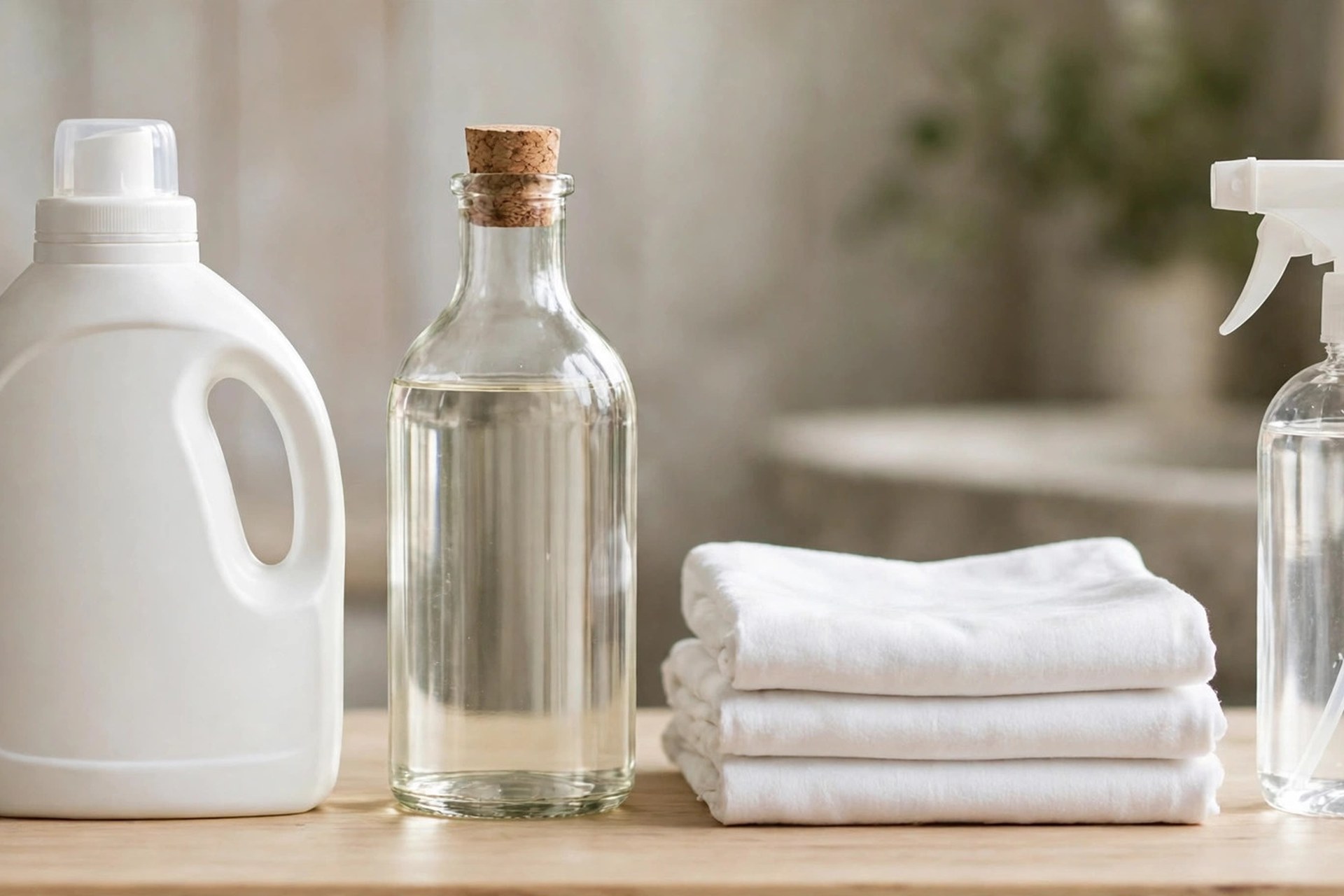
Chemical Solvents and Supplies for fabric Stain Removal
Quick and Easy Stain Removal Clothing & fabrics Fact Sheet Directory Stain Removal Care Labels Fashion Education Directory Apparel Research Fashion Schools Apparel Chemicals
Chemical Solvents and Supplies
Supplies needed for stain removal can usually be found in grocery, drug, general merchandise, or paint stores.
Many commercially available products have proprietary formulas that are protected by patent rights and not available to the public. Ingredients listed on labels for safety purposes can help you decide if the product will be useful for the stain removal task- you have to do. There is no miracle product that will remove all stains.
Detergents
- Heavy-duty liquid detergents (Era, Fab, Grease Relief, Tide, Wisk)
- Light-duty liquid detergents (Delicare, Ivory, Lux,Woolite)
- Powdered detergents (Amway, Cheer, Dash, Oxydol, Sears, Tide)
Bleaches
- Hydrogen peroxide
- Powdered all-fabricc bleaches (sodium perborate)(Biz, Borateem, Clorox 2; Purex, Snowy)
- Liquid all-fabric bleaches (Snowy, Vivid)
- Liquid chlorine bleach (sodium hypochlorite)(Clorox, Hi-lex,Purex)
- Liquid chlorine bleaches have a limited shelf-life. If your bleach is more than six months old and has no effect on stains, it may need to be replaced with fresh bleach.
- To test for colorfastness to liquid chlorine bleaches, mix I tablespoon of bleach with 1/4 cup of water. Use an eyedropper to put a drop of this solution on a hidden seam or pocket edge inside the garment. Let it stand two minutes, then blot dry. If there is no color change it is safe to use the product. Powdered bleach packages have directions for doing colorfastness tests.
Pretreatment Products
- Aerosol sprays-petroleum-based solvent (Clorox, Shout, Spray'n Wash)
- Pump-type sprays-- detergent based (Clorox, Shout, Spray'n Wash)
Absorbent Materials
- Clean white cloths
- Paper towels (white)
- Sponges (white or neutral colored)
- Caution: Colored sponges or paper towels can bleed dyes onto fabrics, making dye stains that may be difficult to remove.
Odor-reducing Agents
- Activated charcoal
- Calcium carbonate
- Soda
Stain Removal Chemicals
| Common name | Chemical | Brand Names |
|---|---|---|
| Alcohol (rubbing) | Isopropyl | - |
| Ammonia | ammonium hydroxide | Ajax, Bo Beep, Top Job |
| Color remover | sodium hydrosulfite | Rit, Tintex |
| Commercial stain removers* | isopropyl alcohol or other unspecified ingredients | Easy Wash, Tech, Whizz |
| Drycleaning fluid or petroleum-based pretreatment solvent | perchloroethylene, trichloroethylene petroleum distillates | Energine, Clorox Prewash, Shout, Spray n'Wash |
| Enzyme presoak products** | amylase, protease, lipase | Biz Bleach, Axion |
| Lemon juice and salt | citric acid and sodium chloride | - |
| Nail polish remover | acetone | - |
| Rust removers*** | hydrofluoric acid, oxalic acid | RoVer, Whink |
| Photo supply acid fixer | sodium thiosulfate | - |
| Turpentine | terpene | - |
| White vinegar | acetic acid | - |
* Limited testing on these products has shown them to be less effective than advertised.
**These must be used at body temperature for enzyme action to occur, Chlorine bleach and hot water inactivate enzymes.
***Do not use these products with chlorine or oxygen type bleaches.
Note: Some of these products may no longer be available; while new products have also been developed.
Special thanks to Iowa State University for allowing us to reproduce this information.
Reproduced with permission from the Cooperative Extension Service, Iowa State University, Ames, Iowa, 50011.
Prepared by: Janis Stone,
Textiles and Clothing Specialist,
Iowa State University
Build the Kit Before You Need It
Stain removal rewards preparation because timing is half the treatment. A basic kit assembled from this list — a dry solvent, a heavy-duty liquid detergent, chlorine and oxygen bleaches kept for the fabrics that allow them, ammonia, white vinegar, glycerin and clean white absorbent cloths — covers the great majority of household stains. White cloths are specified deliberately: a colored cloth can transfer dye into the stain area and add a second problem.
Proprietary Formulas Mean Label Reading
The sheet is candid that commercial spot removers are patented formulations whose exact contents are not published. Two products with similar names can behave differently on the same stain, so the working rules are to follow each product's own directions, test in a hidden place first, and never mix products — especially never bleach with ammonia or acids, a safety rule the series repeats wherever chemicals are listed.
Common Questions
Where can stain removal supplies be bought?
Most are ordinary grocery, drug, general merchandise or paint-store items — solvents, detergents, ammonia, vinegar, glycerin and bleaches are all standard household stock.
Why white cloths for stain work?
A colored or printed cloth can bleed dye into the wet stain area. Clean white cloths and paper show the stain transferring out and add no color of their own.
Can stain removal products be mixed for stubborn stains?
No — never mix products, and never combine bleach with ammonia or acidic cleaners. Use one product at a time, exactly as its label directs.