Spot Treatment Technique (Sponging) for Apparel Fabrics
An extension fact sheet on confining a stain to a small area and lifting it out by sponging
A spot treatment confines a stain to a small area and keeps it from spreading — the method often called sponging. It needs absorbent material such as clean rags or paper towels, plus a drycleaning solvent, spot remover or aerosol pretreatment spray. The stained area goes face-down over a padded surface, a small white cloth dampened with solvent pats the stain from the wrong side, and the edges are feathered from the outside toward the center so the stained area does not grow. As the stain transfers to the absorbent material beneath, that material is moved so the stain always has a clean place to exit into, and the garment is laundered afterward to remove any ring the solvent might leave.
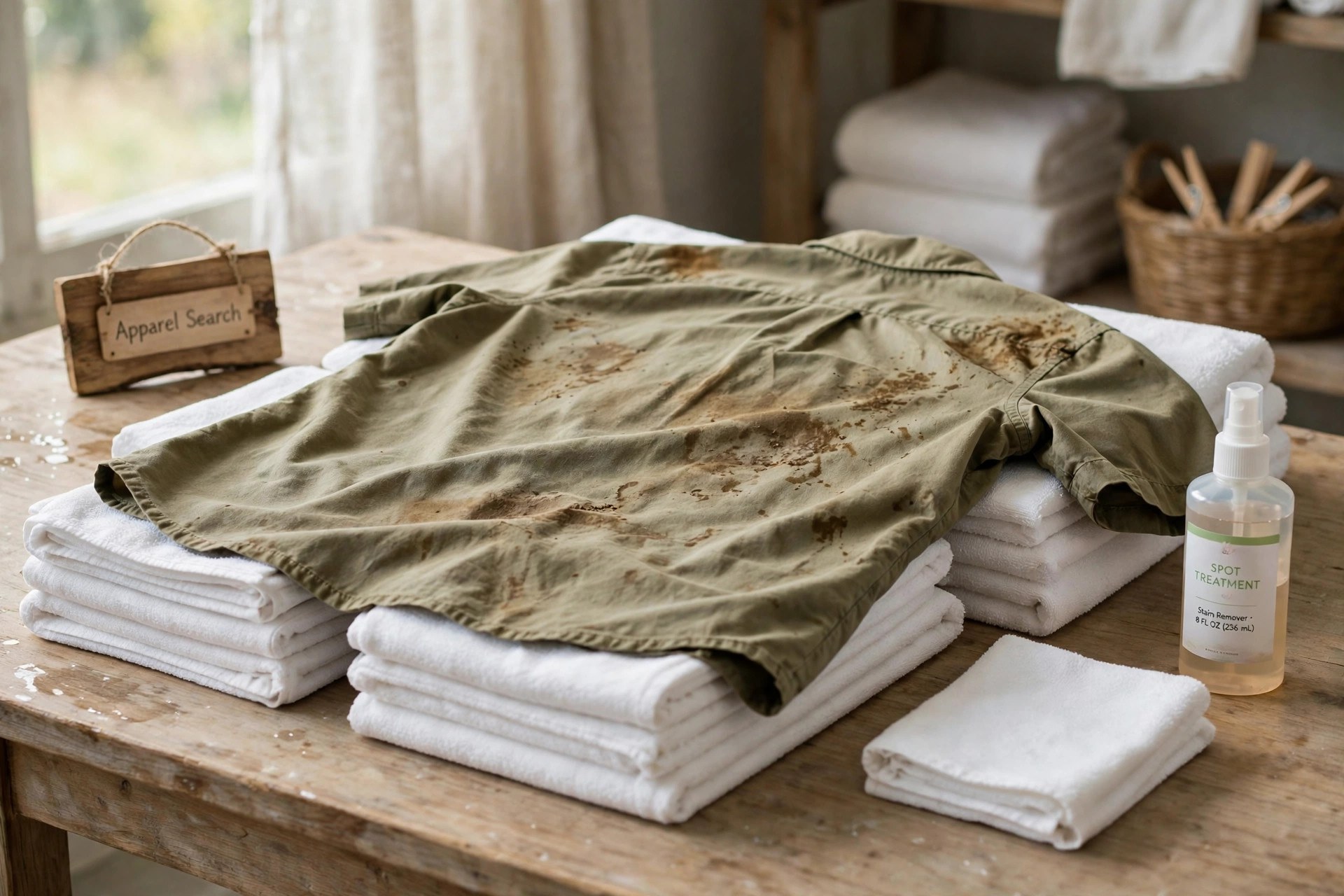
Spot Treatment Technique (Sponging) for Apparel fabrics
Quick and Easy Stain Removal Clothing & fabrics Fact Sheet Directory Stain Removal Care Labels Fashion Education Directory Apparel Research Fashion Schools Apparel
Spot Treatment Technique (Sponging) for Apparel fabrics
A spot treatment confines the stain to a small area and keeps it from spreading. This method is sometimes called "sponging." For spot treatment you need a supply of absorbent material such as, clean rags or paper towels, and a drycleaning solvent, spot remover, or aerosol pretreatment spray.
Follow these steps:
- Pad the working surface with clean rags or paper towels that can be stained as you work.
- Place the stained area or spot on the garment face-down over the padded surface.
- Dampen a small white cloth with solvent.
- Use the dampened cloth to pat the stain from the wrong side. Feather the edges of the stain working from the outside toward the center to keep the stained area from getting larger.
- As the stain transfers to the absorbent material beneath, move it to a different place on the absorbent material so the stain has a clean place to exit into.
- Repeat this procedure until all traces of stain are gone. Launder to remove any ring that might be left by the solvent.
Special thanks to Iowa State University for allowing us to reproduce this information.
Reproduced with permission from the Cooperative Extension Service, Iowa State University, Ames, Iowa, 50011.
Prepared by: Janis Stone,
Textiles and Clothing Specialist,
Iowa State University
Why the Stain Faces Down
Placement is the whole logic of sponging. With the stained face against clean absorbent padding and the treatment applied from the wrong side, loosened soil has only a short path out of the fabric — straight into the padding. Treating from the face would drive the same soil through the full thickness of the cloth, spreading it on the way and making a larger, fainter stain that is harder to finish. The padding is not passive, either: it must be moved as it picks up color, because padding that is already loaded with stain can redeposit soil as fast as the solvent lifts it. A clean exit surface for every pass is what turns repeated patting into steady progress.
Feathering and the Solvent Ring
Feathering — working from the outside of the stained area toward the center — keeps the wet edge of the treatment from becoming a new boundary line. Solvents and pretreatment sprays dissolve finishes and soil unevenly, and a hard wet-to-dry edge can leave a ring that survives the stain itself. Feathering softens that edge, and the final laundering step in the procedure exists for the same reason: it removes the solvent residue and any ring it might leave. White cloths matter throughout, because a colored cloth can transfer dye under solvent, and a dirty cloth simply moves one stain while removing another.
Where Sponging Fits Among the Methods
Sponging is the controlled, small-area method in the stain-removal series. It suits individual spots on garments that should not be soaked whole, stains on the wrong side that can be reached directly, and treatments involving drycleaning solvent or pretreatment products that are applied locally rather than in a wash load. It pairs with the general procedures for washable fabrics — blot first, identify the stain and fabric, test for colorfastness in a hidden place — and with the specific sheets for stain classes that need more than a solvent pat, such as protein, tannin or combination stains. Used patiently, with the padding shifted and the edges feathered, it removes the stain without enlarging the problem it started with.
Common Questions
What does sponging mean in stain removal?
Sponging is spot treatment: the stain is confined to a small area, placed face-down over absorbent padding, and patted from the wrong side with a cloth dampened with solvent so the soil transfers into the padding.
Why are the edges of the stain feathered?
Feathering — working from the outside toward the center — keeps the treated area from getting larger and softens the wet edge so the solvent is less likely to leave a ring.
What is done after sponging is finished?
The garment is laundered to remove any ring the solvent might have left, after repeating the sponging until all traces of the stain are gone.