Follow These Safety Precautions
Rules for using stain-removal chemicals, bleaches and solvents safely at home
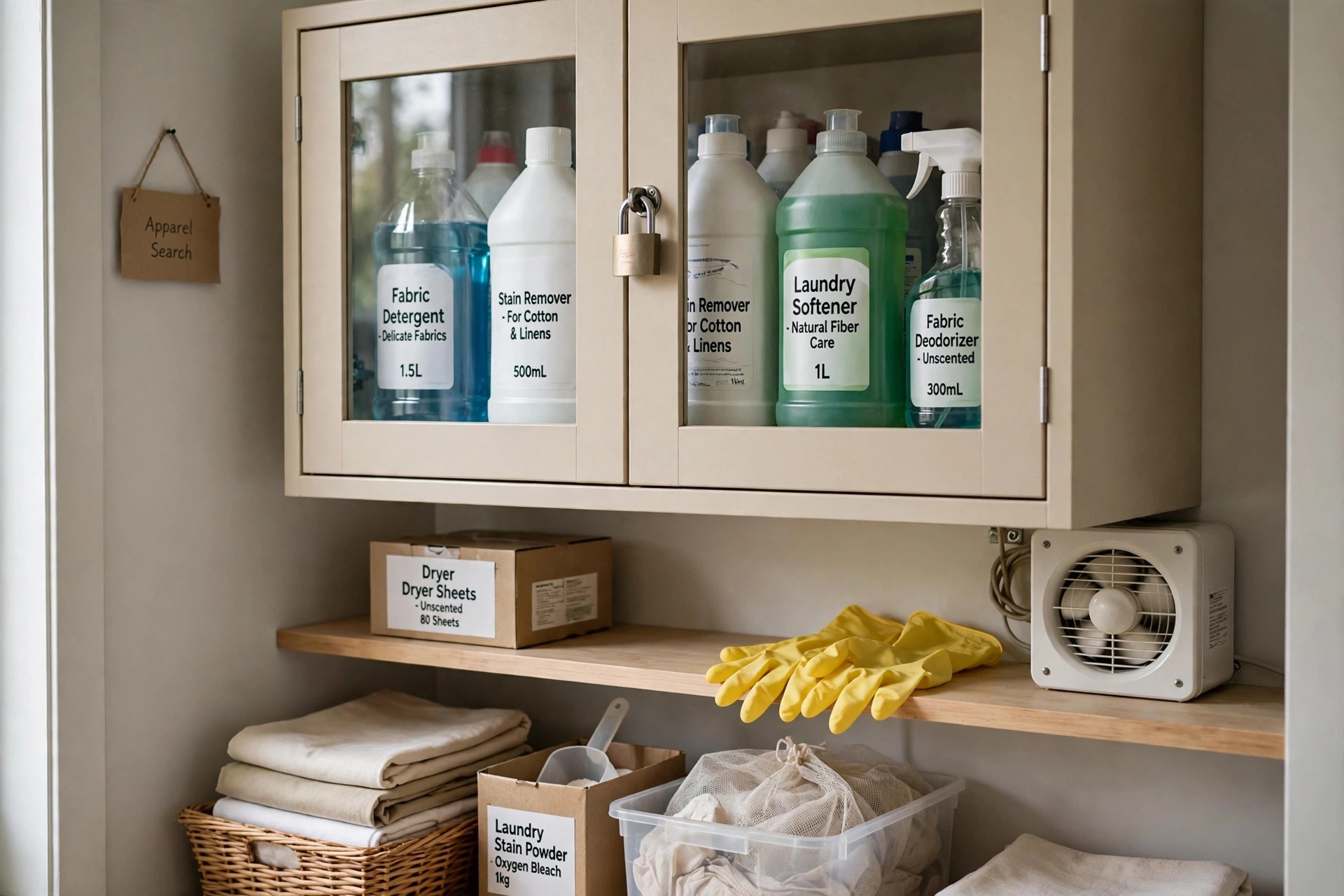
While many stain removal chemicals and bleaches are commonly used around the home, they are still dangerous — some flammable, others toxic. This sheet of the Ohio series states the household rules plainly: store stain removal materials out of children's reach, work with ventilation, keep solvents away from flame and pilot lights, never mix products (above all, never bleach with ammonia or acids), keep chemicals in their labeled original containers, and protect skin and eyes during treatment. These precautions precede every procedure in the series, because the method is only safe inside them.
Follow These Safety Precautions When Using Stain Removal Chemicals
Quick and Easy Stain Removal Clothing & fabrics Fact Sheet Directory Stain Removal Care Labels Fashion Education Directory Apparel Research Fashion Schools Apparel
Follow These Safety Precautions
While many stain removal, chemicals and bleaches are commonly used around the home, they are still dangerous. Some are flammable; others are toxic. Here are some rules to keep in mind regarding their use:
- Store stain removal materials out of the reach of children. Do not store with food products.
- Read all label directions and warnings. Store chemicals in their original containers so label directions are available in case of an accident.
- Use all chemicals and commercial stain removal product according to label recommendations.
- Avoid getting the chemicals on your skin. Some are easily absorbed.
- Use drycleaning solvents and other chemicals in a well-ventilated room. Toxic fumes can cause illness.
- Do not use solvents near an open flame or electrical outlet.
- Seal containers so that fumes can't escape.
- Never mix stain removal materials together (bleach and ammonia together form toxic fumes).
Special thanks to Iowa State University for allowing us to reproduce this information.
Reproduced with permission from the Cooperative Extension Service, Iowa State University, Ames, Iowa, 50011.
Prepared by: Janis Stone,
Textiles and Clothing Specialist,
Iowa State University
Storage Is the First Safety Step
Most home chemical accidents happen away from the sink, in storage: a solvent decanted into a drink bottle, a bleach within a child's reach, a flammable product beside a water heater's pilot light. The sheet's rules — original labeled containers only, high or locked storage away from children and pets, flammables kept from heat and flame — remove those accidents before any stain is treated. Labels also carry the first-aid information an emergency needs, which an unlabeled bottle cannot provide.
Never Mix: the Rule With No Exceptions
Mixing bleach with ammonia or with acidic cleaners releases gases that can injure lungs in seconds, and mixing solvents can create reactions no label predicts. Stain treatment sometimes uses two products in sequence — but sequence means rinsing thoroughly between them, never combining them in one container or on one cloth. If a treatment is not working, the series' answer is a different method after a full rinse, not a stronger mixture.
Common Questions
What is the most dangerous mistake in stain removal?
Mixing chemicals — especially bleach with ammonia or acids, which releases toxic gas. Products are used one at a time, with rinsing between them.
How should stain chemicals be stored?
In their original labeled containers, out of children's reach, with flammable solvents away from flames, heaters and pilot lights.
Why keep products in original containers?
The label carries the product's identity, directions and first-aid information — a decanted, unlabeled bottle defeats all three in an emergency.