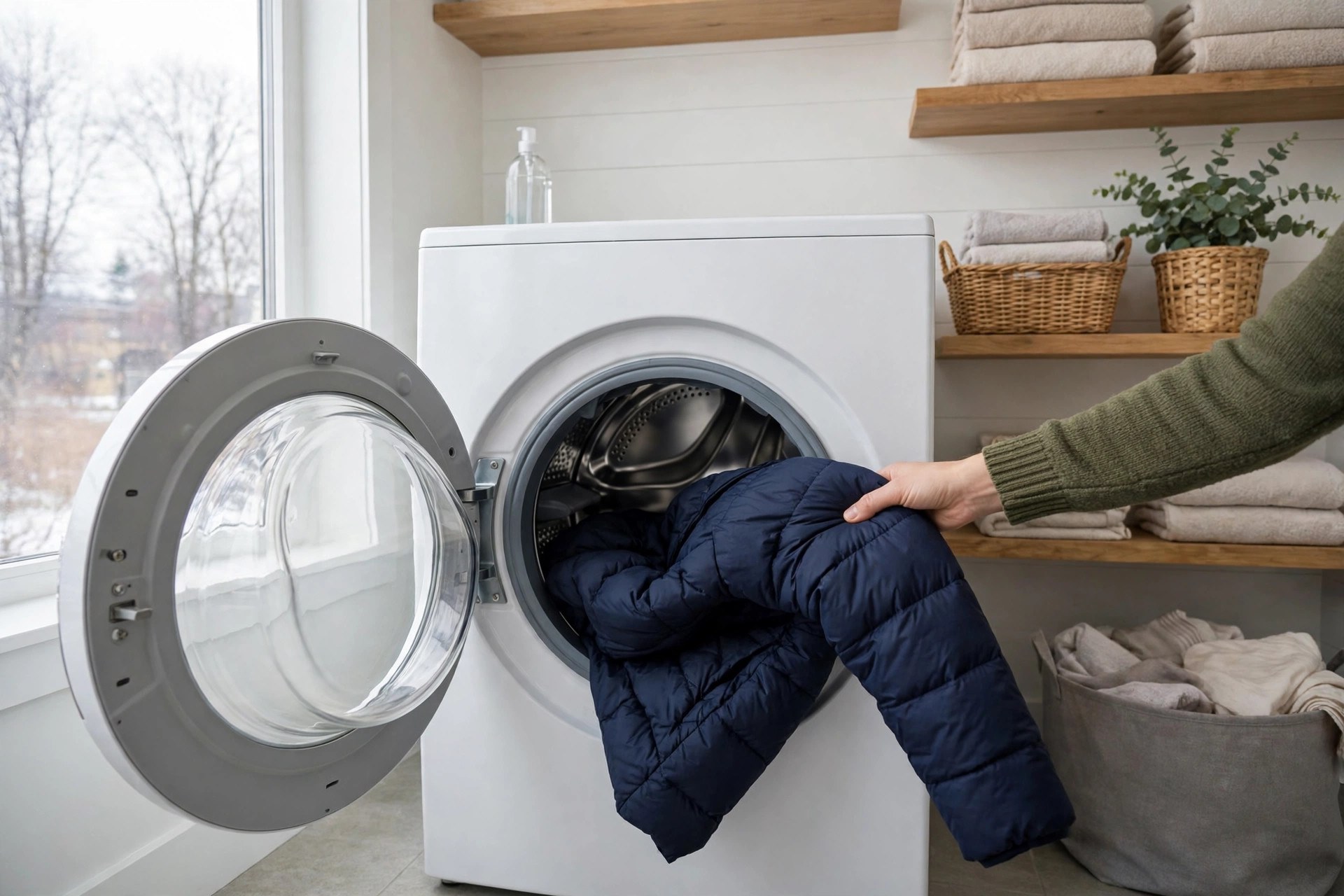
Washing a down coat frightens people because wet down looks ruined: the fill clumps, the coat hangs flat and heavy, and it seems impossible it will puff up again. It will — loft is restored in the dryer, not the wash. The method that works: a large front-loading machine (a top-loader's agitator can tear the baffles that hold the down), warm water on a gentle cycle, a detergent made for down, an extra rinse, and then a long, low tumble dry with clean tennis balls or dryer balls to break up clumps. Always start with the care label, and if the coat is oversized or you cannot dry it thoroughly, a professional wash is the safer route.
The Wash
Empty the pockets, close zips and fasteners, and turn the coat as the label directs. Pre-treat collar and cuff soil — the areas that pick up skin oils — with a little of the down wash worked in gently. Use a front-loading machine with room for the coat to move; a cramped drum cleans poorly and stresses seams. Wash on a gentle cycle with warm water and a measured dose of down-specific detergent: regular detergents and fabric softeners can strip the natural oils from down clusters and coat synthetic fills, reducing loft, and bleach should never be used. Run an extra rinse — leftover detergent in the fill is a common cause of a coat that never quite puffs back.
Before drying, lift the coat supporting its weight — wet down is heavy — and do not wring it. A gentle extra spin in the machine is fine and shortens drying. Understanding what you are reviving helps: loft is trapped air between down clusters, which is exactly what fill power measures, and synthetic fills follow the same washing logic with the differences noted in synthetic insulation.
Drying: Where the Loft Comes Back
Tumble dry on low heat with two or three clean tennis balls or wool dryer balls. The balls pummel the clumps apart as the fill dries — without them, down dries in lumps. Expect it to take two hours or more; stop the dryer periodically, take the coat out, and gently break up remaining clumps by hand, shaking the coat to redistribute fill. The coat is done only when it feels completely dry and light — trapped moisture invites mildew and odor, and a coat stored damp loses loft and gains a smell that is hard to remove.
Store the clean coat hanging or loosely in a large breathable bag, never compressed in its stuff sack for the season: long compression crushes clusters and costs loft. If your machine at home is small, the coat is bulky, or the label says professional care, use a laundry service with down experience — the wash is inexpensive compared with the coat. Mid-season, spot-clean splashes and air the coat after wear so a full wash is needed only once or twice a year.
Common Questions
- Can I wash a down coat in a top-loading machine?
- It is risky. The central agitator can tear the internal baffles that keep down in place, and the coat can wrap and strain seams. A large front-loader is strongly preferred; if you only have a top-loader without an agitator (an impeller model), use the gentlest cycle — or take the coat to a laundromat's big front-loader.
- Why does my down coat look flat after washing?
- Wet down clumps and loses all its loft — that is normal and temporary. Loft returns in the tumble dryer: dry low and long with dryer balls, stopping to break up clumps by hand, until the coat is completely dry and puffy again.
- What detergent should I use on down?
- A wash made specifically for down (or for technical insulated gear). Regular detergent can strip the natural oils that let down clusters loft, fabric softener coats the fill, and bleach damages it. An extra rinse cycle helps clear all residue from the fill.
- How long does a down coat take to dry?
- Often two to three hours on low heat, depending on the coat's fill weight. Do not shortcut it: a coat that feels dry on the shell can still hold moisture deep in the fill, and storing it damp causes mildew and odor.
Garment Care & Clothing Storage Guides
This page is part of the Apparel Search garment care series — practical guides to washing, finishing, and storing the clothes you own. Browse the full series below.