Men's Down Jackets Guide
Men's down jackets are hip-length insulated jackets filled with down - the puffer in its original, technical sense. If the down coat in this letter is built for standing in winter, the jacket is built for moving in it: lighter, shorter, layerable, and the backbone of every cold-climate system from the commute to the mountain. It is also the most over-specified and under-examined purchase in winter clothing, sold by a single number (fill power) that explains less than half of what will keep you warm.
Shop Men's Down Jackets Now
Shop Men's Down Jackets on Amazon Shop Men's Down Jackets on eBayThe Amazon and eBay links on this page are affiliate links. If you make a purchase through them, Apparel Search may earn a commission.
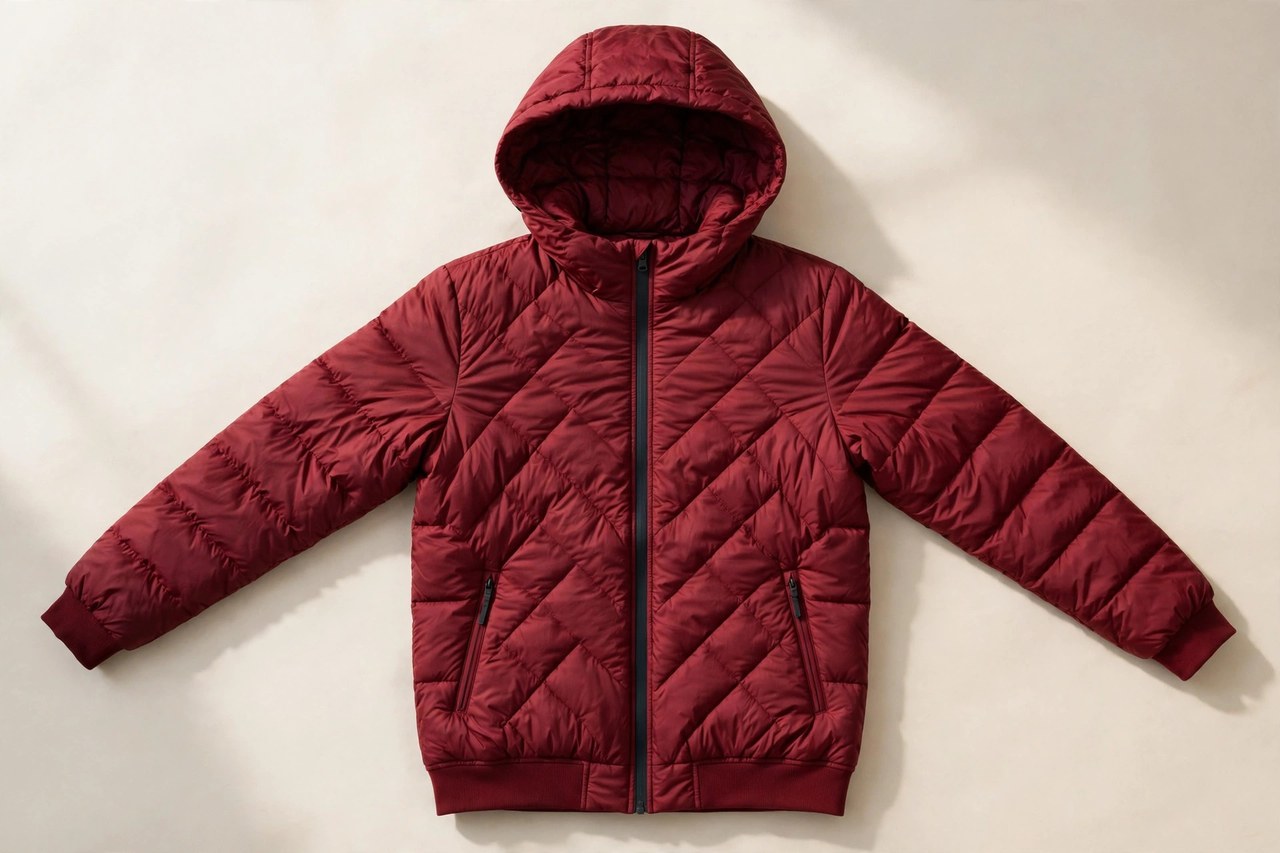
Men's down jackets are hip-length insulated jackets filled with down - the puffer in its original, technical sense. If the down coat in this letter is built for standing in winter, the jacket is built for moving in it: lighter, shorter, layerable, and the backbone of every cold-climate system from the commute to the mountain. It is also the most over-specified and under-examined purchase in winter clothing, sold by a single number (fill power) that explains less than half of what will keep you warm. This guide covers the styles worth knowing, the fit points that decide comfort, the fabrics and construction that separate a good buy from a regret, and the simple care that makes the garment last.
Styles and Construction
The specification is a product of two numbers: fill power (loft per ounce, 550-900+) times fill weight (ounces inside). A high fill power with a low fill weight makes an ultralight layer for mild cold and under-shell use; moderate fill power in quantity makes the warm standalone jacket. Baffles express the intent: narrow sewn-through baffles mean a layering piece, wide box baffles mean a belay-grade parka in jacket length. Shells divide by mission too - featherweight matte nylons for travel and layering, robust proofed shells for the jacket that is the outer layer. Synthetic-filled jackets imitate the category with less loft and better wet performance, at lower prices.
Outerwear value hides below the surface: taped versus merely stitched seams, a zipper whose slider runs true under one hand, cuffs and hems that adjust to seal weather out, and a lining slippery enough to glide over the layers beneath. Shoulder build decides the hang over knitwear or a jacket, and pocket engineering decides whether hands and kit ride where your body expects them. Specify for the worst honest day, not the brochure day.
Fit and Sizing
Fit a down jacket by its intended layer: a layering piece should sit close over a base layer and vanish under a shell; a standalone should close over a sweater without compressing the loft flat - pinched down is spent down. The hem should seal at the hip with a drawcord, sleeves should cover the wrist with arms forward, and the collar should close to the chin without a scarf's help. Try it seated, because jackets ride up: the test of a winter jacket is a bus stop and a car seat, not a mirror.
Fit outerwear over the bulkiest layer it will honestly cover, and test the working range: arms forward as if driving, arms overhead, sitting with every closure fastened. The coat's shoulders should echo yours rather than extend past them, closures should meet without strain, and the hem must reach the coverage the garment exists to give. A coat fitted over a T-shirt alone belongs to a climate you may not live in.
Wearing and Care
Treat down jackets as loft equipment: store them hanging loose, never compressed (the travel stuff-sack is for the trip, not the closet), wash with down detergent when the shell's grime begins to defeat its water resistance, and tumble dry low with dryer balls until the baffles plume fully - a jacket dried halfway is a lumpy, cold jacket. Reproof the shell's water-resistant finish when droplets stop beading. Small shell tears get patched immediately; down escapes by the cluster through a hole you can barely see.
Hang outerwear on broad hangers that carry the shoulders, rest it between wears, and resist washing it often - spot-clean first, and wash by the maker's method with the detergent the fabric demands when a full clean is due. Refresh water-repellent finishes when rain stops beading, never store a coat dirty or compressed, and send leather and tailored pieces to professionals rather than experimenting at home.
Common Questions
Is fill power or fill weight more important?
Warmth is their product, so neither wins alone - but if a listing gives you only one number, treat it as marketing. Fill power tells you the down's quality (loft per ounce); fill weight tells you how much of it you bought. A 900-fill jacket with 2 ounces inside is a layering piece; a 650-fill jacket with 6 ounces is a deep-winter piece. For a single standalone winter jacket for most climates, look for roughly 550-700 fill power in a generous fill weight, in box or generous baffles.
Down or synthetic insulation - which is better?
Down wins on warmth per gram, compressibility and lifespan - a cared-for down jacket serves a decade or more. Synthetic wins on price, on warmth while wet (down collapses when soaked; synthetics retain structure), and on easy laundering. The honest split: dry cold and weight-sensitive use argue down; wet climates, work abuse and tight budgets argue synthetic. Many working wardrobes own both: the synthetic for the wet months, the down for the cold, dry heart of winter.
Why does my down jacket leak feathers?
Some migration is normal - down clusters carry fine quills that work through shell weave, especially at seams, in a garment's early life. Stem it by pulling the feather back from inside the garment rather than out (pulling enlarges the hole and invites followers). Persistent heavy leaking means the shell is not properly down-proof or is wearing thin - a construction flaw in a new jacket, a retirement signal in an old one. Keep baffles' seams as the inspection points at each season's start.
More in Men's Clothes Guide D
Coat or Jacket?
The standing reference on the difference between coats and jackets organizes the down pair in this letter. The short version: the jacket is cut for movement and layering, the coat for coverage; in down, that difference is measured in inches of insulated thigh.
Looking for Men's Clothing Stores?
This guide explains men's down jackets. To browse where to buy, visit our men's clothing store directory, where you can find retailers that carry them.