Men's Down Coats Guide
Men's down coats are full-length insulated coats filled with down - the soft under-plumage of ducks and geese whose clusters trap air in a three-dimensional loft no fiber matches for warmth per gram. Where the down jacket stops at the hip, the down coat continues to the knee or beyond, wrapping the thighs in the same insulation, and that coverage is the entire point: a coat is the garment for standing in real winter - platforms, sidelines, dog walks in January - rather than moving through it. Three references matter here: the down definition, the coats-versus-jackets distinction, and the Responsible Down Standard.
Shop Men's Down Coats Now
Shop Men's Down Coats on Amazon Shop Men's Down Coats on eBayThe Amazon and eBay links on this page are affiliate links. If you make a purchase through them, Apparel Search may earn a commission.
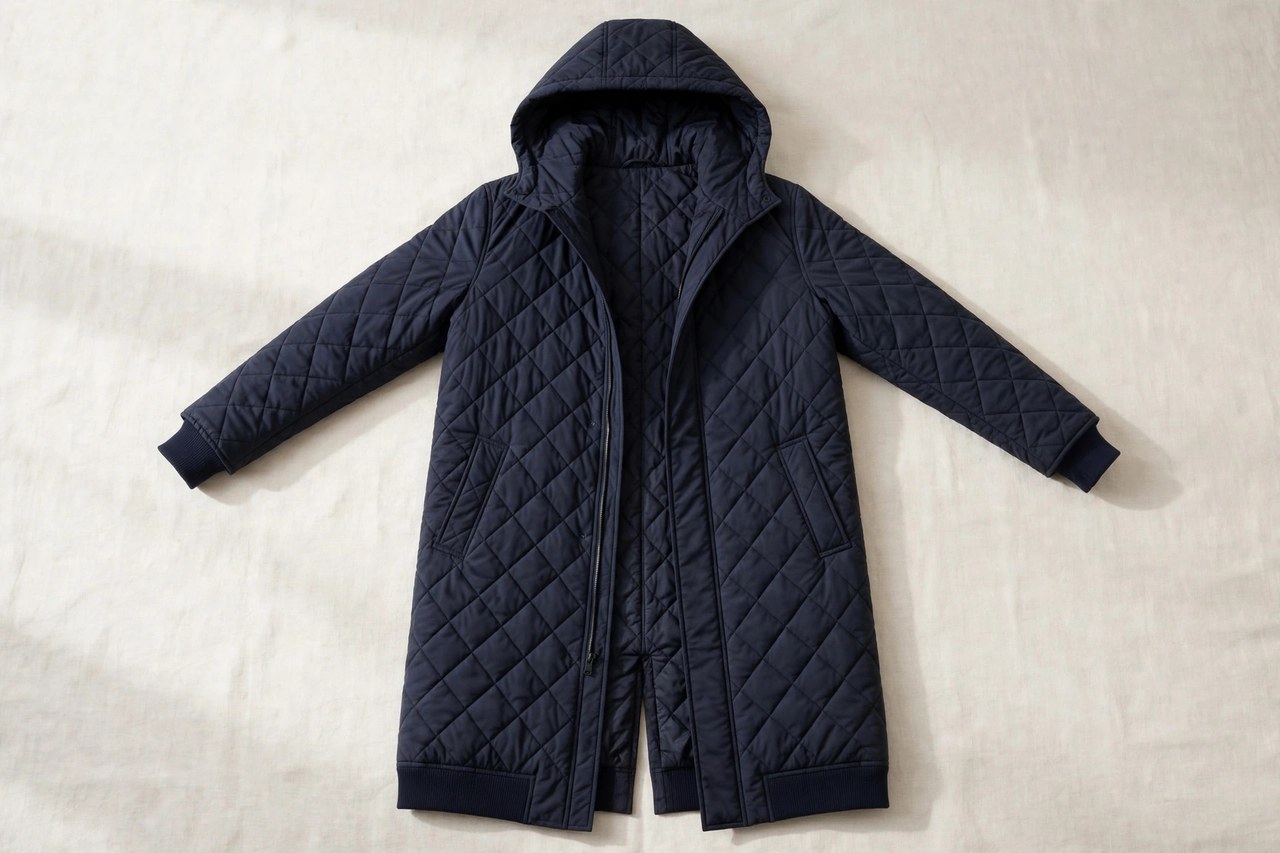
Men's down coats are full-length insulated coats filled with down - the soft under-plumage of ducks and geese whose clusters trap air in a three-dimensional loft no fiber matches for warmth per gram. Where the down jacket stops at the hip, the down coat continues to the knee or beyond, wrapping the thighs in the same insulation, and that coverage is the entire point: a coat is the garment for standing in real winter - platforms, sidelines, dog walks in January - rather than moving through it. Three references matter here: the down definition, the coats-versus-jackets distinction, and the Responsible Down Standard. This guide is built around the questions buyers actually ask: which style, which size, which fabric, and what will it look like after a year of real use - answered in order, with the trade-offs stated plainly.
Styles and Construction
Judge a down coat by its two numbers and its shell. Fill power (550 to 900+) rates the down's loft per ounce - higher fill power means the same warmth at less weight and bulk. Fill weight is the other half: how many ounces of that down are actually inside, which listings state less eagerly and which decides real warmth. The shell must be down-proof (tightly woven or calendared, or feathers will migrate through it), windproof, and ideally water-resistant, because wet down collapses into cold clumps. Baffle construction matters at this length: sewn-through baffles are light but carry cold spots at every seam; box baffles hold more loft for deep winter.
Outerwear value hides below the surface: taped versus merely stitched seams, a zipper whose slider runs true under one hand, cuffs and hems that adjust to seal weather out, and a lining slippery enough to glide over the layers beneath. Shoulder build decides the hang over knitwear or a jacket, and pocket engineering decides whether hands and kit ride where your body expects them. Specify for the worst honest day, not the brochure day.
Fit and Sizing
Fit a down coat over the layers it will honestly cover, and test standing stillness as well as motion: seated on a bench with the two-way zip closed (a coat you cannot sit in is a coat mis-sized or mis-zipped), arms forward, hood up over a hat. Length is the specification - mid-thigh for mobility, knee for maximum standing warmth. The coat should not compress its own loft when fastened: insulation works by thickness, and a coat zipped tight against the body has already spent some of the warmth you bought.
Fit outerwear over the bulkiest layer it will honestly cover, and test the working range: arms forward as if driving, arms overhead, sitting with every closure fastened. The coat's shoulders should echo yours rather than extend past them, closures should meet without strain, and the hem must reach the coverage the garment exists to give. A coat fitted over a T-shirt alone belongs to a climate you may not live in.
Wearing and Care
Down care is loft care. Store the coat uncompressed on a broad hanger or in a large breathable bag - months in a stuff sack crush cluster structure. Wash rarely, with down-specific detergent, in a large machine, and dry low and long with clean dryer balls until the clusters separate and loft returns - damp clumps mean it is not done. Feather leaks are stemmed by drawing the quill back from inside, never pulling it out. Ethically, look for the Responsible Down Standard or traceability claims on the label: that standard is now the industry's baseline expectation.
Hang outerwear on broad hangers that carry the shoulders, rest it between wears, and resist washing it often - spot-clean first, and wash by the maker's method with the detergent the fabric demands when a full clean is due. Refresh water-repellent finishes when rain stops beading, never store a coat dirty or compressed, and send leather and tailored pieces to professionals rather than experimenting at home.
Common Questions
What fill power should a down coat have?
For a coat meant for standing in deep winter, 650-750 fill power in generous quantity is the value center: real loft, reasonable price. 800+ fill power earns its premium where weight and packability matter - travel, long walks - because it matches warmth with less down. Below 550, a coat must carry so much fill to compensate that it becomes heavy and bulky. And always ask the second question - fill weight: a thin fill of 800-power down is a cool coat wearing a warm number.
What is the difference between a down coat and a down jacket?
Length, and therefore assignment. A jacket ends at the hip or waist and is built for movement - walking, working, layering under shells. A coat extends to mid-thigh or the knee, trading step length for coverage of the thighs, which is where standing cold is felt most. Our site's own coats-versus-jackets reference makes the general distinction; for down specifically: choose the jacket to go, the coat to stay - platforms, queues, sidelines and static cold belong to the coat.
What is the Responsible Down Standard?
The RDS is an independent certification that traces down from farm to finished garment, prohibiting live-plucking and force-feeding and requiring animal-welfare standards through the supply chain. It matters because down is an animal product whose sourcing was historically opaque. A coat labeled RDS-certified (or the newer global recycled/traceability equivalents) has had its down audited; the certification is now common enough that its absence on a premium coat is a question worth asking.
More in Men's Clothes Guide D
Down, Defined and Certified
This subject needs a reference shelf: the definition of down itself, the answer on the difference between coats and jackets, guidance on selecting insulated garments, down feather suppliers, and the Responsible Down Standard — the certification that traces the fill ethically from farm to coat.
More to Explore on Apparel Search
- Men's Coats
- selecting insulated vests and jackets
- the difference between coats and jackets
- down fashion
- Fashion Designer Directory
- Men's Clothes Guide H-P
- Men's Clothes Guide Q-Z
- Fashion
- Clothing Retail Stores
- Fashion News
- Fashion Designers
- Popular Brands
- Men's Clothing Stores
- Men's Clothing Wholesalers
- Men's Fashion
Looking for Men's Clothing Stores?
This guide explains men's down coats. To browse where to buy, visit our men's clothing store directory, where you can find retailers that carry them.