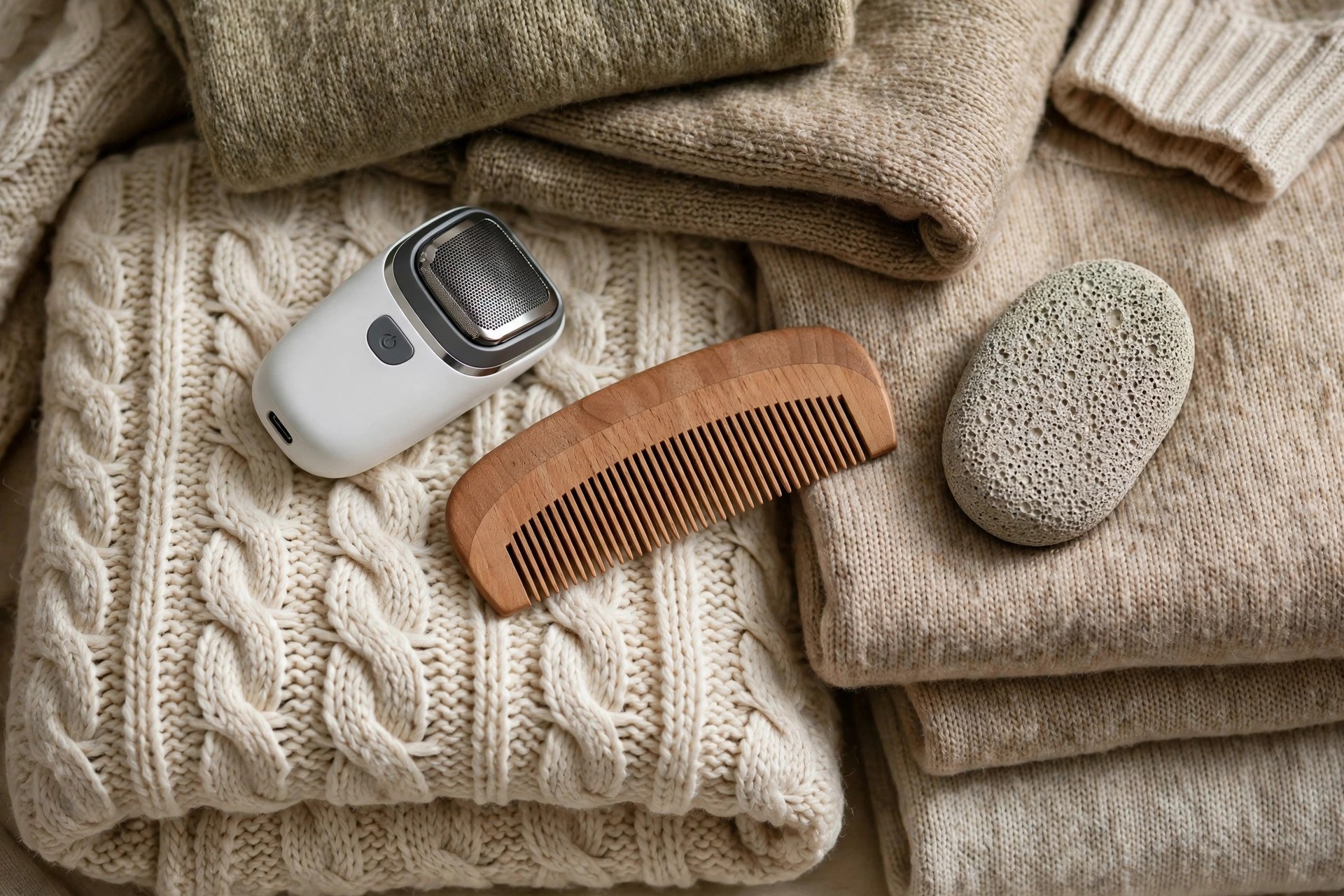
Fabric shavers, sweater combs, and sweater stones are the three classic tools for removing pilling, and each works differently. An electric fabric shaver trims pills off at the surface with rotating blades behind a perforated foil. A sweater comb catches and pulls pills away with a fine metal mesh edge. A sweater stone — a block of natural or manufactured pumice — snags pills off heavier fabrics as it is dragged across them. Choosing well matters: the shaver that refreshes a wool coat in minutes can be too aggressive for a fine cashmere knit, where a comb is the traditional tool. All three are inexpensive and, used lightly, safe.
The Three Tools Compared
Electric fabric shaver. The fastest and most versatile option. The foil head holds the fabric flat while blades shear pills at surface level, and a chamber collects the lint. Best for wool sweaters, coats, upholstery-weight knits, and larger areas. Look for an adjustable or fine foil head for delicate knits, and empty the chamber often. Sweater comb. A small hand tool with a mesh or fine-toothed edge, used in short strokes in one direction. It is the classic choice for cashmere and fine-gauge knits because there is no motor and no blade pressure — control is entirely in your hand. Slower than a shaver, but the safest on the finest fabrics.
Sweater stone. A pumice block whose rough surface catches pills and pulls them free. Best on sturdy, heavier knits, fleece, and sweatshirts; too grippy for fine or loosely woven fabrics, and it sheds a little pumice dust as it works, so use it over a surface you can shake out. For technique — flat surface, light pressure, working away from seams — see how to remove pilling.
Matching the Tool to the Fabric
Fine cashmere and lightweight merino: reach for the comb first, or a shaver on its finest setting with the lightest touch. Everyday wool and cotton knits: any of the three works; the shaver is quickest. Heavy knits, fleece, and sweatshirts: the stone or shaver. Avoid all three on very loose weaves, open lace, sequins or embellishment, and anything whose yarns snag to the touch — pills on those are better left, or handled by a professional cleaner. On cashmere, remember that early pilling is normal and declines; you are maintaining the surface, not fighting a defect.
Whichever tool you choose, work on a hard flat surface in good light, keep the fabric smooth and gently taut, and check progress often — stop as soon as the surface looks clean, since overworking any area thins it. Replace or clean shaver blades that pull rather than cut, and brush combs and stones clean so they grip pills, not lint.
Common Questions
- Are electric fabric shavers safe on cashmere?
- They can be, on a fine setting with a very light touch and the garment laid flat — but a sweater comb is the safer traditional choice for cashmere and other fine knits, because there is no blade or motor pressure involved.
- How is a sweater stone different from a comb?
- A stone is a rough pumice block that snags pills off as it is dragged across the fabric — best for sturdy knits and fleece. A comb has a fine mesh edge that catches pills in short strokes and is gentle enough for fine-gauge sweaters.
- How often should I de-pill a sweater?
- Whenever pills become visible — typically a few times a season for a sweater in regular rotation. A few light minutes early is better than an aggressive session on matted pills later.
- Can these tools fix a badly pilled sweater?
- They can restore the surface of most pilled knits, even heavily pilled ones, with patience. What they cannot fix is thinning, holes, or felting — if the fabric itself has worn thin, de-pilling will only make that more visible.
Garment Care & Clothing Storage Guides
This page is part of the Apparel Search garment care series — practical guides to washing, finishing, and storing the clothes you own. Browse the full series below.