Women's Knit Sweaters Guide
The sweater is the knit most women reach for first: a warm, flexible layer in crew, V-neck and turtleneck forms, where fiber and gauge decide how much cold it can actually handle.
Shop Women's Knit Sweaters Now
Shop Women's Knit Sweaters on Amazon Shop Women's Knit Sweaters on eBayThe Amazon and eBay links on this page are affiliate links. If you make a purchase through them, Apparel Search may earn a commission.
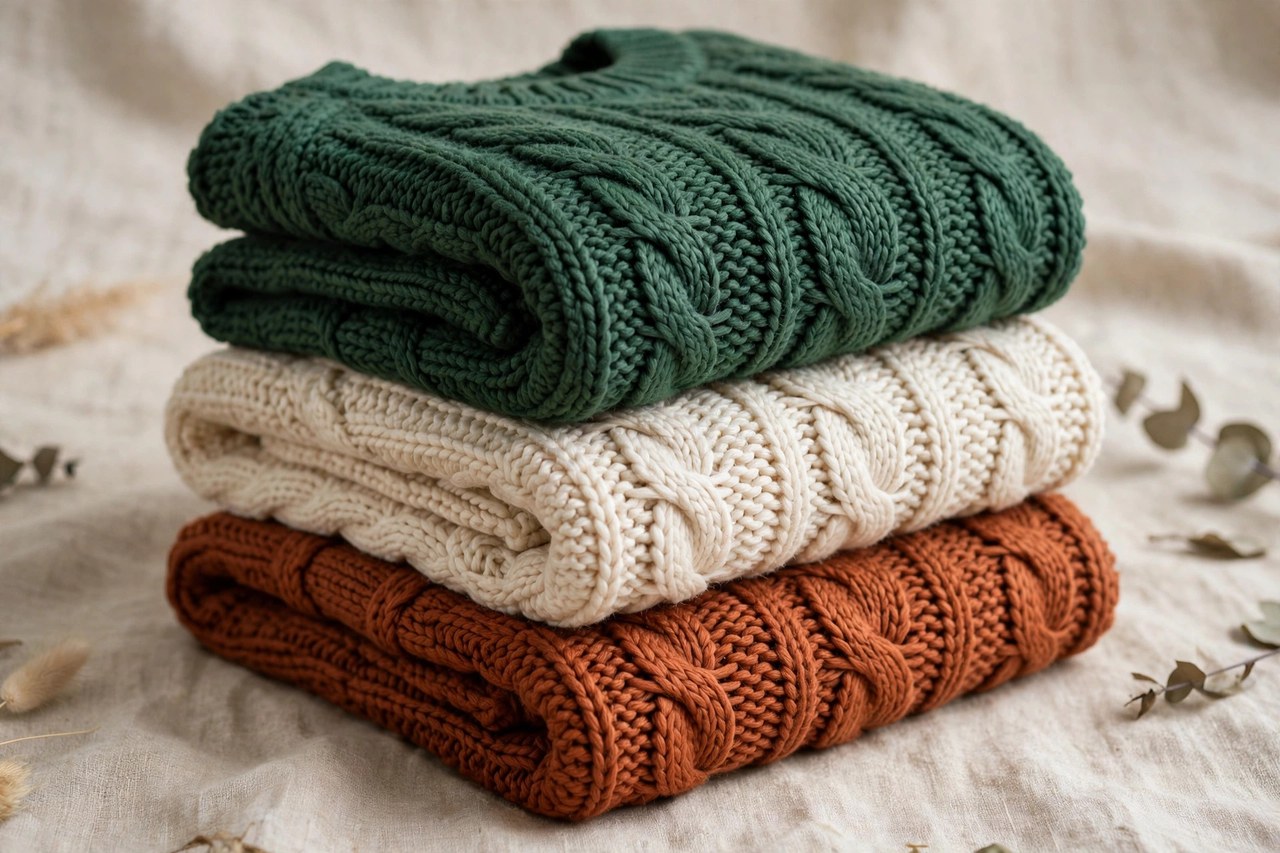
A knit sweater is a warm upper-body garment made by looping yarn into a fabric that stretches, recovers and traps air between its stitches. That trapped air is the whole point. Unlike a woven jacket, which blocks wind at the surface, a sweater insulates by holding still air close to the body, so two sweaters of the same weight can feel very different depending on how lofty the yarn is and how openly it is knitted. This guide covers knit sweaters as a category: the main shapes, the fibers, and how to judge warmth before you buy.
The family divides first by how it goes on. A pullover slips over the head and presents one clean front, which makes it the natural partner for collared shirts and scarves. A cardigan opens down the front with buttons, a zipper or no fastening at all, and works more like a soft jacket that can be shrugged off indoors. Both belong in a working wardrobe, because they solve different problems: the pullover for uninterrupted warmth, the cardigan for changeable temperatures and layered outfits.
Necklines, Silhouettes and Sleeves
The crew neck sits high and round at the base of the throat, frames the face neatly and layers cleanly over a shirt collar or under a coat. The V-neck opens the chest, lengthens the line of the neck and leaves room for a blouse, a camisole or a necklace to show. The turtleneck folds or stands up around the neck and removes the need for a scarf on all but the coldest days, while its close cousin the mock neck stops halfway and suits women who find a full roll too warm or too high.
Silhouette runs from fitted, fine-knit sweaters that follow the body and tuck into skirts, through classic straight shapes, to relaxed and oversized knits worn over leggings and slim trousers. Sleeves matter more than most shoppers expect: set-in sleeves read tailored, raglan sleeves read sporty and comfortable across the shoulder, and drop shoulders create the soft, slouchy outline of a weekend sweater. Check where the shoulder seam falls and whether the cuff stays at the wrist when you reach forward, because a sweater that rides up will annoy you every time you wear it.
Fiber, Gauge and Warmth
Fiber decides warmth, weight and price. Wool is the benchmark insulator: it stays warm when damp, breathes well and resists odor, with merino offering a finer, softer hand than traditional lambswool. Cotton knits are cooler, heavier and better for spring than for winter. Cashmere is exceptionally warm for its light weight but needs gentle handling. Acrylic and other synthetics lower the cost and simplify washing, though they usually trap less air and can pill sooner. Blends often give the most practical result, adding nylon for strength or a little elastane to help cuffs and hems keep their shape.
Gauge means stitches per inch, and it tells you how fine the knit is. A high gauge produces a smooth, thin sweater that layers under a blazer and suits dressier outfits. A low gauge produces the chunky, textured knit of fisherman sweaters, cables and heavy winter pullovers, with more air in the fabric and more warmth, but also more bulk. Match gauge to the job: fine gauges for layering and office wear, medium gauges for everyday warmth, and chunky gauges when the sweater itself is the outer layer on a cold, dry day.
Fit, Care and Storage
A sweater should skim rather than squeeze. If the knit pulls into horizontal lines across the chest or waist, the size is too small or the yarn has too little give for that cut. Leave enough ease to wear a thin top underneath, check that the hem covers the waistband of your usual trousers, and remember that most knits relax slightly with wear. Natural fibers recover their shape with rest, so rotating sweaters rather than wearing the same one on consecutive days genuinely extends its life.
Care starts with the label, because wool, cashmere and blends can have very different instructions. Many knit sweaters do best washed gently in cool water, reshaped while damp and dried flat, since hanging a wet knit lets its own weight stretch it out of shape. Store sweaters folded on a shelf or in a drawer, never on hangers, which leave points at the shoulders. For seasonal storage, wash them first, fold them with tissue if you like, and keep them in a clean, dry container away from direct light, so they come out ready to wear when the weather turns.
When pills do appear, the tool matters as much as the technique — our comparison of fabric shavers, sweater combs, and sweater stones matches each tool to the knits it suits.
Related Women's Guides
Photos

More to Explore on Apparel Search
Looking for Women's Clothing Stores?
This guide helps you choose women's knit sweaters. To browse where to buy, visit our women's clothing store directory, where you can find retailers that carry them.