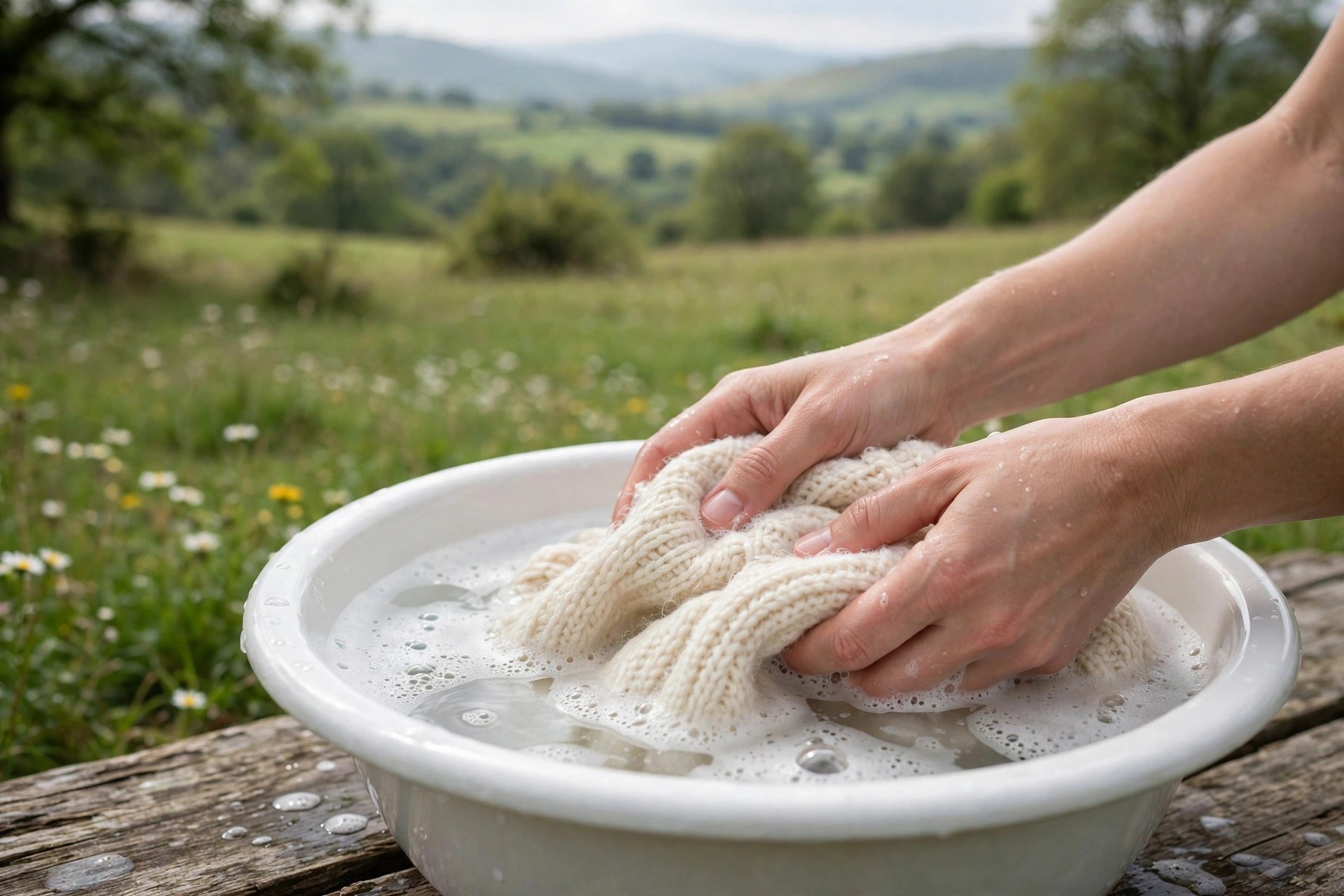
Washing a wool sweater safely means controlling the three things that damage wool: heat, agitation, and sudden temperature change. Wool fibers have overlapping scales, and heat plus movement locks those scales together — that is felting, and it is permanent. The safe method is unhurried: soak in cool water with a wool wash, press water through by hand, rinse at the same temperature, and dry the sweater flat, reshaped to its measurements. Machine washing is fine only when the care label allows it, on a wool or delicates cycle in a mesh bag. Done this way, wool washes cleanly for years.
Hand Washing, Step by Step
Read the care label first — it overrules any general guide, including this one. Fill a clean basin with cool to lukewarm water and stir in a small measure of wool wash. Turn the sweater inside out, submerge it, and press the water through the knit gently. Let it soak for 15 to 30 minutes; stubborn soil can be worked very lightly with fingertips, but never scrub, wring, or twist. Drain the basin and rinse with cool water at the same temperature until the water runs clear and free of suds.
Support the whole sweater as you lift it — a waterlogged knit can stretch under its own weight. Press out water by rolling the sweater in a large clean towel, then lay it flat on a dry towel or mesh rack and reshape it: smooth the body, align the seams, and pat sleeves and hems to their natural length. Dry away from radiators, heaters, and direct sunlight, turning once if your rack allows air underneath. Wool is naturally odor-resistant, so most sweaters need this treatment only after several wears.
When Machine Washing Is Safe
Some wool is finished to tolerate machines — the label will say machine washable, and superwash-treated wool is made for gentle cycles. If the label allows it: turn the sweater inside out, put it in a mesh wash bag, choose the wool or delicates cycle with cold water and low spin, and use a detergent made for wool. Take the sweater out promptly, reshape it, and dry it flat — the dryer is never part of the process, even for machine-washable wool. If the label says hand wash or dry clean only, believe it; one hot or vigorous cycle can felt a sweater beyond rescue.
Shrinking, Felting, and Other Problems
A sweater that comes out smaller and stiffer has felted: the fiber scales have locked, and no treatment truly reverses it. Soaking a mildly shrunken knit in lukewarm water with a little hair conditioner or wool wash can relax fibers enough to ease it back partway on a flat surface, but prevention is the real cure — cool water, no agitation, no dryer. For fine cashmere and luxury knits, the same principles apply with extra gentleness; see our cashmere care guide. And whatever the fiber, finish by storing the clean sweater folded, as covered in how to store sweaters, so it comes out of the drawer ready to wear.
Common Questions
- What temperature water should I use for wool sweaters?
- Cool to lukewarm — comfortable to your hand, never hot. Just as important, keep the rinse water the same temperature as the wash water; a sudden change from warm to cold helps shock fibers into felting.
- Can I put a wool sweater in the dryer?
- No. Tumble-dryer heat and tumbling are the fastest route to a felted, shrunken sweater. Always dry wool flat on a towel or mesh rack, reshaped to size, away from direct heat.
- How often do wool sweaters need washing?
- Less often than most garments. Wool resists odors and soil, so airing a sweater after wear and washing after several wears is usually enough. Wash sooner for spills, heavy perspiration, or before seasonal storage — never store a soiled sweater.
- What detergent is best for wool?
- A wash made for wool or delicates — mild and pH-neutral. Avoid regular detergents with bleach or strong enzymes, and never use chlorine bleach on wool, which dissolves the fibers. Fabric softener is also best skipped on knits.
Garment Care & Clothing Storage Guides
This page is part of the Apparel Search garment care series — practical guides to washing, finishing, and storing the clothes you own. Browse the full series below.