Women's Evening Gowns Guide
The gown is the most formal garment a woman can wear. Silhouettes from sheath to ball gown, the fabrics that photograph beautifully, and how to match length to the invitation.
Shop Women's Evening Gowns Now
Shop Women's Evening Gowns on Amazon Shop Women's Evening Gowns on eBayThe Amazon and eBay links on this page are affiliate links. If you make a purchase through them, Apparel Search may earn a commission.
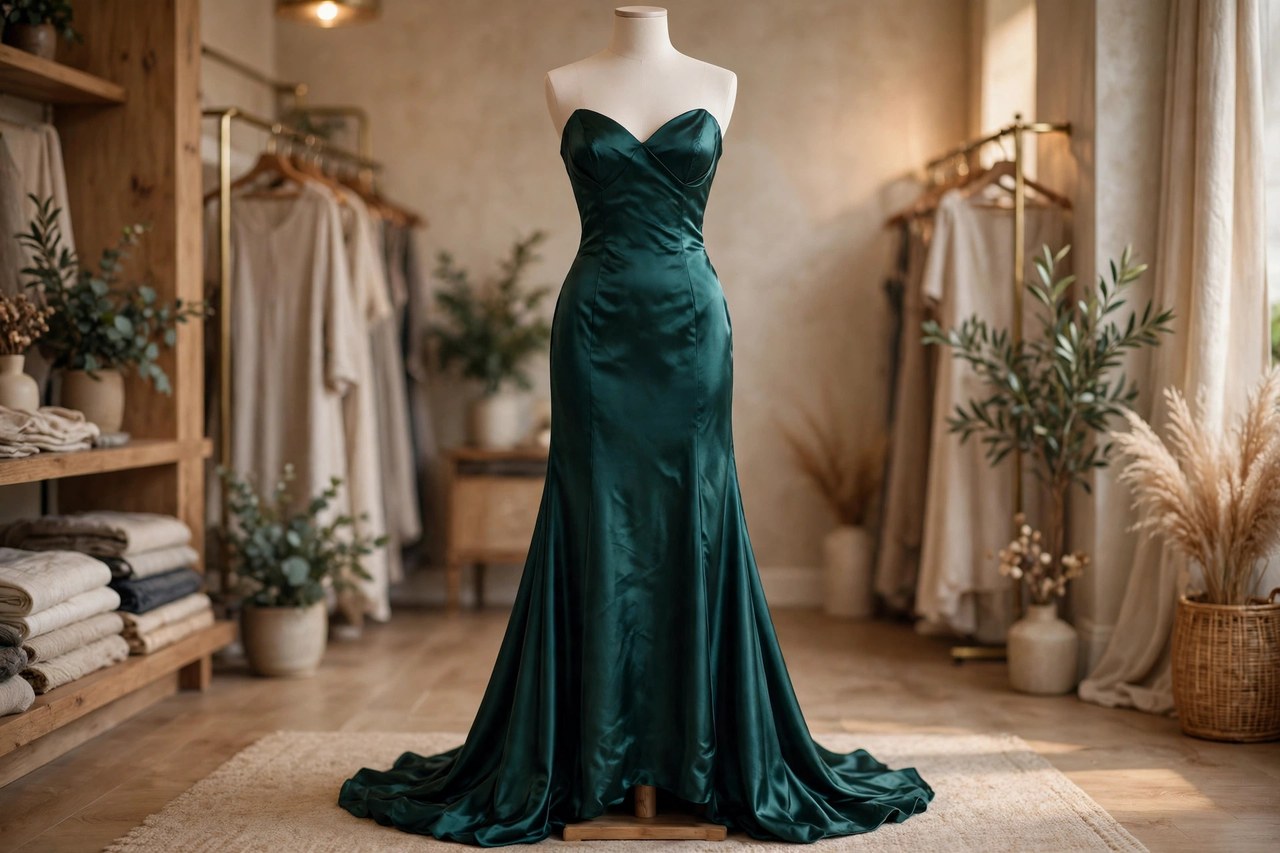
An evening gown — evening dress or simply gown — is a formal women's dress worn to a formal affair: the garment of red carpet events such as the Oscars and Golden Globes, formal dinners, opera and theatre premieres, formal dances, evening wedding receptions and charity balls. It is the top of the formality ladder, and it earns that place through length, fabric and finish rather than through any single design.
This guide is about the gowns themselves — their silhouettes, necklines, fabrics and lengths — so you can read a gown at a glance and choose the right one for the occasion. Our eveningwear guide covers the wider formal-dressing picture, and the evening shoes guide handles what goes underneath.
Silhouettes: Sheath to Ball Gown
Although the terms are used interchangeably, a ball gown always has a full skirt and a fitted bodice. An evening gown is the broader category and can be any silhouette: the sheath, a narrow column that follows the body; the mermaid, fitted to the knee then flaring; the A-line, fitted at the bodice and flaring gently from the waist; or the trumpet, which sits between A-line and mermaid. An evening gown may also have an empire or dropped waist, which is why those styles get their own guides elsewhere in this section.
Choose the silhouette by what it asks of you. Ball gowns and full A-lines carry their own drama and forgive the lower body entirely; sheaths and mermaids are architecture — they look extraordinary and allow sitting, stairs and dancing only as far as the cut permits. Try the dress in the shoes you will wear, and sit down in it before you commit.
Necklines, Backs and Detail
The gown's top half does the close-range work — it is what dinner partners and photographs see. Strapless and sweetheart necklines are the classics for a reason; halter and high necklines suit long lines and add the coverage some formal settings prefer; one-shoulder and illusion necklines give structure with lightness. Backs are the evening gown's secret weapon: a low or detailed back is what the room sees as you leave it.
Embellishment concentrates where the light lands: beading on the bodice, lace appliqué, or a single dramatic element such as a train, an overskirt or oversized bow. One statement at a time is the reliable rule — a gown that glitters, drapes, trains and slits simultaneously leaves nothing to look at first.
Fabrics and Lengths
Evening gowns are usually made of luxurious fabrics: chiffon for float and movement, velvet for winter depth, satin for liquid shine, organza for structured volume, and silk above all — still the most popular fibre for fine gowns. Fabric dictates season and formality as much as cut: velvet in July and cotton voile at a white-tie ball both miss their moment.
Lengths run from tea and ballerina length (mid-calf to ankle, elegant and danceable) to the full floor length that remains the pinnacle of formality. Match length to the invitation: black tie welcomes both, white tie asks for full length, and a formal wedding lets the hour decide — after dark, longer reads dressier. Hem the gown over your evening shoes so the skirt just kisses the floor, and store it hung in a breathable bag, cleaned before storage, never after the stains have set.
Delicate evening fabrics are finished, not pressed. Our guide to garment steamers and lint rollers explains how steaming relaxes wrinkles and refreshes a gown without an iron ever touching it.
Related Women's Guides
Lace deserves a special mention among evening fabrics: a lace dress or lace gown carries its pattern and decoration in the fabric itself, and our guide covers the main styles, how to judge lace quality, and the occasions each one suits.
Evening Gown or Ball Gown? The Distinction
An evening gown, evening dress or gown is a formal women's dress usually worn to a formal affair — you will often find evening gowns worn to red carpet events such as the Oscars and Golden Globes. Although the terms are used interchangeably, ball gowns and evening gowns differ: a ball gown will always have a full skirt and a fitted bodice, while an evening gown can be any silhouette — sheath, mermaid, A-line or trumpet shaped — and may have an empire or dropped waist. Gowns range from tea and ballerina length to full-length, and are usually made of luxurious fabrics such as chiffon, velvet, satin and organza; silk is a popular fibre for many evening gowns. Today the evening gown comes in different silhouettes and even lengths, but the full-skirted ball gown remains the pinnacle of formality. Evening gowns are worn at semi-formal black-tie (and sometimes white tie) functions, including formal dinners, opera and theatre premieres, formal dances, evening wedding receptions and charity balls. The neighbouring category is the bridal gown, and an evening dress that stops short of gown length has its own place in our products section.
Photos

Looking for Women's Clothing Stores?
This guide helps you choose women's evening gowns by silhouette, fabric and length. To browse where to buy, visit our women's clothing store directory, where you can find retailers that carry them.