Women's Embroidered Shirts Guide
Needlework turns a plain shirt into a piece of craft. The stitches and placements that matter, hand versus machine embroidery, and how to style and care for embroidered shirts.
Shop Women's Embroidered Shirts Now
Shop Women's Embroidered Shirts on Amazon Shop Women's Embroidered Shirts on eBayThe Amazon and eBay links on this page are affiliate links. If you make a purchase through them, Apparel Search may earn a commission.
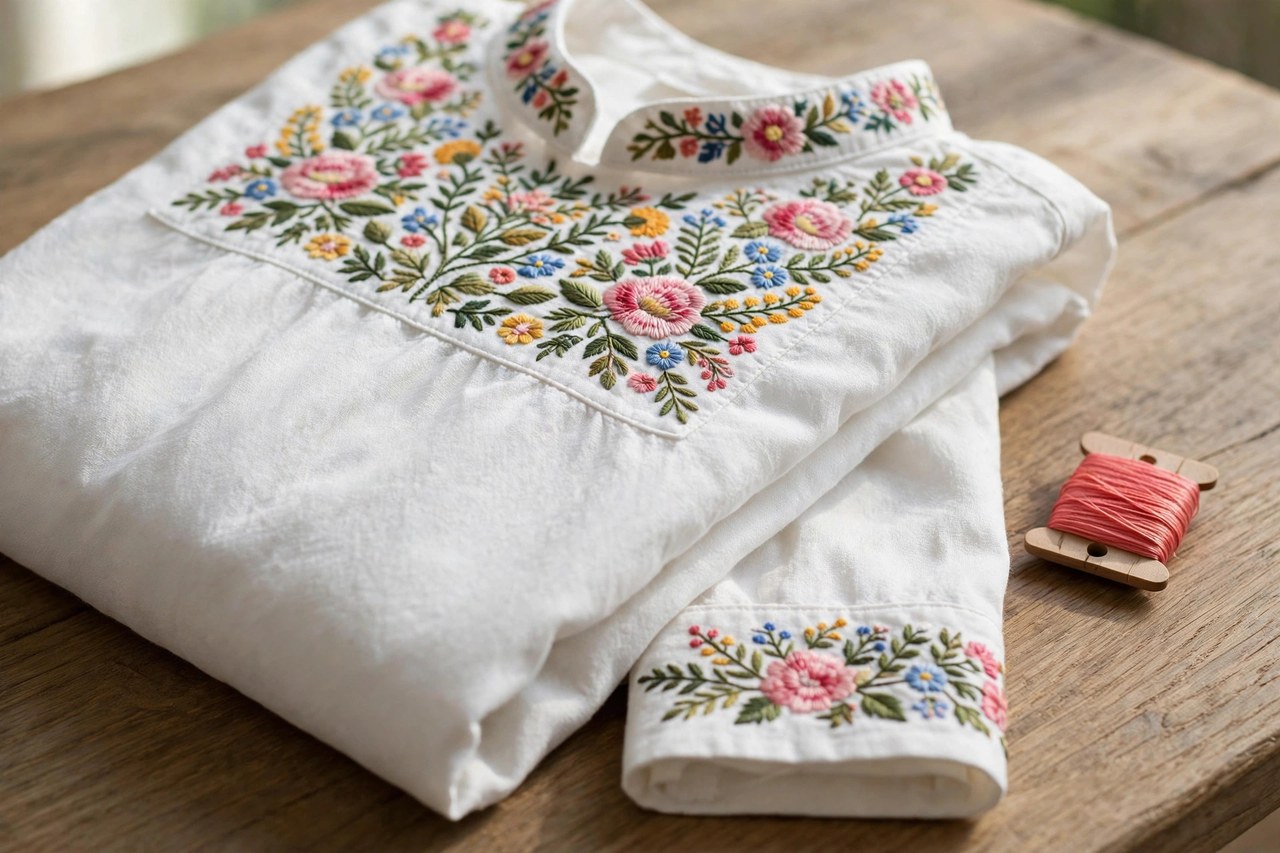
A shirt is a garment for the upper body — often cotton, silk, polyester or other fibres, knit or woven, frequently with a collar, sleeves and buttons down the front — and women's shirts can be embellished in various ways. The most storied of those ways is embroidery: the craft of decorating fabric using a needle to apply thread or yarn, forming decorative designs with hand or machine needlework.
This guide treats embroidery as what it is — a craft with its own techniques, vocabulary and quality signals — and then as a styling tool: where the stitching sits on the shirt, which threads and motifs suit which shirts, and how to wear and wash the results without ruining them.
Placement: Where the Needle Goes
Placement decides whether embroidery reads as folk charm, luxury detail or uniform logo. The yoke and shoulders carry the western-shirt tradition — symmetric florals and scrolls across the upper chest. A single motif at the chest or pocket is the modern minimal version. Cuffs and collars hide the craft at the edges, revealed in gesture, while a full back panel is pure statement, borrowed from souvenir jackets and festival shirts.
All-over embroidery — eyelet lace's stitched cousin, broderie anglaise, and tone-on-tone floral trails — changes the fabric itself and suits simple shirt shapes. Scale matters with figure: large motifs sit best on relaxed shirts, small dense work on fitted ones, and embroidery across the bust needs the motif placed to flatter rather than bisect.
Hand, Machine and Thread
Hand embroidery shows slight, living irregularities and allows raised techniques — French knots, satin stitch, crewel work in wool — that machines imitate at a distance. Machine embroidery is faster, denser and perfectly repeatable; quality shows in stitch density, clean edges and a backing that does not pucker the shirt. Embroidery may also incorporate pearls, beads, quills and sequins, each adding weight and care demands.
Thread choice changes the character: matte cotton floss for folk softness, rayon or silk for sheen, metallic thread for evening flash (and scratchiness — check what touches skin), and wool for textured, tapestry-like motifs. Whatever the thread, colourfastness is the quality test: an embroidered shirt that bleeds its motif into the white ground on the first wash was decoration, not craft.
Styling and Caring for Embroidered Shirts
Let the shirt be the outfit's one decorated thing. A floral-yoke shirt over plain denim or a simple skirt needs nothing else louder than it is; tone-on-tone embroidered white shirts work the other way, as quiet texture under tailoring. Tuck to show a decorated yoke fully, or wear open over a plain tee with the embroidery doing the talking.
Care follows the most delicate element: wash inside out, cool and gentle, ideally in a mesh bag so raised stitches and beads do not catch; never wring embroidery; dry flat or on a hanger away from sun that fades thread faster than cloth; and iron on the reverse, over a cloth, so the iron never flattens the raised work it should be framing. Stored folded with tissue at the decorated panels, a good embroidered shirt keeps its craft for decades.
Related Women's Guides
Embroidery, Defined
Embroidery is the art or process of forming decorative designs with hand or machine needlework — the craft of decorating fabric or other materials using a needle to apply thread or yarn. Embroidery may also incorporate other materials such as pearls, beads, quills and sequins. In modern days embroidery is usually seen on caps, hats, coats, blankets, dress shirts, denim, dresses, stockings and golf shirts, and it is available in a wide variety of thread and yarn colours. The shirt it decorates is a garment for the upper body, often made of cotton, silk, polyester and other fibres, in fabric that can be knit or woven; this type of top is often manufactured with a collar, sleeves and buttons down the front, though many different styles exist. To go deeper, learn about the various types of shirts and types of t-shirts in our terminology section, review embroidery terms, and see how embroidery sits within the wider craft of embellishment.
More to Explore on Apparel Search
Women’s Clothes Guide by Letter: A · B · C · D · F · G · H · I · J · K · L · M · Women's Apparel Directory N · Women's Clothes Directory O · Women's Clothing Directory P · Women's Apparel Directory Q · Women's Fashion Directory R · Women's Clothing Directory S · Women's Clothes Directory T · Women's Fashion Directory U · Women's Clothes Directory V · Women's Clothes Directory W · Women's Clothing Directory X · Women's Clothes Directory Y · Women's Clothes Directory Z
Looking for Women's Clothing Stores?
This guide helps you choose women's embroidered shirts by motif, placement and thread. To browse where to buy, visit our women's clothing store directory, where you can find retailers that carry them.