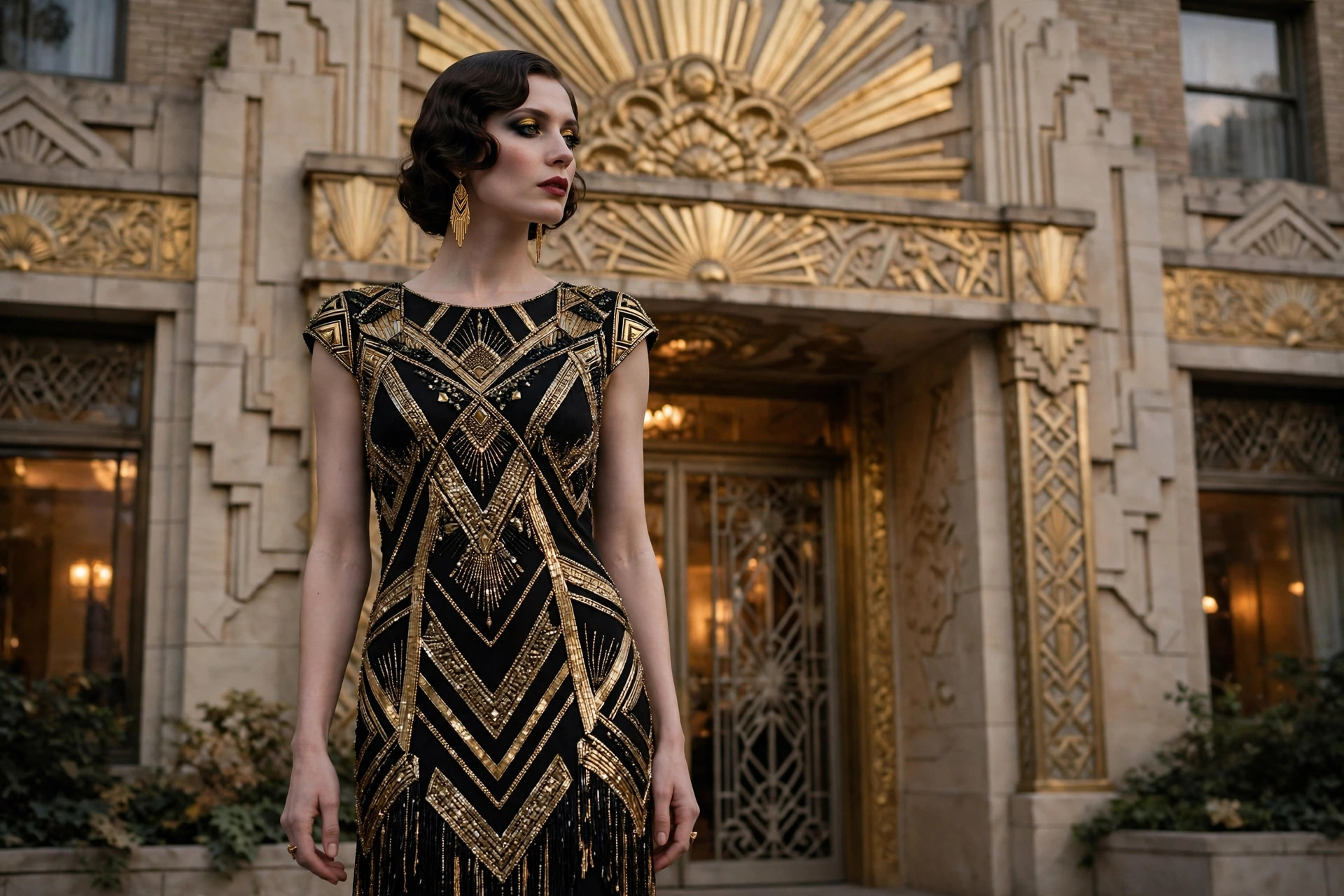
The Neo Deco aesthetic is the modern revival of Art Deco style — the geometric, glamorous design language of the 1920s and 1930s — applied to today's fashion. Sunburst and fan motifs, chevrons, stepped lines, black lacquer paired with gold, emerald and jewel-box colour: Neo Deco takes the visual grammar of the Jazz Age and puts it on contemporary dresses, jewellery, bags and shoes, a century after the style first defined modern luxury.
From 1925 to Now: The Deco Inheritance
Art Deco announced itself at the 1925 Paris exhibition that gave it its name, and within a decade its stepped skyscrapers, sunburst mirrors and geometric jewellery were everywhere. Fashion absorbed it completely: dresses carried chevron beading and angular embroidery, jewellery turned architectural — long pendants, fan earrings, black enamel against gold and platinum — and the sleek, dropped-waist silhouette of the era matched the geometry perfectly. The 2012 wave of 1920s fashion interest, covered in our report on 1920s fashion predicted for 2012, showed how reliably the look returns.
Neo Deco is that return in its newest form, named in Pinterest Predicts' 2026 forecasts. The difference from a costume revival is translation: today's Neo Deco keeps the motifs, metals and colour discipline of Deco but applies them to modern shapes — a slip dress with a sunburst neckline, a blazer with geometric gold buttons, earrings that quote a skyscraper. It references the 1920s the way a well-designed new building references a classic skyline.
The Key Neo Deco Pieces and Motifs
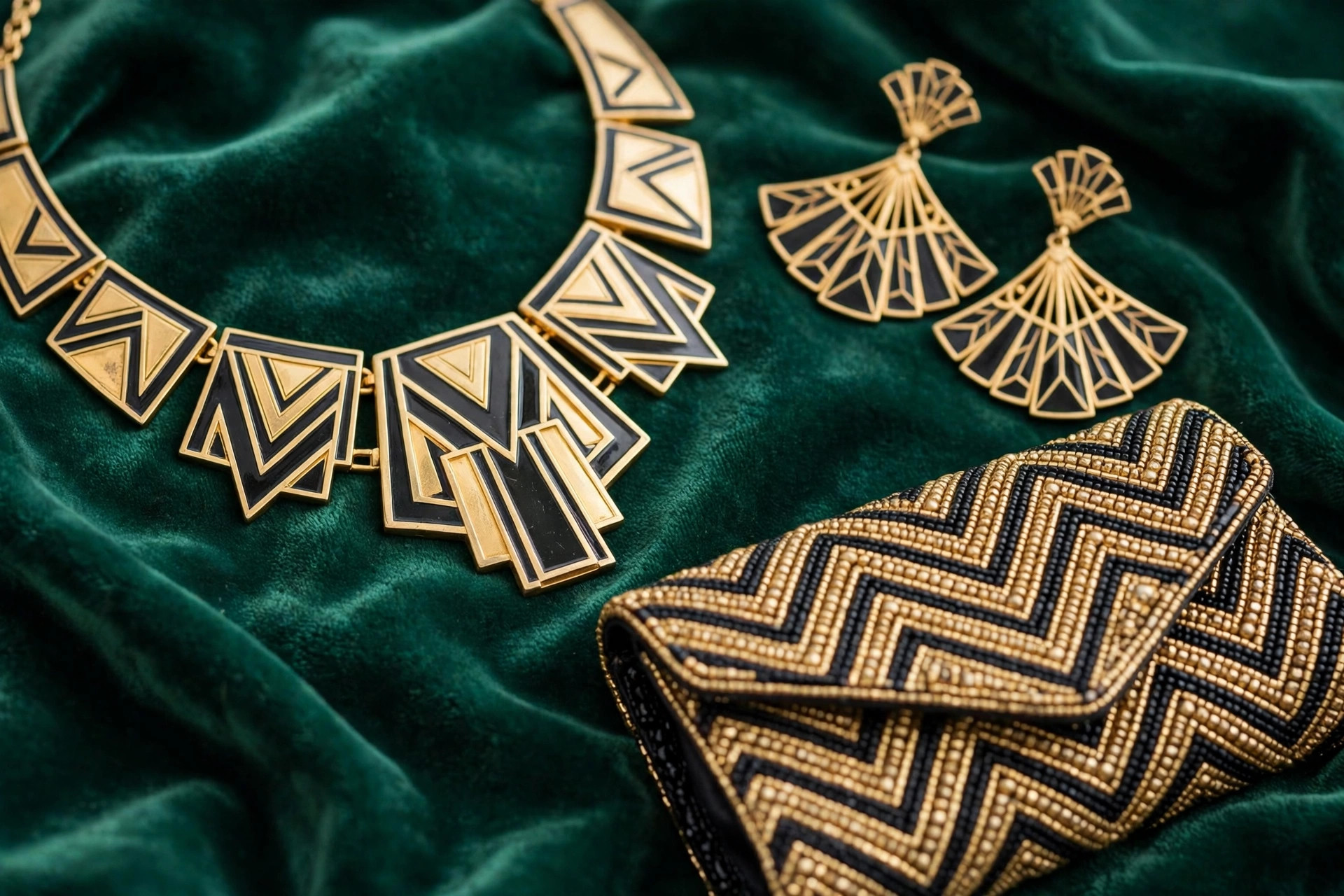
The motifs matter more than any single garment. Learn the vocabulary — sunburst, fan, chevron, zigzag, stepped pyramid lines, stylised feathers and peacocks, bold symmetrical borders — and you can spot Deco influence anywhere. In clothing it appears as beaded or sequinned geometric panels on evening dresses, angular embroidery, colour-blocked black and gold, and prints built from repeating fans and rays. Column and slip silhouettes suit it best, because a straight canvas shows geometry clearly.
Jewellery is where Neo Deco shines brightest and costs least to adopt: fan or sunburst earrings, long geometric pendants, black enamel and gold combinations, and cocktail rings with stepped settings. Our gold necklaces guide covers the metal at the heart of the look. Bags follow with chevron quilting and angular clasps, and shoes with sculptural heels and T-straps borrowed from the original era's dance floors.
The Neo Deco Palette
Deco colour is jewel-box colour on a dark ground. Black is the foundation — lacquer-black, against which gold, emerald green, sapphire, ruby and topaz tones glow like lit windows. Metallic gold and silver are treated as full colours, not accents. Cream and ivory provide the pale contrast, and the occasional flash of coral or peacock teal is pure 1920s. Pastels, earthy tones and muted anything sit outside the palette; Deco is decisive.
The palette is also why Neo Deco works so naturally for evening. An evening gown in black with gold geometric beading is the aesthetic at full strength, and the same black-and-gold discipline scales down to a clutch, a heel and a pair of earrings against a plain modern dress. Keep the ground dark, the metal bright and the shapes angular, and the reference reads instantly.
Wearing Neo Deco Without Looking Like a Costume
The flapper fancy-dress trap — headband, fringe, cigarette holder — is avoided by choosing one Deco element per outfit and keeping everything else current. A beaded geometric top with plain wide trousers; fan earrings and a gold cuff with a simple black dress; a chevron clutch against a modern tailored suit. The motif does the talking, so let it talk alone.
Neo Deco also has a daytime life in structure rather than sparkle: a stepped-hem skirt, a bag with an angular clasp, loafers with gold hardware, a scarf in a fan print. And it pairs beautifully with its glamorous neighbours — the gold abundance of the Glamoratti aesthetic shares its metals, while the opera aesthetic shares its evening drama; Neo Deco is the most architectural and disciplined of the three.
Common Questions
- What is Art Deco in fashion?
- Art Deco was the dominant decorative style of the 1920s and 1930s: geometric, symmetrical and glamorous, built on sunbursts, fans, chevrons and stepped lines in black, gold and jewel tones. In fashion it shaped beaded dresses, architectural jewellery, clutch bags and sleek silhouettes — the vocabulary the Neo Deco revival draws on today.
- How is Neo Deco different from 1920s fancy dress?
- Fancy dress copies the whole 1920s outfit — fringe dress, headband, beads — and reads as costume. Neo Deco translates Deco design language into modern clothing: one geometric motif, one metallic accent, contemporary shapes. The reference is in the details and the discipline, not in a head-to-toe period copy.
- What jewellery suits Neo Deco?
- Architectural pieces: fan and sunburst earrings, long pendants with geometric drops, black enamel combined with gold, stacked angular bangles and cocktail rings with stepped settings. Symmetry matters — Deco jewellery is designed like tiny buildings, not gathered like charms.
- What colours are Neo Deco?
- Black as the ground, with gold and silver as full colours, and jewel tones — emerald, sapphire, ruby, topaz — plus cream for contrast. The palette is saturated and deliberate; muted, earthy or pastel shades move an outfit away from Deco.
- Where does Neo Deco show up beyond clothing?
- Everywhere Deco originally lived: interiors with sunburst mirrors and lacquered furniture, graphic design with geometric type, architecture, weddings and party themes. In fashion terms that breadth helps the aesthetic last, because the motifs are a century-old design language rather than a single season's print.
Fashion Aesthetics and Trends Series
This guide is part of the Apparel Search fashion aesthetics and trends series: the named styles, from social-media aesthetics to revived eras, that shape how people dress now — what each one is, where it came from, and how to wear it well. Browse the full series below.