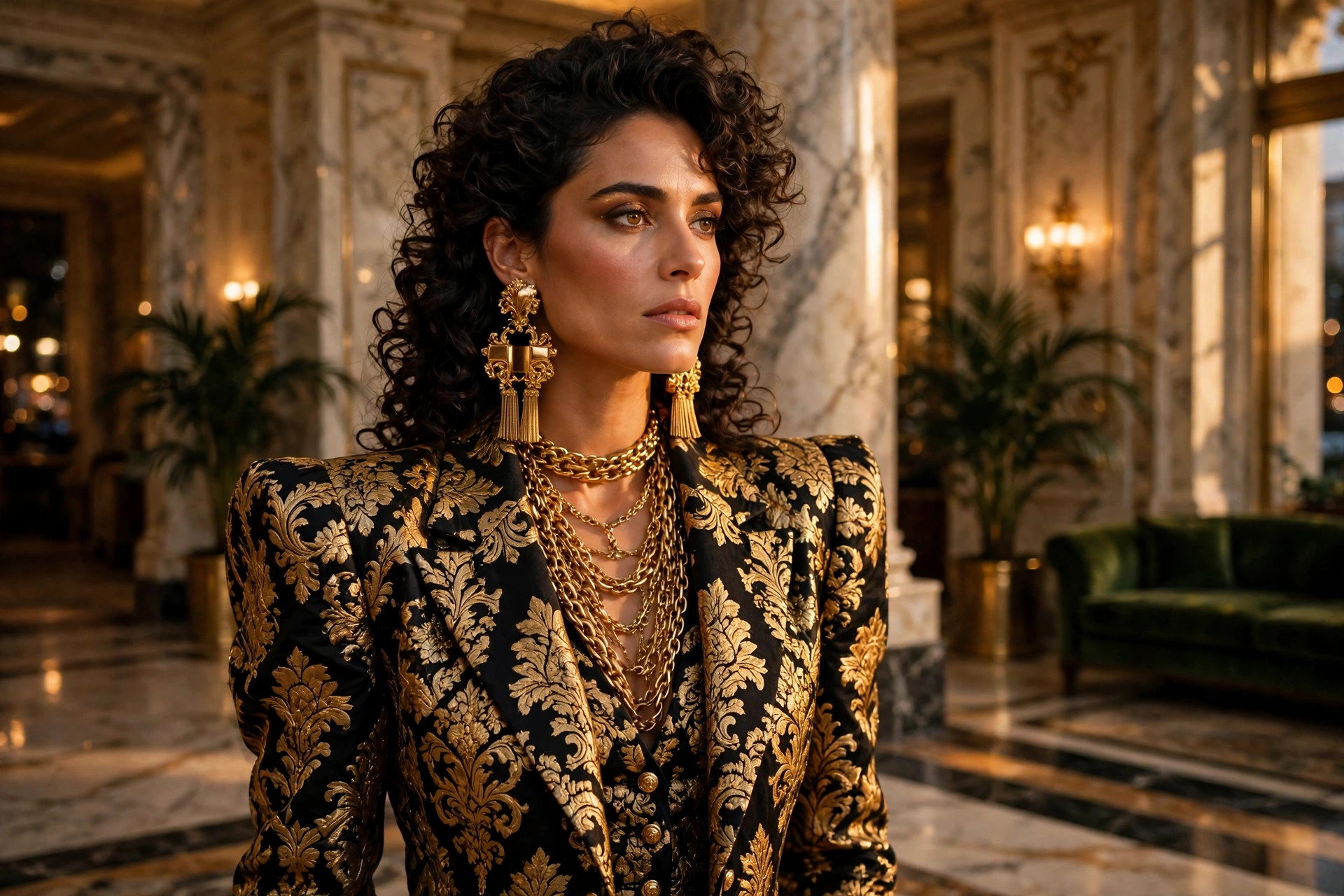
Glamoratti is a maximalist fashion aesthetic built on 1980s luxury: strong-shouldered tailoring, gleaming gold jewellery worn in multiples, rich fabrics such as brocade, velvet and lamé, and an unapologetic more-is-more attitude. Named as one of Pinterest Predicts' 2026 trend forecasts, it takes its cues from the era of power dressing, soap-opera glamour and old-money-meets-new-money excess — and translates them into outfits that are bold, polished and deliberately over the top.
Where Glamoratti Comes From
The look reaches back to the 1980s, the decade when dressing loudly became a form of ambition. Shoulder pads widened every jacket and dress, gold jewellery grew chunky and layered, and television dynasties made crystal, lamé and lacquered hair look like everyday wear. Fashion designers of the period built collections around that confidence, and the decade's silhouette — nipped waist, broad shoulder, knee-skimming skirt, statement earring — became one of the most recognisable in modern fashion history. Read more in our guide to 1980s fashion.
Glamoratti revives that energy for a generation that found it second-hand. Vintage 1980s pieces are plentiful in thrift and resale shops, the jewellery is fun rather than precious, and the look photographs brilliantly — one reason it spread so quickly through social media mood boards. It also answers a mood: after years of quiet, neutral minimalism, Glamoratti is permission to dress up again, loudly and on purpose.
The Key Glamoratti Pieces
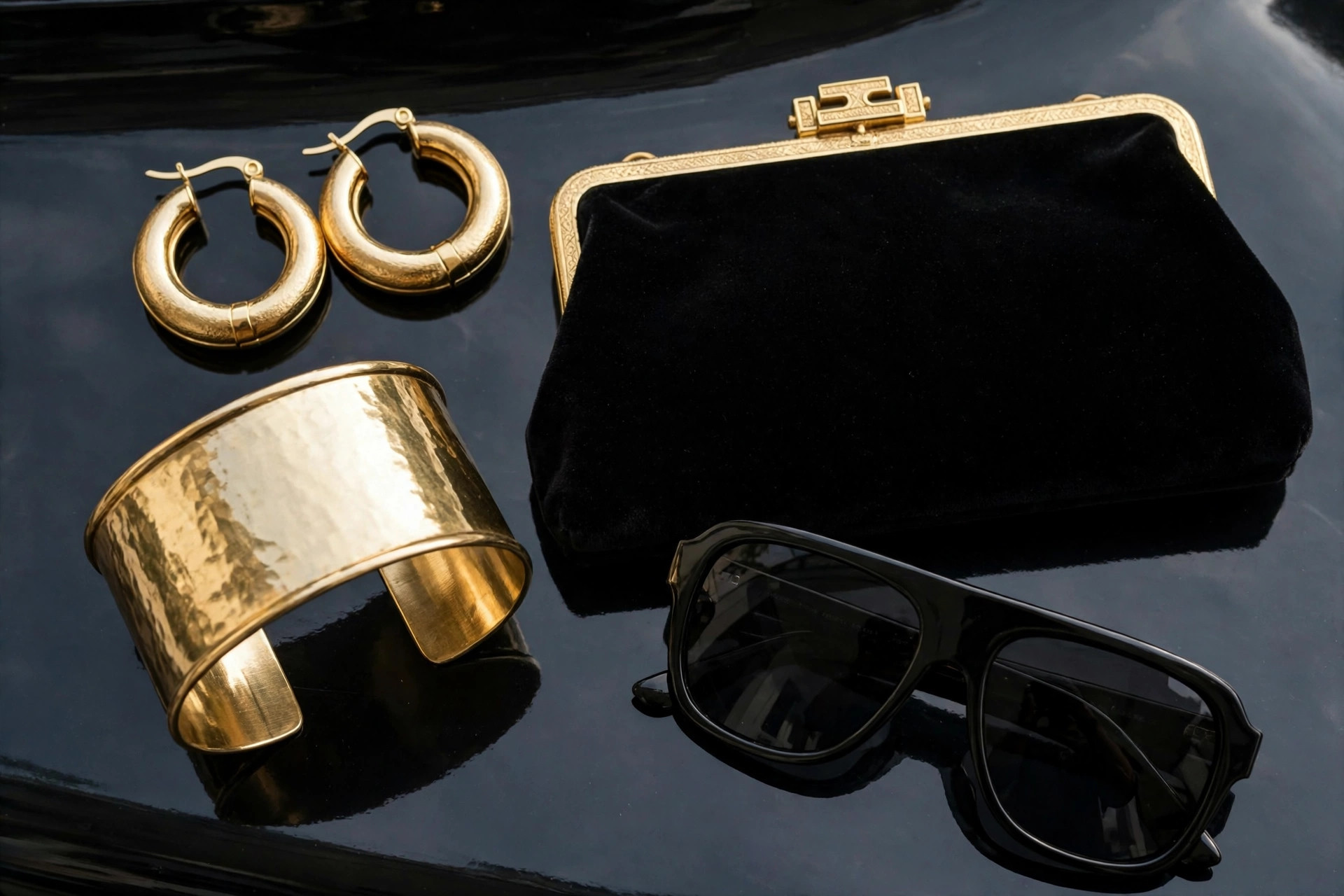
Start with the shoulder. A sharply tailored blazer, a structured dress or a top with a padded or strongly cut shoulder line sets the whole silhouette. Over that goes the jewellery, and plenty of it: chunky gold earrings, layered chains, a wide cuff or a stack of bangles, and at least one piece big enough to be seen across a room. Gold is the metal of the aesthetic — yellow, warm and worn all at once rather than saved for best.
Fabrics should look expensive even when they are not: velvet, brocade, satin, lamé, sequins used with intent, and faux fur as a collar, stole or full coat — our faux fur coat guide covers the dramatic end of the scale. Finishing pieces include oversized dark sunglasses, a structured bag, wide belts that cinch the waist, and pointed heels. Hair and makeup follow the same brief: volume, definition and shine, never the barely-there look.
Colour, Shine and Proportion
The Glamoratti palette is rich and warm: black and gold as the anchor pairing, jewel tones of emerald, ruby, sapphire and amethyst, deep burgundy, and metallics used as colours in their own right. White and cream appear as sharp contrasts, usually in a blouse or a tailored trouser. What the palette avoids is anything washed-out or dusty — Glamoratti colour is saturated, and its neutrals are black, white and gold rather than beige and grey.
Proportion is what keeps maximalism wearable. The 1980s formula balances volume against fit: a big shoulder over a cinched waist, a dramatic top over a slim skirt or straight trouser, statement jewellery against a clean neckline. When everything is oversized at once the outfit tips into costume. Choose one area to exaggerate — shoulders, jewellery, or fabric drama — and let the rest stay structured and close to the body.
How to Wear Glamoratti Day to Day
The full look belongs to evenings, parties and occasions where dressing up is the point: a brocade blazer over a satin camisole and tailored trousers, full gold jewellery, and a red lip is Glamoratti at its most faithful. For daytime, borrow the signals at lower volume. A strong-shouldered blazer with jeans still reads 1980s-luxe when the earrings are gold and the sunglasses are oversized; a velvet top and a wide belt give a plain skirt the same flavour.
Thrifting is the authentic route in — genuine 1980s blazers, clip earrings and evening bags are common and inexpensive, and their proportions are the real thing rather than a copy. However you build it, compare the mood with its neighbours: Glamoratti shares its confidence with the mob wife aesthetic but trades that look's animal print and fur for tailoring and gold, and it is the deliberate opposite of the understatement of the clean girl aesthetic.
Common Questions
- What does Glamoratti mean?
- Glamoratti is a coined name — glamour plus a playful echo of the paparazzi and the illuminati — for the 1980s-inspired luxury maximalist aesthetic forecast by Pinterest Predicts for 2026. It describes bold-shouldered tailoring, abundant gold jewellery, rich fabrics and confident, dressed-up styling.
- What jewellery defines the Glamoratti look?
- Chunky yellow-gold pieces worn in multiples: oversized hoop or door-knocker earrings, layered chains, wide cuffs and stacked bangles. The rule is abundance — one delicate pendant is the opposite of the aesthetic, which treats jewellery as a main feature of the outfit rather than a finishing touch.
- Is Glamoratti the same as 1980s power dressing?
- It grows directly out of it. Power dressing supplied the silhouette — padded shoulders, cinched waists, tailored suits — and Glamoratti adds the evening glamour of the same decade: brocade, lamé, velvet and statement gold. Think boardroom structure meets after-dark excess, worn mostly for the after-dark part.
- How is Glamoratti different from the mob wife aesthetic?
- Both are maximalist reactions against quiet luxury, but their references differ. Mob wife leans on fur, animal print, black and a tougher, cinematic edge. Glamoratti leans on 1980s tailoring, jewel tones and gold jewellery, and reads more polished and party-ready than dangerous.
- Can you wear Glamoratti on a budget?
- Yes — it is one of the cheapest aesthetics to build well, because genuine 1980s pieces are abundant second-hand. A vintage strong-shouldered blazer, thrifted gold-tone jewellery and a wide belt deliver most of the look for very little, and the aesthetic rewards bold second-hand finds over new designer pieces.
Fashion Aesthetics and Trends Series
This guide is part of the Apparel Search fashion aesthetics and trends series: the named styles, from social-media aesthetics to revived eras, that shape how people dress now — what each one is, where it came from, and how to wear it well. Browse the full series below.