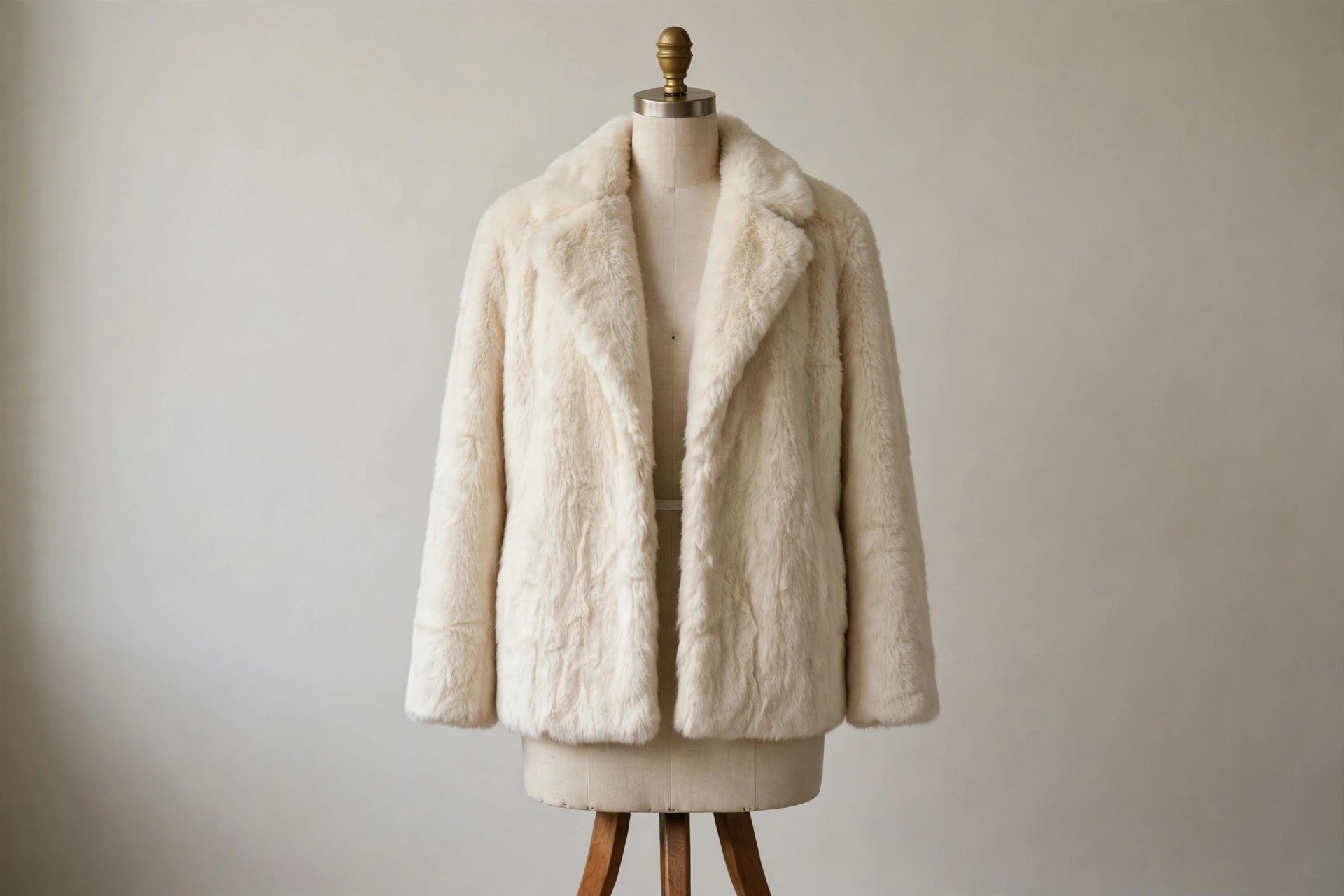
A faux fur coat is a coat made to imitate fur using synthetic pile fabrics, most commonly acrylic and modacrylic blends knitted or woven onto a backing and sheared and finished to resemble pelts. The pile is made in two lengths on better coats: a soft, dense underlayer and longer, glossier guard hairs on top, which is what gives real fur its depth. Faux fur offers the silhouette and drama of a fur coat in a wide range of colors, including shades no animal produces, at prices and in materials many shoppers prefer.
How Modern Faux Fur Has Improved, and Quality Cues
Early faux fur often gave itself away: a uniform, shiny pile with a plastic sheen, colors that sat flat, and a backing that felt stiff. Modern versions are far more convincing. Varied pile lengths, matte and gloss fibers mixed together, printed and tipped color that imitates natural markings, and softer backings mean a good faux fur coat moves and catches light much more like the real thing. The gap between a cheap costume-grade coat and a well-made one is large, which is why quality cues matter when buying.
Run a hand through the pile: it should feel dense and springy, with the backing hard to see when you part the fibers. Look for a natural-looking guard-hair effect, longer surface hairs over a plush underlayer, and color with subtle variation rather than one flat dye. Check the backing and lining: a smooth, well-finished lining that lets the coat slide over knitwear, cleanly finished edges, and closures that sit flat under the pile. Shake the coat gently; excessive loose fibers are a warning sign.
Styles, Warmth, and Care
The classic style is the long, full coat, worn for evenings and cold-weather occasions. Cropped faux fur jackets pair with dresses and high-waisted trousers, while faux fur also appears as trims, collars, and hoods on cloth coats and parkas. A dense pile traps air and can be genuinely warm, and synthetic coats are often lighter than they look, though wind resistance depends on the backing, so a faux fur coat in a storm may need the weather rating checked rather than assumed.
Care is about protecting the pile. Brush it gently with a soft clothes brush to lift flattened areas and remove surface dust, and hang the coat loose in a cool, airy place rather than crushed in a crowded closet. Keep faux fur away from direct heat, radiators, and hot styling tools, which can damage synthetic fibers, and never iron the pile. Follow the label for cleaning: many faux fur coats are dry-clean only, while some tolerate careful washing; either way, let the coat dry naturally and brush the pile back into place afterward. A faux fur coat is also distinct from a teddy coat, the shearling-look fleece style covered in the shearling guides linked below.
Common Questions
- What is faux fur made from?
- Most faux fur is made from acrylic or modacrylic fibers, sometimes blended with polyester, formed into a pile on a knitted or woven backing. Better fabrics combine fiber types and lengths: fine, dense fibers for the soft underlayer and longer, glossier ones for the guard-hair effect. The backing and lining are usually synthetic or blended fabrics too, which is why care labels warn against heat, since synthetic pile can be damaged by high temperatures.
- How warm is a faux fur coat?
- A dense, well-made faux fur coat is warm, because the deep pile traps a layer of air, which is the same principle that makes real fur insulating. Warmth varies with pile density, coat length, and how windproof the backing is; a fashion-weight cropped jacket will not match a long, dense coat. For serious cold, check for a substantial backing or an insulating lining, and remember that closures and cuffs matter as much as pile.
- What is the difference between a faux fur coat and a teddy coat?
- A faux fur coat imitates fur pelts, with varied pile lengths, guard hairs, and often printed or tipped coloring that mimics mink, fox, or other furs. A teddy coat imitates sheepskin or shearling fleece, with a uniform, curly, bouclé-style pile in usually solid, natural tones. They feel different in the hand, too: faux fur is silky and directional, teddy fleece is springy and evenly textured all over.
- Can a faux fur coat get wet in the rain?
- Light drizzle will not ruin most faux fur coats: shake off the water, hang the coat in an airy place away from heat, and brush the pile once dry to restore its direction. Heavy soaking is best avoided, since the backing and lining dry slowly and pile can mat if stored damp. If the coat gets thoroughly wet or dirty, follow the care label, which for many coats means professional cleaning.
Classic Wardrobe Staples
Four enduring wardrobe classics that bring structure, polish, and character to everyday dressing.