Women's Fur Coats Guide
One of the oldest forms of clothing, still the warmest: real fur and faux fur coats, shearling, vintage buying, and the cold-storage care real fur demands.
Shop Women's Fur Coats Now
Shop Women's Fur Coats on Amazon Shop Women's Fur Coats on eBayThe Amazon and eBay links on this page are affiliate links. If you make a purchase through them, Apparel Search may earn a commission.
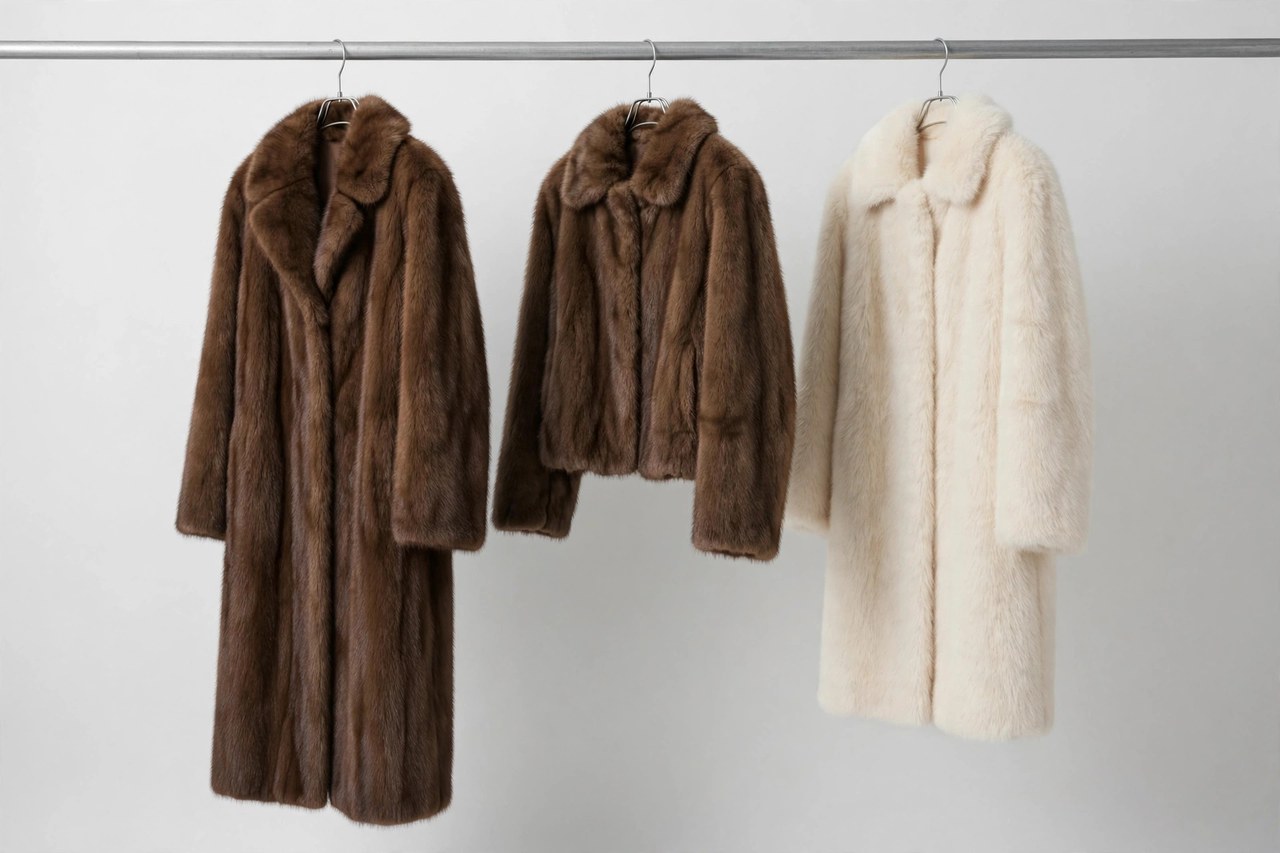
Fur is one of the oldest forms of clothing, and the fur coat remains its grandest expression — a garment of unmatched warmth, considerable glamour and, for a century, controversy. Fur clothing is clothing made of furry animal hides, and women's fur coats have been popular for a very long time, coming in and out of style for various reasons this guide will touch on honestly.
This page covers the subject whole: what fur is, the main types used in coats, the faux fur alternative and how good it has become, vintage buying, and the specialised storage and care a real fur coat requires. Fur hats have their own page.
What Fur Is, and the Main Types
Fur is the short, fine, soft hair of certain animals — technically a pelt with a dense underfur for insulation beneath longer guard hairs for protection. In coats, the classic pelts form a ladder: mink (the standard: durable, light, glossy), fox (long, dramatic, used whole and as trim), sable (the luxury summit), chinchilla (the softest, and fragile), rabbit (the accessible entry, less durable), and shearling — sheepskin with the wool left on, shorn to imitate the feel of velvet, worn suede-side or wool-side out.
Furs may be dyed bright colours or patterns, often to mimic exotic pelts, or left in their original pattern and colour. Quality in any type is judged by density and evenness of underfur, lustre of the guard hairs, size and matching of pelts, and the suppleness of the leather beneath — a dry, papery skin means an old or badly kept coat whatever the hair looks like.
Faux Fur: The Alternative, Taken Seriously
If you are not a fan of real fur, investigate faux fur: fake fur is any material made of cellulose or synthetic fibres designed to resemble fur, normally as part of a piece of clothing. Modern faux has improved beyond recognition — multi-length pile, realistic guard-hair effects, printed and dyed patterns — and it carries practical advantages: a fraction of the price, machine-washable versions, no cold storage, and no ethical weight.
Its honest trade-offs: faux fur is warmer-looking than warm (real fur's insulation remains superior), it is petroleum-based, and poor faux pills and mats within a season. Judge faux by density, softness and how it moves; the best is genuinely convincing at arm's length, and for a fashion coat worn a dozen times a winter, it is often the rational buy.
The Controversy, Plainly
Controversy exists regarding fur coats due to animal cruelty concerns, and a guide should say so plainly. Anti-fur campaigns were popularised in the 1980s and 1990s with the participation of numerous celebrities; fur clothing became the focus of boycotts on the opinion that it is cruel and unnecessary, and organisations such as PETA, other animal rights groups, celebrities and ethicists have called attention to fur farming. The invention of inexpensive synthetic textiles for insulating clothing also led fur clothing to fall from everyday fashion.
At the same time, fur is still worn in most mild and cool climates due to its superior warmth and durability, and it retains its association with glamour and lavish spending. Many wearers choose vintage fur as their resolution — no new demand, and a durable garment kept in use. Apparel Search's role is information; the choice is the reader's own.
Vintage Buying, Storage and Care
Vintage is where value hides: check pelt suppleness (gently flex the leather between seams), look for bald patches at shoulders, collar and cuffs, smell for mustiness, and confirm closures and lining. A furrier's appraisal costs little and grades condition honestly; budget for professional cleaning and any re-lining before comparing prices.
Real fur demands cold storage in summer (a furrier's vault, around 4–7°C with controlled humidity) or the coolest, darkest, airiest cupboard at home, on a broad padded hanger, never in plastic (it needs to breathe) and never near heat. Clean only by furrier methods, never ordinary dry cleaning. Faux fur needs none of this — shake, brush, store normally — which, again, is part of its case. Our fur hats guide covers the smaller fur garment next.
More Fur & Winter Guides
Photos

Looking for Women's Clothing Stores?
This guide helps you choose women's fur coats. To browse where to buy, visit our women's clothing store directory, where you can find retailers that carry them. For the shoulder-wrap form, see our fur stole guide.