
A fur stole is a narrow, elongated wrap of fur — longer and slimmer than a shawl, wider than a scarf — worn draped over the shoulders, usually with evening or formal dress. Unlike a fur coat it covers only the shoulders and upper back, adding warmth and ceremony without covering the outfit. Classic stoles are real fur, often vintage; the modern animal-free equivalent is the faux fur scarf.
What Makes a Stole a Stole
Shape is the definition. A stole is a long rectangle of material, typically around 180–220 cm long and 25–40 cm wide in fur versions, designed to be draped, looped, or crossed over the shoulders rather than wrapped around the neck like a scarf. Many vintage fur stoles are shaped rather than perfectly rectangular — widened at the centre back, tapered at the ends, sometimes finished with the tails, paws, or a head of the original pelt in mid-twentieth-century styles. Modern and faux versions are usually simple rectangles with a satin lining.
Vintage Stoles: Types You Will Meet
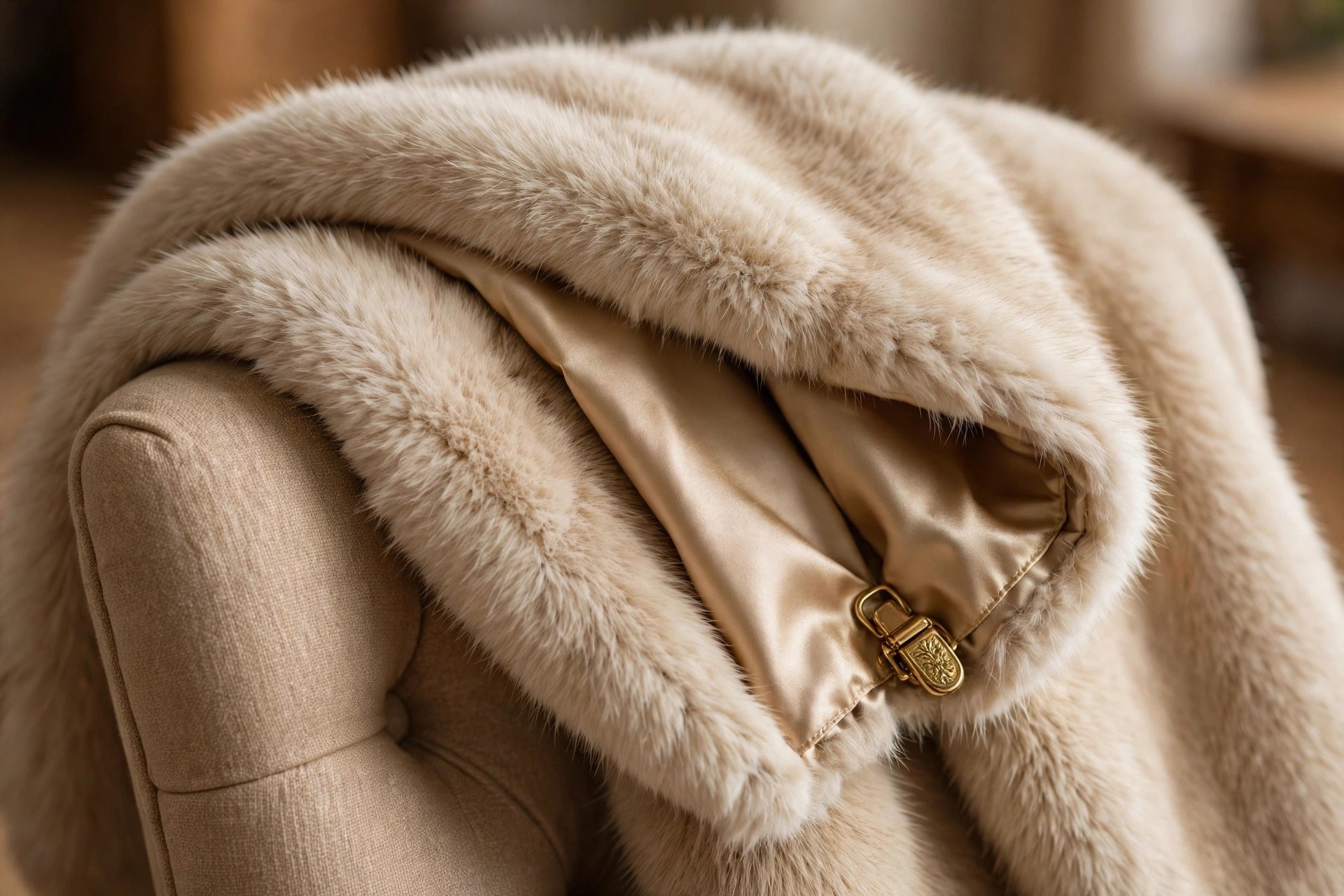
Most real fur stoles in circulation are vintage, made between the 1940s and 1970s, and a few types dominate. Mink stoles — often in brown, mahogany, or pastel-dyed shades — are the most common and usually the most durable. Fox stoles are fuller and more dramatic, with long, soft guard hairs. Sable and marten are rarer, lighter, and were expensive even when new. Stone marten and Baum marten stoles, sometimes sold with multiple pelts, sit in the same family.
How to Wear a Fur Stole Now
The classic arrangement is still the best: draped over both shoulders of a sleeveless or thin-strapped evening dress, fastened at the front, ends hanging evenly. It suits weddings (especially winter weddings), black-tie events, the opera, and formal dinners — occasions where bare shoulders need exactly the amount of warmth and coverage a stole provides. Wear it slipped slightly off one shoulder for a more relaxed, editorial version of the same idea.
Modern styling takes the stole off the ballgown. Over a plain coat or a tailored jacket it reads as a rich collar and adds warmth where a coat is thinnest. Crossed at the front and held with a brooch, it stays put through an evening. With a simple black dress, flat shoes, and no other statement piece, a stole can carry a whole outfit. What it does not pair with is competition: skip the statement necklace — the stole is the frame, and earrings are enough.
Real, Vintage, and Faux: Choosing Your Version
There are three honest routes to this look, and wearers choose between them for different reasons. A vintage real-fur stole uses an existing garment — no new fur is produced — and offers a quality of material modern production rarely matches at the price; it demands proper storage and occasional professional care. A newly made real-fur stole is a significant purchase governed in many places by labelling and trade rules, and deserves research into sourcing before buying.
The faux route has become the default for most wearers. A faux fur scarf or faux stole gives the same silhouette and warmth with ordinary garment care and no storage requirements, and modern fibres imitate fox and mink convincingly at conversational distance. The wider faux family — including the full faux fur coat — is covered in its own guide. Choose by your own values, your budget, and how much maintenance you are genuinely willing to do; an uncared-for real stole is the worst outcome of the three.
Care and Storage — the Part That Decides How Long It Lasts
Real fur is skin and hair, and it fails by drying, heat, friction, and crushing — in roughly that order. Store a stole in a cool, dark place with air around it, hung on a broad hanger or laid flat, never in a sealed plastic bag, which traps moisture and dries the leather, and never under compression. Professional cold storage with a furrier over the summer is the traditional gold standard and is worth it for a valuable piece; a cool spare-room wardrobe is the acceptable home version.
Keep fur away from radiators, direct sun, and perfume or hairspray sprayed while wearing it — apply scent first, let it dry, then dress. If the stole gets wet in rain or snow, shake it and let it dry slowly at room temperature away from heat; never use a hairdryer. Have it cleaned only by a fur specialist, never a general dry cleaner, and have loose clasps and lining tears repaired early, before they catch and tear the pelt. Brush nothing, comb nothing: a gentle shake is home maintenance enough.
Fastening and Finishing Touches
How a stole stays on decides how relaxed you look in it. A working clasp or hook at the front is the most secure and the most traditional. A large brooch pinned through both layers at the chest is the classic improvisation — use a brooch with a strong pin, and pin through the lining side where possible to protect the fur. Some stoles have a hidden loop or slit that one end threads through, scarf-fashion, which holds a crossed arrangement neatly.
Gloves and a small bag complete the period-correct picture, but keep the bag off the shoulder — a strap rubbed across fur wears a bald track into it over an evening, which is why clutch bags belong with stoles.
Shop for Fur stoles
Common Questions
- What is a fur stole?
- A fur stole is a narrow, elongated wrap of fur, longer and slimmer than a shawl and wider than a scarf, worn draped over the shoulders mainly with evening and formal dress. It covers the shoulders and upper back only, adding warmth and ceremony without covering the outfit beneath.
- How do you wear a fur stole?
- Drape it over both shoulders of an evening dress and fasten it at the front with its clasp, a hook, or a brooch, letting the ends hang evenly. Modern styling also wears a stole crossed at the front over a plain coat or tailored jacket, where it works as a rich collar.
- How should a fur stole be stored?
- Cool, dark, and with air around it: hung on a broad hanger or laid flat, never in a sealed plastic bag and never crushed under other garments. Summer cold storage with a furrier is ideal for valuable pieces. Keep it away from radiators, direct sun, and sprays.
- Can a vintage fur stole be repaired or cleaned?
- Yes, by a fur specialist — never a general dry cleaner. A furrier can clean and reglaze dull fur, repair loose clasps, seams and lining tears, and assess dry pelts. Fur whose leather has become papery and cracked from age cannot be restored, so check condition before buying vintage.
- What is the difference between a fur stole and a faux fur scarf?
- Shape and material. A stole is a wide, formal shoulder wrap, traditionally real fur and often vintage. A faux fur scarf is a narrower neck wrap made from synthetic pile, worn with everyday coats, and it needs only ordinary garment care — no special storage.