Women's Black Sweaters Guide
Crewnecks, cardigans, turtleneck sweaters, and cashmere in black — yarn choices, shade depth, styling, and care that prevents pilling and fading.
Shop Women's Black Sweaters Now
Shop Women's Black Sweaters on Amazon Shop Women's Black Sweaters on eBayThe Amazon and eBay links on this page are affiliate links. If you make a purchase through them, Apparel Search may earn a commission.
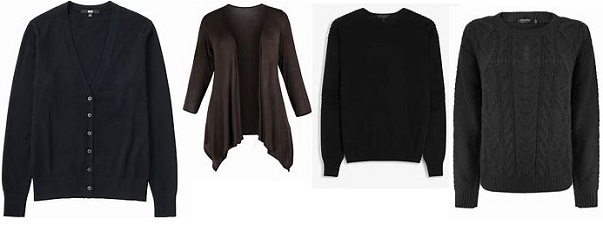
The Black Sweater as a Wardrobe Engine
If black pants are the foundation, the black sweater is the engine room: the piece pulled on for work, travel, errands, and dinners more than any other knit in the closet. A black crewneck over black trousers is a column; over jeans it is a classic; under a black coat it layers without a single color decision. No other sweater color multiplies outfits this way.
Black knitwear also handles the in-between weather that dominates real life — too cool for a tee, too warm for a coat. And because black sweaters sell in every yarn and at every price, the category rewards knowledge: the difference between a sweater that looks rich for five winters and one that pills by February is in the fiber and the knit, not the label.
How Black Looks in Different Yarns
Cashmere and merino take black dye to a soft, deep matte — the luxurious standard, reading slightly softer than a true black woven because knit loops scatter light. Cotton black sweaters look crisper and cooler, ideal for spring, and fade gently toward soft black with washing. Acrylic and polyester knits can achieve the blackest black and resist fading, but may pill and build static instead.
Texture changes the perceived shade. A chunky ribbed black sweater looks lighter than a fine-gauge black knit of the same dye, because every ridge casts a tiny shadow and highlight. Bouclé and brushed yarns read almost charcoal. When a black sweater must match black trousers for a monochrome outfit, fine smooth knits in merino or cotton come closest to a woven black.
Necklines and Silhouettes
The black crewneck is the neutral canvas — it layers over collared shirts and under blazers without neckline negotiations. A black V-neck lengthens the torso and frames jewelry or a camisole. Cardigans in black function as soft jackets: long duster versions over dresses, cropped versions with high-waisted trousers, and chunky grandpa cardigans as weekend outerwear.
Boatnecks and off-shoulder black sweaters lean evening; funnel and mock necks give turtleneck warmth with a modern edge. Oversized black sweaters need a grounding element — a slim trouser or a half-tuck — to avoid swamping the frame. Fit through the shoulder seam is the detail that separates expensive-looking black knitwear from sloppy: the seam should sit at the shoulder bone unless the drop is clearly deliberate.
Styling Black Knitwear
Black sweaters are the great mediators of pattern: they calm plaid skirts, printed trousers, and floral dresses into wearable outfits. A black knit with a white collared shirt beneath, cuffs and tails showing, is a preppy classic that works at almost any age. For evening, a fine black sweater with a satin skirt and heels borrows the sweater’s comfort and the skirt’s glamour equally.
Jewelry matters against black knit: gold reads warm and classic, silver cool and modern, pearls timeless. Since black sweaters collect lint and pet hair visibly, the lint roller is part of the outfit — a thirty-second pass before leaving transforms the same sweater from house clothes to presentation-ready.
Pilling, Shine, and Other Black-Knit Problems
Pilling shows cruelly on black, the little balls catching light against the dark ground. Short-staple fibers pill fastest; tightly twisted, longer-staple yarns resist. A sweater comb or electric defuzzer restores a black knit in minutes, and resting a sweater a full day between wears lets fibers recover and shed less. Friction zones — under bag straps, at seatbelt lines — pill first; rotating sweaters spreads the wear.
Cheap black knits can also develop a shiny, almost metallic cast at elbows and seats where fibers flatten. Brushing with a soft clothes brush lifts the nap slightly. Snags pull into pale loops on black; work them to the inside with a needle rather than cutting, which can start a run in the knit.
Washing and Storing Black Sweaters
Most black sweaters want cold, gentle treatment: hand wash or machine gentle in a mesh bag, with a wool- or dark-safe detergent. Turn inside out to protect the face from abrasion graying. Never hang a wet knit — reshape it and dry flat on a towel, in the shade, since sun fades black shoulders while the body stays dark.
Store sweaters folded, never on hangers that stretch shoulder points into horns. Cedar or lavender deters moths, which prefer dark, undisturbed wool — exactly what a black sweater drawer is. Clean sweaters before summer storage, because invisible perspiration and food traces attract insects and set stains that oxidize into pale marks on black yarn.
More to Explore
More Women's Black Clothing
Looking for Women's Clothing Stores?
This guide helps you choose a black sweater in a yarn and neckline you will reach for weekly. To browse where to buy, visit our women's clothing store directory, where you can find retailers that carry them.