Women's Cotton Cardigan Sweater Guide
The button-front layer that works in three seasons — cool to the touch, kind to sensitive skin, and easy over everything from tees to dresses.
Shop Women's Cotton Cardigan Sweaters Now
Shop Women's Cotton Cardigan Sweaters on Amazon Shop Women's Cotton Cardigan Sweaters on eBayThe Amazon and eBay links on this page are affiliate links. If you make a purchase through them, Apparel Search may earn a commission.
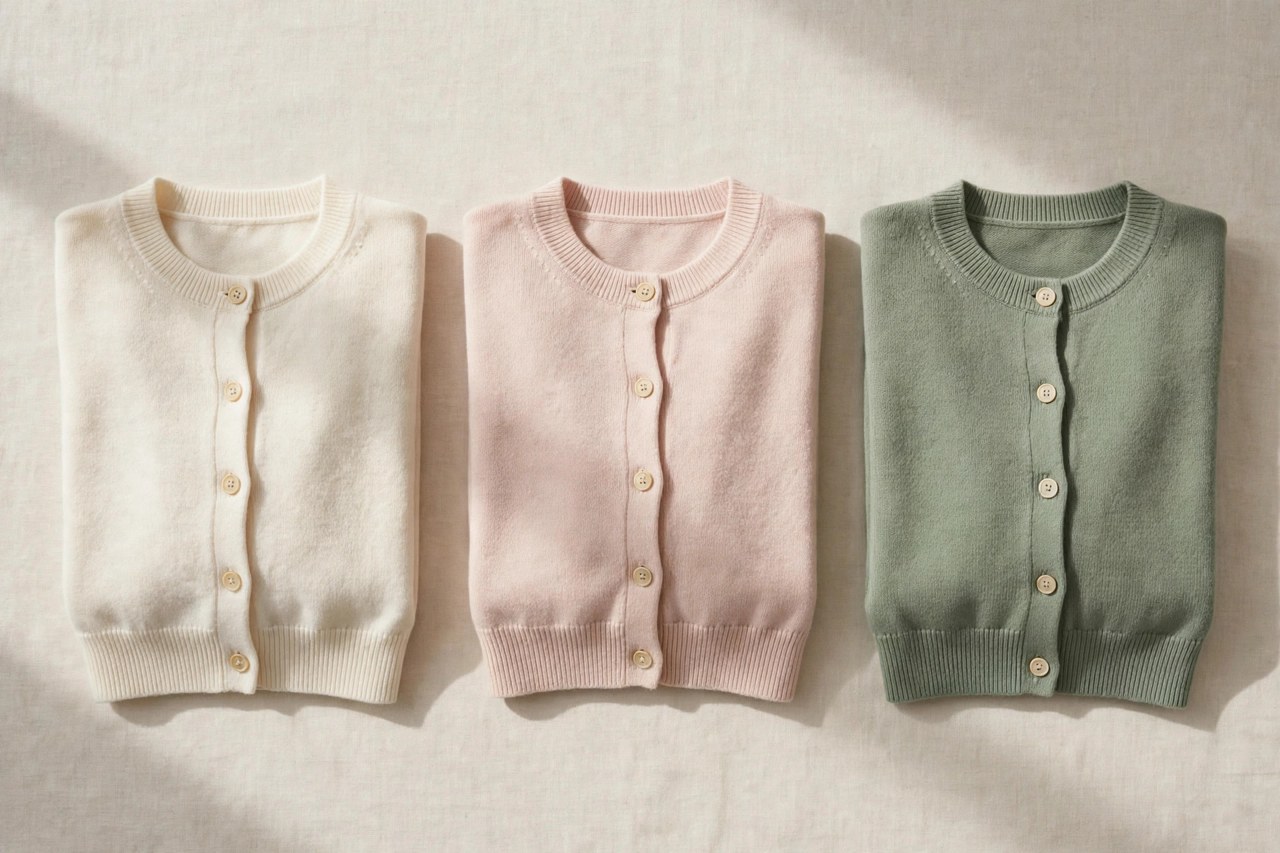
A cotton cardigan sweater is a knitted, open-front layer that closes with buttons, a zipper, or a tie, and it earns its keep precisely because cotton behaves differently from wool. Cotton yarn has a cool, smooth hand, it does not itch against bare skin or a thin blouse, and it breathes in heated offices and spring weather where a wool cardigan would feel stifling by noon. The trade-off is weight and memory: cotton knits are heavier for their warmth and they stretch out more readily, so construction matters. Look for tightly knitted fine-gauge fabric, reinforced button bands, and a little Lycra or a cotton-modal blend at cuffs if you want recovery.
Gauges, Yarns, and How a Cardigan Is Knit
Gauge describes how many stitches sit across an inch of knitting, and it decides whether a cardigan drapes like a sweater or hangs like a light jacket. Fine gauges, roughly 14 to 18 gauge, produce the smooth, almost flat surface of classic dress cardigans that layer under blazers and over silk blouses. Mid gauges around 7 to 12 give a more visible stitch, a slightly chunkier hand, and better standalone wear over a camisole. Cotton yarn itself varies: combed cotton is smoother and pills less, ring-spun cotton feels a touch more textured, and long-staple Pima cotton knits into a noticeably silkier, more durable fabric. Slub yarns add subtle horizontal texture for casual styles. Whatever the gauge, run a thumb over the knit — even stitches, no snags, and buttonholes finished cleanly are the marks of a cardigan that will keep its shape.
Styles: Cropped, Classic, Boyfriend, and Longline
Cropped cardigans end at or above the waist and exist to partner high-waisted trousers, skirts, and fit-and-flare dresses without swallowing the waistline. The classic hip-length cardigan, with a V or crew neckline and a full button front, is the office and everyday standard and the easiest style to wear buttoned as a top in its own right. Boyfriend cardigans borrow a looser, longer cut with dropped shoulders and patch pockets; in cotton they read relaxed rather than slouchy when the knit is fine and the sleeves are pushed to the forearm. Longline and duster cardigans fall to mid-thigh or the knee, adding a vertical line over leggings and straight dresses. Shrug and bolero cuts cover shoulders only. Match length to purpose first, then choose neckline: V-necks layer over collared shirts, crew necks sit neatest over scoop and boatneck tops underneath.
Cotton Versus Wool Cardigans
The honest comparison starts with warmth. Wool traps air and insulates even when damp, so a wool cardigan is the better deep-winter layer. Cotton wins everywhere else for many women: no itch, no dry-cleaning bills, no moth risk in storage, and a cool hand that suits spring, summer evenings, and air-conditioned rooms. Cotton is also the safer choice for sensitive and allergy-prone skin, and it tolerates frequent washing — important for light colors worn near makeup and sunscreen. Where cotton loses is resilience: elbows bag, cuffs stretch, and a heavy cotton knit can grow in length on a hanger. Counter that by choosing finer gauges, ribbed cuffs with recovery, and by folding rather than hanging. Many wardrobes sensibly hold both: wool for January, cotton for the other nine or ten months of layering weather.
Layering and Styling Cotton Cardigans
Treat the cardigan as the finishing layer, not an afterthought. Buttoned only at the middle, a fine-gauge cardigan over a printed dress defines the waist while letting the print show above and below. Worn open over a white tee and jeans, a colored cotton cardigan supplies the polish that a sweatshirt cannot. For work, a crew-neck cardigan buttoned over a sleeveless shell reads as a twinset-style top and stays comfortable when office temperatures swing. Belt a longline cardigan over a slim column of one color to keep the line long. Shoulder-draping — cardigan over the shoulders, sleeves loose — is a practical warm-weather trick that adds a layer without heat. Coordinate buttons with jewelry metal for a finished look, and keep one neutral and one cheerful color in rotation; cardigans are repeat players, not one-outfit pieces.
Care: Washing, Reshaping, and Storage
Cotton knitwear rewards gentle handling. Wash in cool water on a gentle cycle inside a mesh bag, or hand wash, using mild detergent; hot water and rough agitation encourage shrinkage and surface fuzz. Skip the tumble dryer for better cardigans — cotton knits can shrink in length and the heat tires the yarn. Instead, roll the cardigan in a towel to press out water, reshape it flat to its original measurements, and dry it away from direct sun, which fades dyes. Between wears, let it rest a day so stretched elbows and seat areas relax. Store folded in a drawer or on a shelf, never on a hanger, which pulls cotton knits into shoulder points and extra length. Check buttons after washing and re-sew a loose one early; a lost original button is hard to match, so keep the spare most makers sew inside.
More to Explore on Apparel Search
Photos

Looking for Women's Clothing Stores?
This guide helps you choose women's cotton cardigan sweaters by gauge, length and style. To browse where to buy, visit our women's clothing store directory, where you can find retailers that carry them.