The Dress Family
One Technique, Two Very Different Dresses
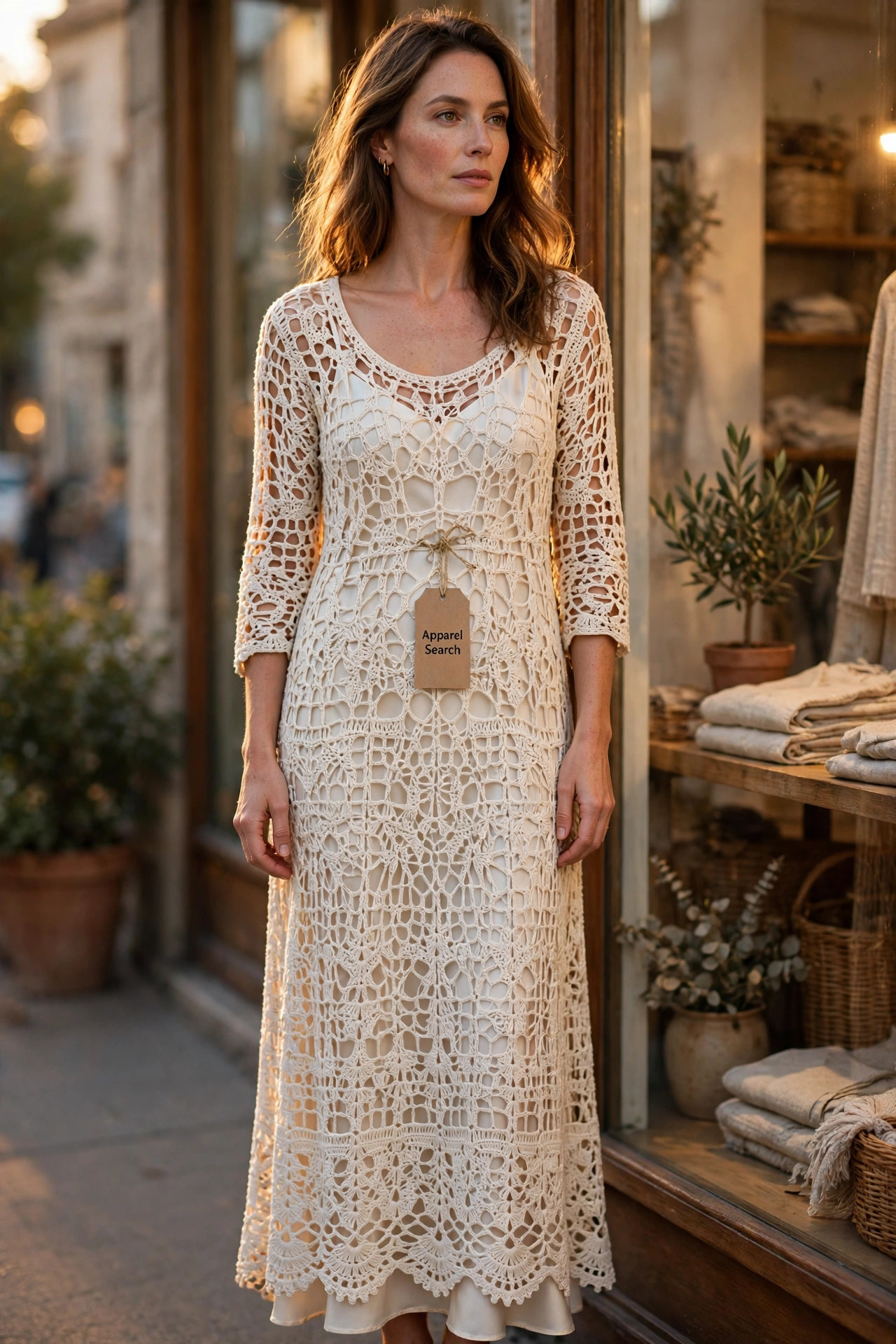
Every crochet dress is a negotiation between the pattern and what goes underneath it. At one end sits the beach cover-up: open mesh or motif work, unlined, designed to be seen through to a swimsuit. At the other sits the lined city dress: denser stitchwork or openwork mounted on a full slip, worn to lunches, weddings and summer evenings. Confusing the two is the only real mistake in this category — everything else is length, yarn and taste.
This guide works through both branches and the middle ground between them. For the wider family start with the crochet clothing guide; for outfit formulas, see how to style crochet.
Beach or City?
Cover-Up Dresses Versus Lined City Dresses
Cover-up dresses are the freest form: wide mesh, large motifs, fringe and tassels, usually in cotton or a cotton blend that tolerates suncream and the occasional splash. They are cut loose because the swimsuit underneath provides the silhouette. Judge them on how they behave wet at the edges — heavy cotton holds water and sags, so shorter cover-ups and open patterns are the practical picks. A cover-up worn in town over a slip can work; a lined city dress at the beach is overdressed and under-ventilated.
Lined city dresses earn the lining. The shell is worked in a finer, denser pattern — shells, fans, pineapple motifs, filet grids — and mounted on a slip in a matching or skin tone, sewn in at neckline and armholes so the layers move as one. The result reads as texture rather than transparency. Fit should be judged with the lining in place: the shell alone measures larger and hangs longer than the finished dress. Prices rise steeply here, because hand-work hours multiply as patterns get finer.
Lengths & Shapes
Mini, Midi and Maxi — and What Each One Needs
Mini crochet dresses are usually the most open, a single bold pattern worn over a short slip or, at the beach, a swimsuit. They suit denser yarns that hold a shape at the hem. Midi dresses are the versatile middle: fitted motif bodices with straighter or gently flared skirts, the length most lined city dresses choose, and the easiest to dress up with a heel or down with a flat sandal. Maxi dresses make the strongest statement and carry the most weight — literally. Look for shoulder and waist construction that distributes the load, and expect the hem to settle an inch or more lower after the first wears.
Silhouette follows stitch. Motif dresses — granny squares and joined flowers — are built from units, so they hang straight unless the units are graded in size. Filet and mesh dresses drape more fluidly. Fitted dresses work their waist shaping into the pattern itself. Whatever the shape, sit down in it before buying: crochet that fits standing can pull its pattern out of alignment seated.
Underneath It All
Slips and Underlayers: the Dress Beneath the Dress
The slip is half the outfit. For an unlined dress, choose a slip that ends an inch or two above the crochet hem so the pattern’s edge stays the visible finish. Skin-tone slips disappear and let the stitch pattern carry the whole effect — the right choice for weddings and photographs. Matching-tone slips (ivory under ivory, black under black) deepen the colour and read more solid. Contrast slips — black under ecru, colour under white — turn the pattern into a graphic and belong to parties and holidays, not ceremonies.
Fabric matters as much as colour: a smooth, light, non-cling slip lets the crochet move over it; a jersey slip grips and twists. Straps should hide under the dress’s own straps or be convertible. For dresses worn as cover-ups, the equivalent decision is the swimsuit — a plain, smooth suit in a toning colour, since prints fighting through openwork satisfy nobody. The crochet swimwear guide covers that pairing in detail, and the women’s dresses guide covers slip and lining conventions across dress types.
Occasions & Care
Where Crochet Dresses Go — and Keeping Them True
Occasion rules follow the lining. Lined, midi or maxi, in a fine pattern: summer weddings (never white or ivory as a guest — crochet reads bridal faster than most fabrics), christenings, garden parties and holiday evenings. Unlined or mini: festivals, beach clubs and resort dinners. A crochet dress is rarely right for formal evening codes, and only works at the office when the pattern is dense, the lining complete and the length conservative.
Care decides whether the dress keeps its shape for a season or a decade. Cool gentle washing, drying flat to measurements and folded storage are non-negotiable for maxis, whose own weight is the enemy. Rest a dress for a day between outings, and repair pulled loops by easing them back along the row, never by snipping.
Questions
Common Questions
Can you wear a crochet dress to a wedding?
Yes — a lined crochet dress in a midi or maxi length and a fine, dense pattern is a lovely wedding-guest choice for summer. Avoid white, ivory and cream, which read bridal in crochet faster than in almost any other fabric, and make sure the lining is complete: openwork that needs a visible slip underneath belongs at the beach, not a ceremony.
What do you wear under an unlined crochet dress?
A smooth slip dress that ends an inch or two above the crochet hem. Skin tone disappears and lets the pattern show; a matching tone reads most solid; a deliberate contrast turns the pattern graphic for parties. Choose a non-cling slip fabric so the crochet can move over it, and hide or convert the straps to match the dress neckline.
Do crochet dresses stretch out?
Yes, gradually — yarn loops ease under the garment’s own weight, and long dresses lengthen most. Buy the fit at the bust and hip, expect the hem to settle lower, dry the dress flat after washing and store it folded. A lined dress stretches far less than an unlined one because the lining carries part of the load.
More to Explore
Search Apparel Search