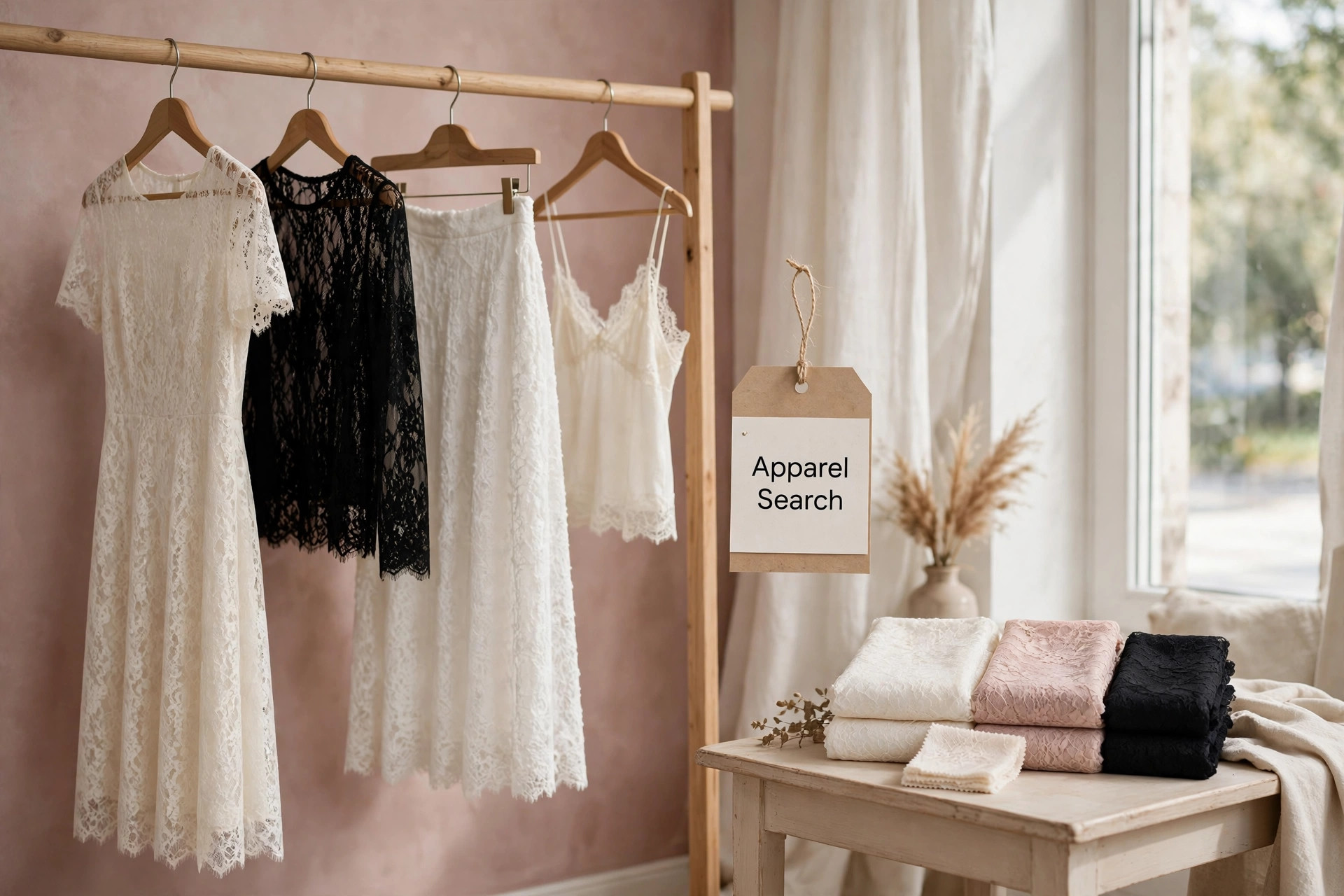
Lace is the fabric that does its own decorating. The openwork pattern supplies texture, detail and formality in a single cloth, which is why a lace garment needs little added to it — and why it goes wrong when everything around it competes. This guide covers the lace types used in clothing, the line between elegant and dated, colour pairing, and carrying lace from day to evening. Two companions go deeper on the garments: Lace Skirt Outfits and Lace Dresses & Tops.
Search Apparel Search
01 — The Laces
The Lace Types Used in Clothing
Chantilly is the classic dress lace: fine, flat floral motifs outlined on a net ground, soft-draping and traditionally formal — the lace of evening dresses and bridal wear. Guipure is heavier and bolder, its motifs joined by bars instead of net, with a raised texture that holds a shape, so it suits structured skirts, jackets and shift dresses. Eyelet (broderie anglaise) is not built on net at all: patterns are cut and embroidered into cotton cloth, which makes it opaque, washable and summery — the lace of sundresses and casual tops. Crochet-style lace imitates hand crochet in cotton or blends and reads relaxed and handmade. Leavers and raschel laces are the machine-made workhorses behind most high-street lace clothing. The construction behind each family is mapped in the lace definition, with its own pages for needle lace and bobbin lace.
Whatever the type, judge lace up close: motifs cleanly defined, the ground net even, the hand-feel soft and pliable. Stiff, scratchy, papery lace wears as cheaply as it feels.
02 — The Line
When Lace Reads Elegant — and When It Reads Dated
Elegant lace is almost always restrained lace: one piece per outfit, a clean modern cut underneath the decoration, and plain partners doing the balancing. A lace top with straight-leg trousers and loafers; a lace skirt with a fine plain knit; a lace dress with simple shoes and no competing jewellery. The lace is the single ornate note in an otherwise quiet outfit.
Lace reads dated when the sweetness stacks up: lace plus ruffles plus bows plus pastels plus curls is a period look, not a modern one, and all-over lace in a shiny fabric dates fastest of all. Fit matters too — lace over a lining that wrinkles or pulls looks tired however good the fabric is. If a piece feels costume-like, the fix is rarely a different accessory; it is a plainer, more current partner.
03 — Colour
Colour Pairing: What to Put With Lace
Black lace is the evening default and the easiest to wear after dark; pair it with black, charcoal or deep jewel tones and let texture, not contrast, do the work. Ivory and white lace carry bridal associations, so outside weddings they work best broken up — white lace with denim, tan leather or a coloured shoe stops the wedding reading entirely; the bridal dress guide covers the full ceremonial version. Coloured lace — burgundy, navy, forest, dusty rose — is the modern route into daytime lace, because colour moves it away from both bridal and lingerie territory. Keep the rest of the outfit in the same tonal family or in a calm neutral, and match metals quietly: antique gold and soft silver sit better with lace than high-shine chrome brights.
04 — Day to Evening
Taking Lace From Day to Evening
The same lace piece can work both shifts if the partners change. By day, dress lace down with flat shoes, denim, cotton and knitwear, and keep it matte: a lace-trim camisole under a cardigan, an eyelet top with chinos, a lace skirt with a plain tee and trainers. The lace-trim silk cami guide is the layering piece that does this most often. By evening, swap in the heeled shoe, the clutch and one piece of real jewellery, and remove a layer rather than adding one. Lace is also a natural coquette fabric and a staple of occasion dressing, from the wedding guest wardrobe to eveningwear. Because lace is semi-sheer by construction, the sheer fabric notes on linings apply to it directly.
Good to Know
Common Questions
Which lace is best for everyday clothing?
Eyelet and cotton crochet-style lace are the everyday workhorses: they are opaque or nearly so, washable, and read casual rather than formal. Save fine Chantilly and delicate floral net lace for dresses and occasion pieces, and use guipure — the heavier, net-free lace — where a garment needs structure, such as a skirt waistband or a jacket.
How do I stop lace looking dated?
Pair it with something plain and current. Lace dates fastest when the whole outfit is soft, sweet and shiny at once; it looks modern next to denim, a plain knit, tailored trousers, a leather jacket or clean minimal shoes. One lace piece per outfit, a modern silhouette underneath it, and unfussy hair and jewellery keep the fabric — not a period costume — as the point.
Can I wear lace to the office?
Yes, in contained doses. A lace-trim camisole under a blazer, a lace blouse with the lining doing its job, or a lined lace pencil skirt in navy, black or burgundy all read professional. Keep the lace opaque, the fit tailored rather than body-conscious, and the rest of the outfit structured — the contrast between soft lace and sharp tailoring is what makes it office-appropriate.