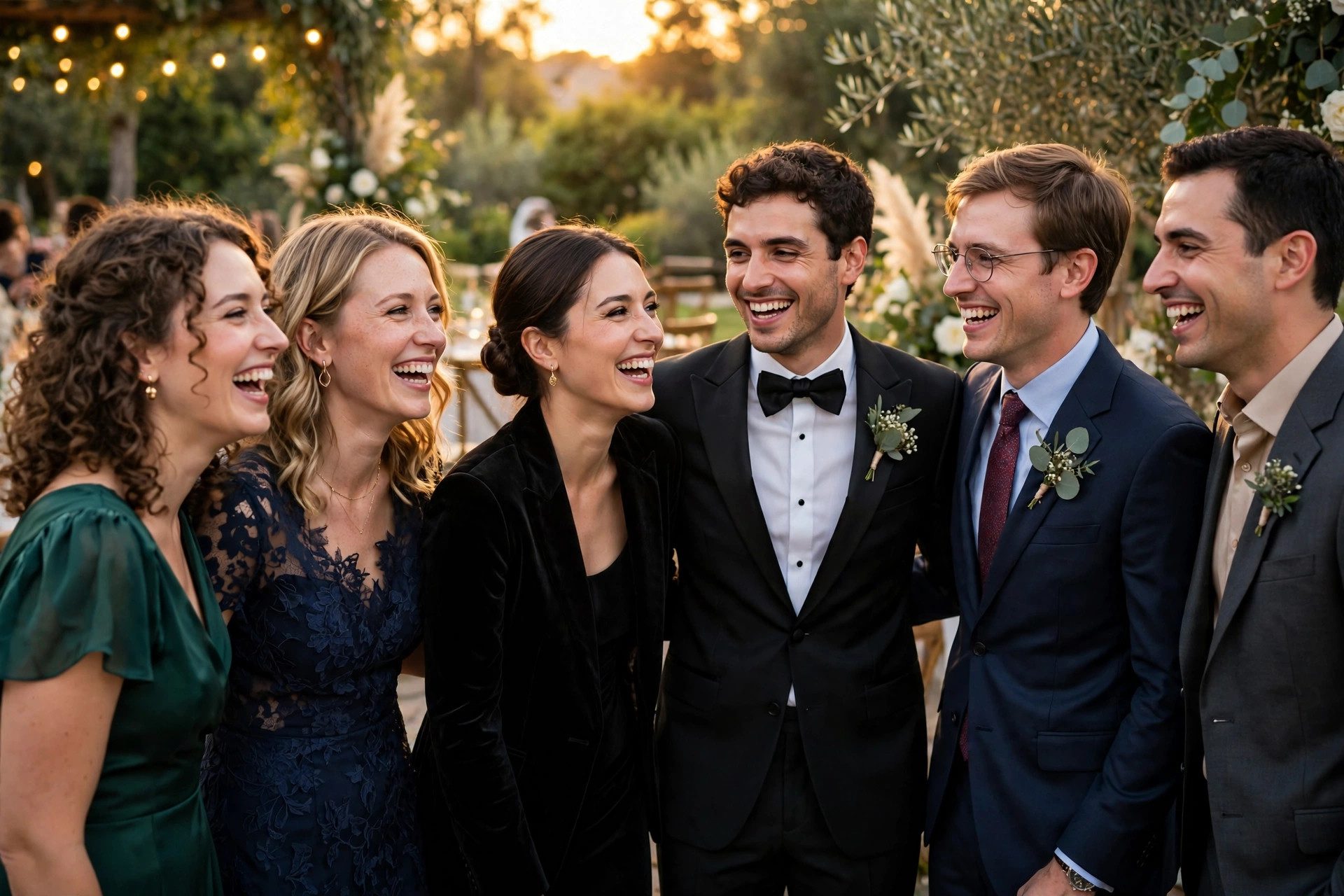
Where to start
Every wedding outfit decision flows from three facts: the dress code on the invitation, the season, and the venue. A black-tie evening wedding in December calls for entirely different clothing than a barefoot beach ceremony in July. Get those three right and the rest is detail.
Two rules apply at every wedding, no exceptions. First, do not wear white, ivory, cream, or anything close to bridal — that color belongs to the couple. Second, dress for the code stated, not the code you wish it were: overdressing a casual wedding draws as much attention as underdressing a formal one.
Explore this section
What to Wear to a Wedding
Outfit guidance organized by dress code — black tie, cocktail, semi-formal, casual, beach, and destination weddings.
Wedding Dress Codes Decoded
What white tie, black tie optional, cocktail, dressy casual, and the rest actually mean — and what to wear for each.
Attire by Season
Fabrics, colors, and layers that work for spring, summer, fall, and winter weddings.
The golden rules of wedding guest dressing
Read the invitation literally
The dress code is printed for a reason. "Cocktail attire" is an instruction, not a suggestion. When no code is given, take cues from the venue and time of day — evening and ballrooms skew formal, afternoons and gardens skew relaxed.
Never outshine the couple
Avoid white and near-white, skip anything bridal-looking (long veils of tulle, tiara-adjacent headpieces), and keep sequin-ballgown energy proportional to the formality. The spotlight is taken.
Dress for the venue's reality
Stilettos sink into lawns — choose block heels or wedges for outdoor ceremonies. Beach weddings mean wind: weighted hemlines beat flowing maxi skirts. Cold churches demand a wrap even in summer.
When in doubt, ask
A quick question to the couple, the wedding party, or the venue beats a wrong guess. "How formal is it, really?" is a compliment to the hosts, not an imposition.