Mother of the Bride Guide
The complete planning guide for the mother of the bride: the right outfit, the right color, the right timing — and the etiquette that makes the day run smoothly.
Shop Mother of the Bride Dresses Now
Shop Mother of the Bride Dresses on Amazon Shop Mother of the Bride Dresses on eBayThe Amazon and eBay links on this page are affiliate links. If you make a purchase through them, Apparel Search may earn a commission.
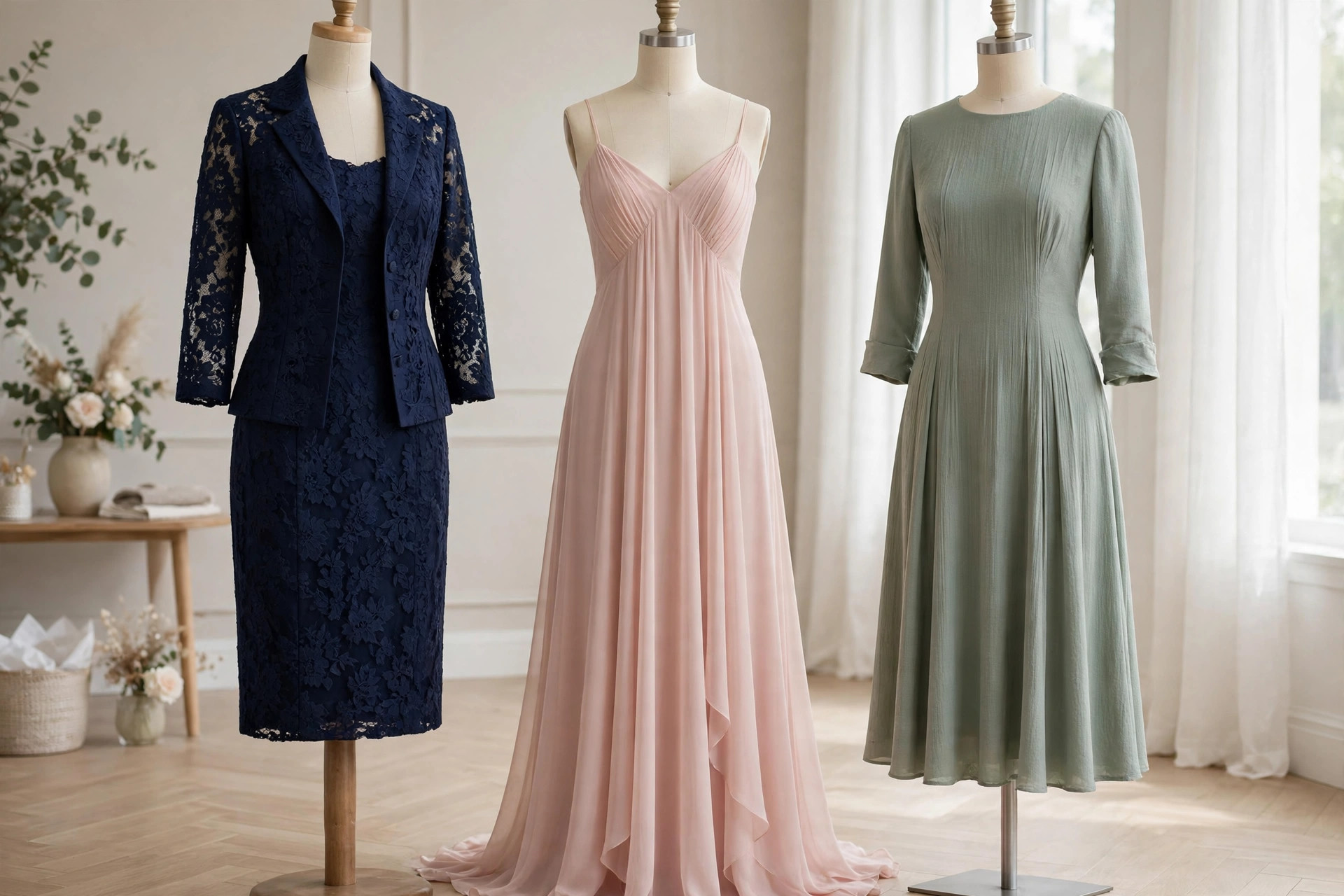
The mother of the bride is the hostess figure of the wedding day: she greets guests, anchors the receiving line, appears in nearly every family photograph and, by long tradition, is the first of the two mothers to choose her outfit. This guide covers the whole job — the outfits themselves, the etiquette that surrounds them, how the choice changes with the season and the formality of the day, and how to shop without stress. For dress silhouettes, lengths and jacket dresses in depth, start with our companion mother of the bride dresses guide; this page is the wider planning companion to it.
The Outfits: Dresses, Separates and Pantsuits
Most mothers of the bride choose a dress, and the strongest current options are the lace or chiffon jacket dress, the floor-length A-line gown for formal weddings, the tea-length fit-and-flare for daytime, and the beaded sheath for evening. But a dress is not compulsory. An elegant two-piece — a long skirt with a matching embellished top — fits many bodies better than any one-piece, and a well-tailored pantsuit in a dressy fabric such as crepe, satin-back crepe or a soft metallic weave is now fully accepted at all but the most traditional black-tie weddings. What matters is that the outfit reads as one deliberate, formal ensemble, not as separates borrowed from the office wardrobe.
Sleeves deserve early thought, because they drive comfort in photographs and in air-conditioned venues alike. Three-quarter and illusion sleeves are the category's workhorses; flutter and elbow sleeves suit warm-weather weddings; and a matching jacket, wrap or bolero turns a sleeveless dress into two outfits — covered for the ceremony, lighter for dancing.
Etiquette: Color, Coordination and What Not to Wear
The traditional order exists to prevent clashes: the bride settles her dress and the bridesmaids' dresses first, the mother of the bride chooses next, and the mother of the groom then coordinates with her — our mother of the groom guide explains her side of that conversation. Aim to harmonize with the wedding palette rather than match it exactly: a deeper, softer or more muted relation of the bridesmaids' color photographs as family without looking like an extra bridesmaid.
What not to wear is short and firm. Never white, ivory, cream, champagne or any pale shade that can read bridal in photographs, unless the bride explicitly asks for it. Avoid the bridesmaids' exact color and fabric. Skip anything that competes with the bride — dramatic trains, bridal-style lace headpieces, or a silhouette closer to a wedding gown than to an occasion dress. Black, once avoided, is now a normal elegant choice for formal evening weddings when the bride is happy with it; ask first, because in some families it still reads as disapproval. Red carries a similar check-first status in a few traditions. When in doubt, send the bride a photograph of the dress — that one message prevents nearly every mother-of-the-bride problem.
By Season and Formality
Black tie and evening: a floor-length gown or formal full-length separates, in satin, chiffon, lace or velvet in season. Formal and cocktail: a tea-length or knee-length dress in a dressy fabric, or an elegant pantsuit. Daytime and garden: a knee-length or midi dress with sleeves or a jacket, in lighter colors and fabrics, with shoes that survive grass. Spring and summer favor chiffon, lace and pastels or florals, plus a wrap for cool evenings. Autumn suits jewel tones — burgundy, plum, forest, navy — in crepe and satin. Winter is the season for velvet, longer sleeves and richer metallics, with a proper coat or wrap planned as part of the outfit rather than an afterthought.
Accessories and Finishing Touches
Keep jewelry at one statement level: if the dress is beaded, keep earrings simple; if the dress is plain crepe, let the jewelry and bag carry the sparkle. Shoes should be bought before the final fitting, worn at the fitting, and chosen for a long day — a moderate heel or an elegant flat beats a beautiful shoe abandoned by dessert. A small clutch or structured evening bag in a metallic or matching tone finishes the look, and a wrap in the dress's fabric family covers shoulders for the ceremony, photographs and travel between venues.
Shopping Guidance
Start three to six months before the wedding: mother-of-the-bride departments are deep but sizes in popular colors sell through, and ordered dresses plus alterations take real time. Shop with the bride's palette and the venue in mind, try every candidate seated as well as standing, and order by your largest measurement, altering down. Budget for alterations, shoes and the wrap from the start. Finally, compare notes with the mother of the groom once your outfit is chosen — a short, friendly exchange about color and length is all the coordination the day needs, and the wedding guest section's wedding guest attire hub covers what everyone else at the wedding will be working from.
Common Questions
When should the mother of the bride choose her dress?
After the bride has chosen her dress and the bridesmaids' dresses, and before the mother of the groom chooses hers. In practice that means shopping three to six months before the wedding, leaving time for ordering and alterations.
What colors should the mother of the bride avoid?
White, ivory, cream and any pale shade that photographs as bridal, plus the bridesmaids' exact color and fabric. Choose a harmonizing deeper, softer or muted relation of the wedding palette instead — navy, burgundy, slate, taupe, blush and jewel tones all work well.
Can the mother of the bride wear a pantsuit or black?
Yes to both, with one check each. A tailored pantsuit in a dressy fabric such as crepe or satin is accepted at all but the most traditional weddings, and black is now a normal elegant choice for formal evening weddings — ask the bride first, because in some families it still reads as disapproval.
Related Women's Guides
More to Explore on Apparel Search
Looking for Women's Clothing Stores?
If you are ready to shop rather than browse guides, visit our women’s clothing shopping directory for stores carrying mother of the bride dresses and much more, or use the Amazon and eBay buttons at the top of this page.