Mother of the Groom Guide
The complete planning guide for the mother of the groom: how to coordinate gracefully with the mother of the bride, choose the right outfit, and enjoy the day.
Shop Mother of the Groom Dresses Now
Shop Mother of the Groom Dresses on Amazon Shop Mother of the Groom Dresses on eBayThe Amazon and eBay links on this page are affiliate links. If you make a purchase through them, Apparel Search may earn a commission.
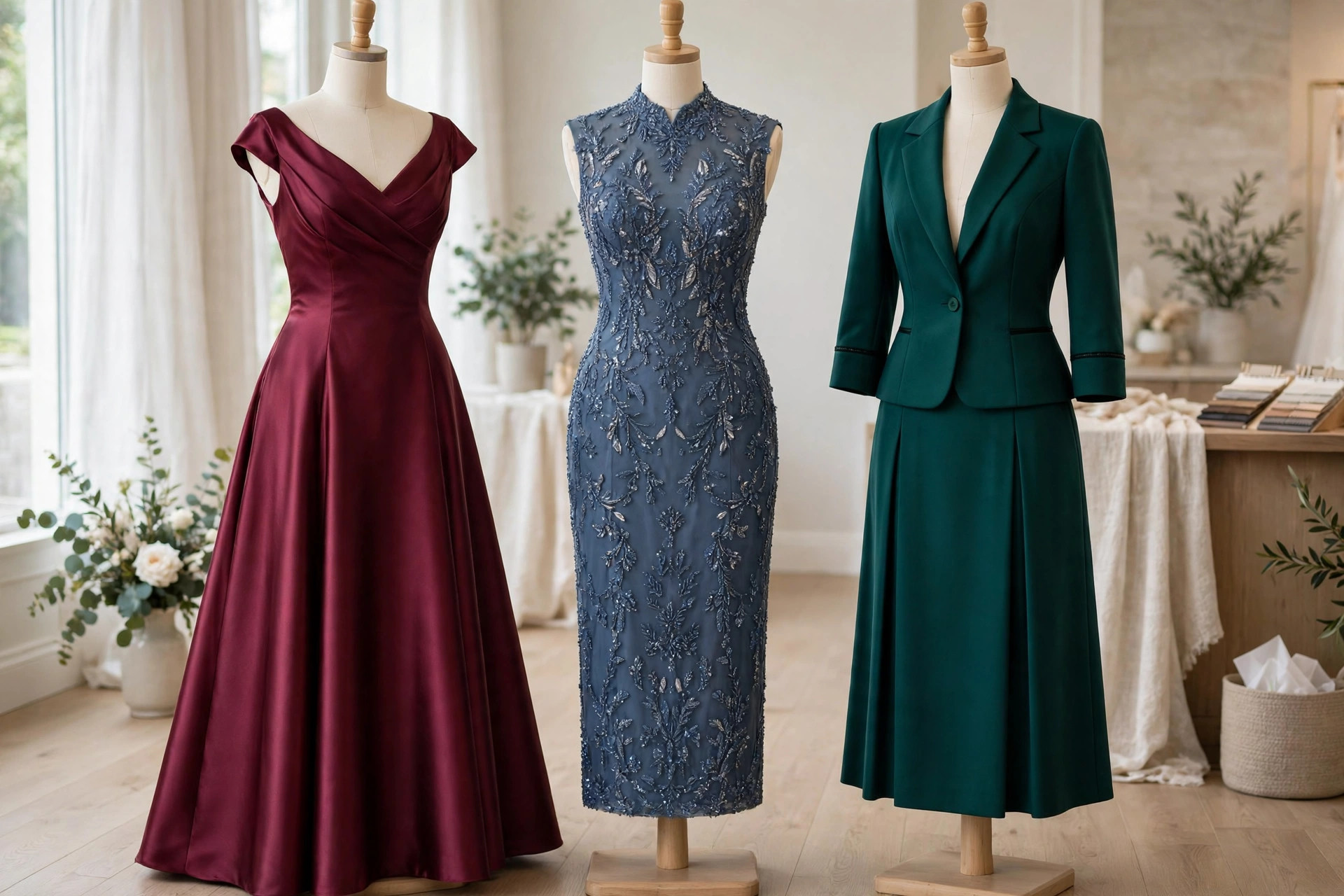
The mother of the groom has the wedding's most misunderstood dress code: tradition asks her to wait, coordinate, and then shine inside a brief she did not set. Handled well, that brief is a gift — the palette, formality and venue are already decided, and her whole job is to find the most flattering outfit inside them. This guide covers her outfits, the etiquette of coordinating with the mother of the bride, choices by season and formality, accessories, and a calm shopping plan. Her companion dress-by-dress survey is our mother of the groom dresses guide.
The Outfits: Dresses, Separates and Pantsuits
The classic mother of the groom choices mirror the wider occasion department: a lace or chiffon dress with a matching jacket, a tea-length A-line for daytime weddings, a beaded or satin sheath for evening, and a floor-length gown when the invitation says black tie. Separates — a long or tea-length skirt with a coordinated embellished top — are often the most comfortable route, because each half can be fitted independently. A tailored pantsuit in crepe, satin or a subtle metallic is a modern, fully respectable option, especially for mothers who simply do not wear dresses; dressed with evening shoes and jewelry, it meets every code except the most traditional white-tie formality.
Coverage is a matter of preference, not age. Illusion, three-quarter and flutter sleeves, higher necklines and longer hems are stocked throughout this department precisely because so many mothers ask for them. Modest styling is easy here: our modest wedding guest attire guide shows how longer hems and sleeves meet every dress code, and the same approach works beautifully for a mother of the groom.
Etiquette: Coordinating With the Mother of the Bride
Tradition gives the first choice to the mother of the bride, and the mother of the groom chooses after her — not as a slight, but so the two outfits can be coordinated instead of colliding. Once the mother of the bride has chosen, a friendly call or message settles the three things that matter: color family (harmonize; do not match exactly, and do not choose the same color), length (roughly comparable formality in photographs), and formality (if she is in a beaded gown, a casual sundress will look lost beside her, and the reverse is equally true). Our mother of the bride guide covers her side of the same conversation.
What not to wear follows the same short list as every honored guest: never white, ivory or anything that photographs as bridal; avoid the wedding party's exact color; avoid upstaging silhouettes and bridal details. The mother of the groom should also take her cue on black and red from the couple and the mother of the bride — both are widely worn now, but they are choices to coordinate, not to surprise people with. And one genuine rule of the role: whatever you think of the arrangements, the outfit is not the place to say it. Elegant and harmonious is the whole assignment.
By Season and Formality
Black tie: floor-length, in satin, chiffon, lace or seasonal velvet, with evening accessories. Formal and cocktail: tea-length or knee-length in a dressy fabric, or a formal pantsuit. Daytime, garden and beach: a knee-length or midi dress with sleeves or a light jacket, in colors that sit well in natural light, and shoes chosen for grass or sand. Spring and summer bring lighter fabrics and softer colors — dusty blue, sage, blush, silver-grey. Autumn is the jewel-tone season: plum, teal, burgundy, navy. Winter weddings reward velvet, longer sleeves, deep metallics and a planned coat or wrap, because the photographs may well happen outdoors.
Accessories and Finishing Touches
Let the dress set the sparkle budget: beaded dress, quiet jewelry; plain dress, room for a necklace or statement earrings and a metallic clutch. Comfortable, already-broken-in shoes matter more than an extra inch of heel — you will be standing for photographs, greeting your son's new family, and dancing. A wrap or jacket in a matching fabric family handles ceremony shoulders, evening chill and air conditioning without disturbing the outfit underneath, and it should be chosen with the dress, not the week of the wedding.
Shopping Guidance
Begin once the mother of the bride has chosen — typically three to five months before the wedding — and allow for ordering time and alterations. Bring the wedding's colors with you, try candidates seated, standing and moving, and order by your largest measurement so a tailor can take the outfit in rather than letting it out. If the two mothers live far apart, exchanging photographs of the chosen outfits is the modern version of the traditional call, and it works just as well. For what the rest of the guests will be wearing, the wedding guest attire hub decodes every invitation, and the bridesmaid dresses guide shows the palette you are harmonizing with.
Common Questions
Does the mother of the groom really have to wait for the mother of the bride?
Traditionally yes — she chooses after the mother of the bride so the two outfits can be coordinated for color, length and formality instead of clashing in photographs. A short friendly exchange about those three points is all the coordination the tradition actually requires.
What color should the mother of the groom wear?
A color that harmonizes with the wedding palette and with the mother of the bride's dress without matching either exactly. Silver-grey, dusty blue, sage, plum, teal, navy and burgundy are reliable choices; avoid white and ivory, the wedding party's exact color, and check with the couple before choosing black or red.
Can the mother of the groom wear the same color as the mother of the bride?
Better not. Photographs read much better when the two mothers wear related but distinct colors at a similar level of formality. If you both fall in love with the same color family, separate the shades clearly — light versus deep, for example — and tell each other before the day.
Related Women's Guides
More to Explore on Apparel Search
Looking for Women's Clothing Stores?
If you are ready to shop rather than browse guides, visit our women’s clothing shopping directory for stores carrying mother of the groom dresses and much more, or use the Amazon and eBay buttons at the top of this page.