First, read the invitation
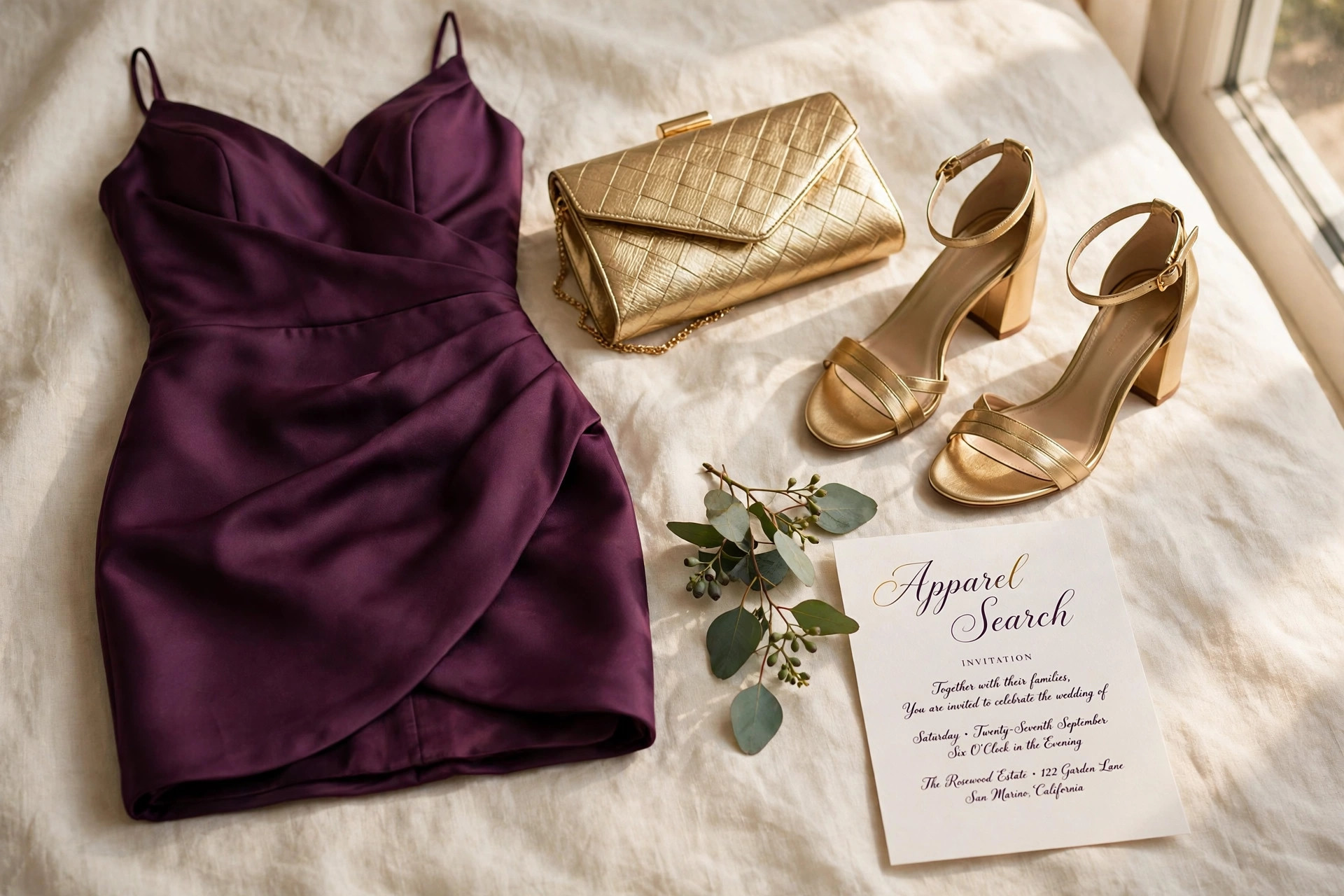
Almost every wedding outfit question is answered on the invitation itself. The dress code line — black tie, cocktail, dressy casual — is an instruction from the couple, not a theme suggestion. The venue and start time fill in the rest: a 6 p.m. ceremony at a historic mansion and a 2 p.m. ceremony in a garden can carry the same code and still call for different shoes, fabrics, and layers. Our companion guide, Wedding Dress Codes Decoded, defines each code precisely; this page shows what to actually put on.
Two habits save guests repeatedly. Decide the outfit at least two weeks out, so there is time for tailoring, shoe repair, or a replacement. And try the whole outfit on — sitting, walking, and raising a glass — because a wedding is six hours of all three, not a mirror check.
Formal and black tie
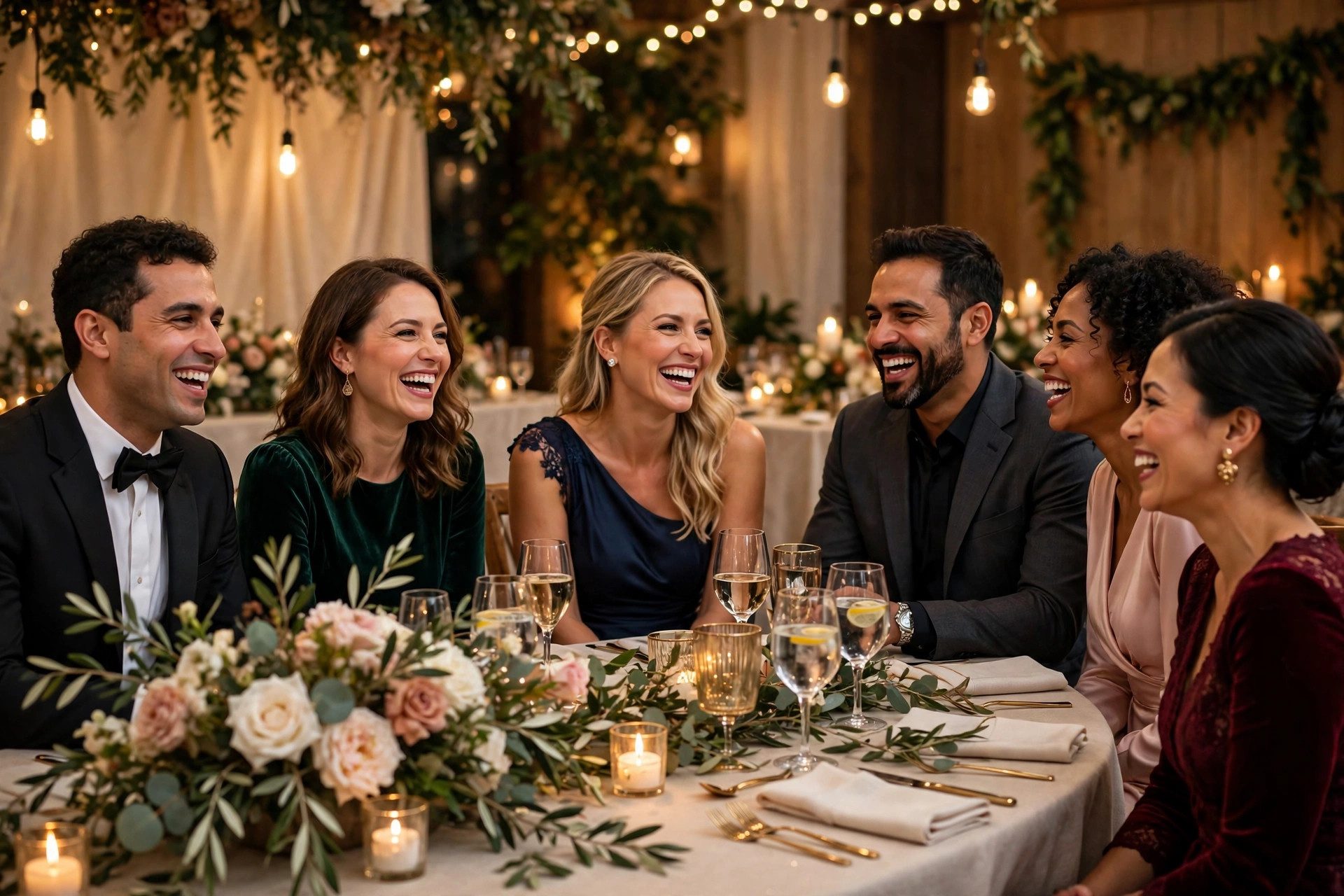
Black tie is the most formal common dress code. Women wear floor-length gowns or very dressy cocktail dresses in luxe fabrics — silk, velvet, crepe — with fine jewelry and an evening clutch. Men wear a tuxedo: black dinner jacket, formal trousers, bow tie, and patent or polished dress shoes. "Formal" without the word "black" is a half-step down: a tuxedo still works, or a dark suit with a tie.
Two refinements matter at this level. "Black tie optional" invites the tuxedo but accepts a dark suit — wear the tuxedo if you own one, since the couple is signaling they would love the full effect. And fabric does the formal talking: matte wool, silk, and crepe read formal at any length, while shiny satin and heavy beading can push a shorter dress up a level. White tie, the one code above black tie, is rare enough that our dress codes guide covers it separately.
Cocktail and semi-formal
The most common wedding dress code. Women choose cocktail dresses at or just below the knee, dressy jumpsuits, or a skirt-and-blouse pairing in elevated fabrics. Men wear a suit — navy, charcoal, or dark gray — with a dress shirt and tie (the tie may be optional for semi-formal in warm weather). This is the code where most guests land, so it pays to own one reliable outfit at this level.
Semi-formal sits one notch below cocktail: the same silhouettes in slightly softer fabrics, midi and tea lengths welcome, and men can swap the suit for a blazer and odd trousers in the daytime. Color is freer here than at black tie — jewel tones, deep florals, and metallics all belong — but the no-white rule and the polish standard do not relax.
Dressy casual and casual
"Dressy casual" still means polished: women in sundresses, midi skirts, or tailored separates; men in chinos or dress trousers with a collared shirt (blazer optional but welcome). True "casual" is rare for weddings and usually signals a backyard or daytime event — neat dark jeans can work, but shorts, flip-flops, and graphic tees never do. When a wedding says casual, aim one notch above what you would wear to a nice restaurant.
The trap at this level is reading "casual" as "everyday." The couple still hired a photographer. Choose the nicest version of relaxed: pressed fabrics, closed or clean shoes, and one deliberate accessory. If you would wear it to run errands, it is not wedding casual.
Beach and destination weddings
Beach formal calls for lightweight fabrics that move in ocean wind: linen suits without ties for men, flowing midi or maxi dresses for women, and footwear that handles sand — dressy sandals or barefoot-friendly flats. For destination weddings, pack for the climate first and the ceremony second, and bring one layer for air-conditioned receptions. Wrinkle-resistant fabrics earn their keep when the outfit travels in a suitcase.
Venue-specific guides go deeper: the beach wedding guest guide covers dresses, fabrics, and shoes for sand; the courthouse wedding guest guide handles small, photo-heavy ceremonies; and the modest wedding guest attire guide pulls together covered, elegant options for ceremonies with dress expectations of their own.
Let the season adjust the outfit
The dress code sets the level; the season sets the fabric. The same cocktail dress code means breathable linen-blend and open shoes in July, and velvet with closed-toe heels and a real coat in December. Our wedding guest attire by season guide works through spring, summer, fall, and winter in detail, and the winter wedding guest guide covers cold-weather dressing — layers, sleeves, and coats that survive arrival photos.
Shoes and finishing touches
Shoes are where wedding outfits quietly succeed or fail. Grass swallows stilettos, so outdoor ceremonies call for block heels, wedges, or dressy flats; marble and dance floors punish brand-new shoes, so break in anything new at home first. A small evening bag that holds a phone, a card, and lip balm beats a daytime tote at every code above casual. Jewelry should finish the outfit, not announce it — one strong piece at a time — and a wrap or tailored coat counts as part of the outfit in any month with a chill, because it will appear in the arrival photos.
A note on menswear
Men's wedding guest dressing is simpler but less forgiving of errors. Match leathers (belt to shoes), make sure the suit fits in the shoulders, and skip the novelty tie at anything above casual. A well-fitted navy suit with a white shirt handles nearly every dress code except black tie — it is the hardest-working garment a wedding guest can own.
Men get a full page of their own in this section: Men's Wedding Guest Attire covers the one-suit strategy, outfit formulas for every dress code, fit checks, and shoes. For outfit-by-outfit detail rung by rung, see the companion men's wedding guest outfits guide in the Men's Clothes section.
Common questions
Can I wear black to a wedding?
Yes. Black is a standard, safe guest color at evening and formal weddings, and a black cocktail dress or dark suit reads elegant rather than funereal. In daytime or garden settings, lighten the look with metallic or colored accessories so it feels celebratory.
Can wedding guests wear white or ivory?
No. White, ivory, cream, and anything that photographs as bridal belong to the couple. That includes mostly-white prints and pale champagne at formal weddings. If a dress only works in white, choose a different dress.
What if the invitation does not state a dress code?
Read the venue and the hour. An evening start at a ballroom or historic house points to cocktail or formal; a daytime garden, barn, or restaurant wedding points to dressy casual. The invitation's own formality — letterpress versus an email — is a hint too. When you still cannot tell, ask the couple or a member of the wedding party.
Are jeans ever OK at a wedding?
Only at a genuinely casual wedding — a backyard or daytime event where the couple says casual and means it. Even then, choose dark, neat denim with a collared shirt or a dressy top, never ripped or faded jeans. At every other dress code, trousers, a skirt, or a dress is the right call.
What should a man wear if he does not own a suit?
A blazer or sport coat with dress trousers, a collared shirt, and leather shoes covers semi-formal and dressy casual weddings well. For cocktail or formal codes, a suit is expected — buy one versatile navy or charcoal suit rather than renting, because it will handle nearly every wedding on your calendar.