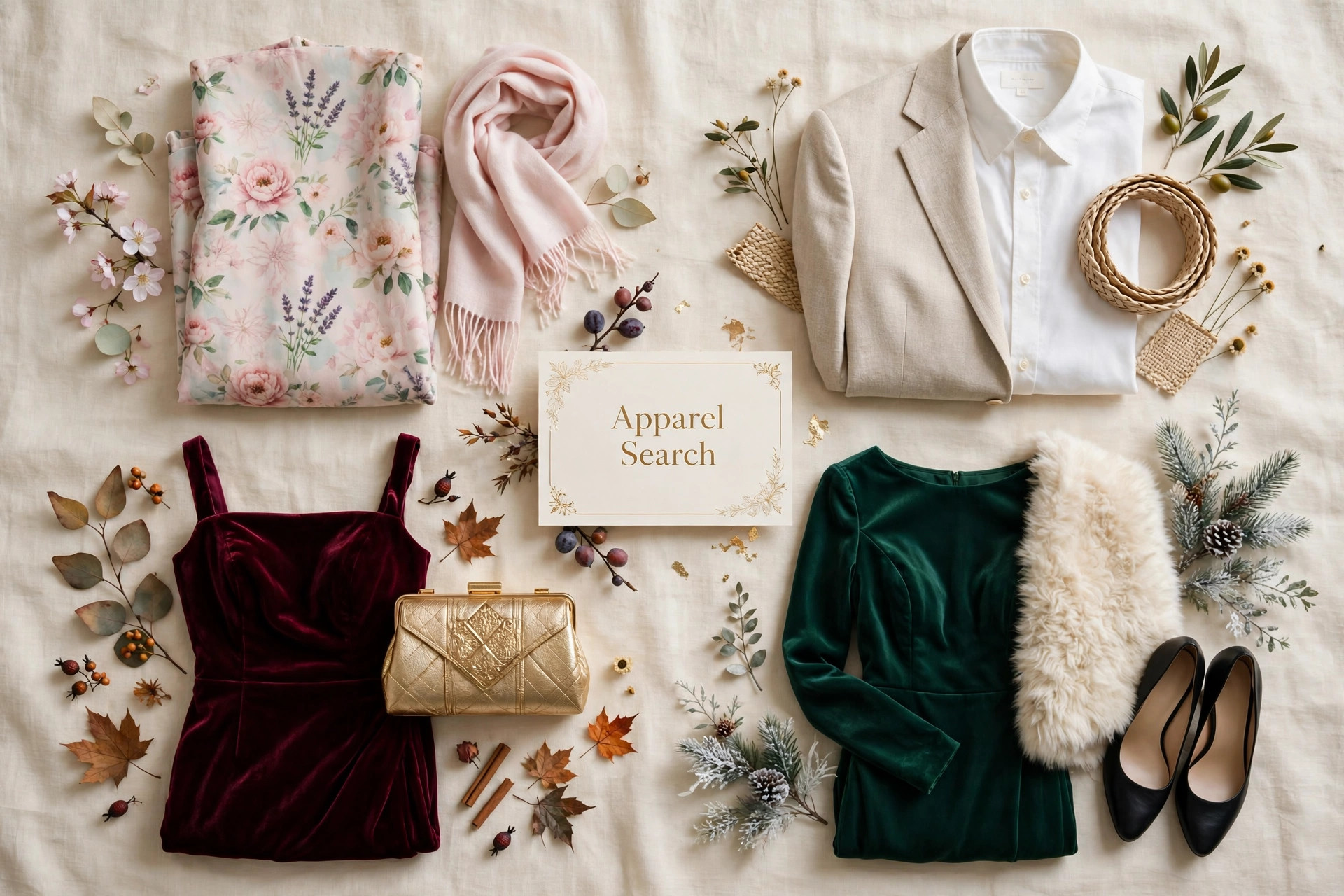
Season is the second question
The first question is always the dress code. The second question — the one this guide answers — is the season. Two weddings can carry the identical code and demand completely different clothes, because season decides fabric weight, which colors look right in the light, what belongs on your feet, and whether a layer is an accessory or a necessity.
Learn to read a forecast the way an event demands. A daily high tells you almost nothing: what matters is the temperature during the ceremony hours, plus where those hours are spent. An outdoor ceremony followed by an indoor reception means dressing for two climates in one outfit — sun, wind, or cold for the vows, then air conditioning or heating for dinner. Arrival photographs happen outside in nearly every season, so your coat, wrap, and shoes will be photographed. Plan for the hardest hour you will spend outdoors, and make the layer the part you can add or remove gracefully once inside.
Spring weddings
Spring is wedding high season, and the challenge is changeable weather. Florals and pastels suit the season; a midi dress with a pashmina or light blazer handles a chilly church and a warm garden in the same afternoon. Men do well with lighter suits in gray or blue. Bring the layer — spring ceremonies run long and shade is cold.
For women, spring fabrics sit in the middle weight range: crepe, lined chiffon, and cotton-silk blends give coverage without warmth you cannot shed. Midi lengths keep hems clear of damp grass and puddles. Pastels — blush, powder blue, lilac, soft sage — and small-scale florals read seasonal in spring light; ground them with a solid shoe and bag. Gardens and church steps can be wet, so a block heel or dressy flat with grip beats a thin stiletto, and closed toes are safer early in the season.
For men, a lighter gray or blue suit in breathable wool replaces the dark winter suit, with a pastel tie if the code allows some play. Bring the jacket even when the afternoon feels warm, and check the forecast that morning, not the week before — spring fronts move fast.
Summer weddings
Heat is the enemy of formalwear. Breathable fabrics — linen, cotton, seersucker, lightweight silk — keep guests comfortable, and lighter colors reflect sun at outdoor ceremonies. Women should consider sweat-proof fabrics and secure hairstyles; men can often lose the tie at semi-formal summer weddings (keep the jacket for the ceremony). Sunglasses are practical for outdoor vows but come off for photos.
For women, fabric choice does most of the work. Natural fibers and loose weaves let air move, and lightly lined dresses stay comfortable through a long outdoor ceremony. Sweat-proof dressing means thinking about what shows: busy prints and mid-tone colors disguise perspiration far better than pale solid satin. Carry a light wrap for air-conditioned receptions and ceremonies that ask for covered shoulders. Secure hairstyles — an updo, a low ponytail, pinned braids — survive humidity in a way loose curls do not. For sand and midday heat in more detail, see our guide to dressing as a guest at a beach wedding.
For men, summer suiting means lighter cloth and color: tan, light gray, and pale blue suits in linen, cotton, seersucker, or tropical-weight wool. A linen blend holds its shape better through photographs than pure linen. At semi-formal weddings the tie can often go, but the jacket stays on for the ceremony, and at cocktail or formal codes the tie stays too. Choose breathable leather shoes, and wear sunglasses for waiting in the sun, not for the vows.
Fall weddings
Fall offers the richest palette: jewel tones, burgundy, forest green, navy, and metallics all read seasonal without looking costumey. Heavier fabrics — velvet, crepe, brocade — suit cooling evenings. This is the season for the statement coat or wrap, since it will be photographed. Men can bring back texture: flannel-wool suits, knit ties.
For women, fall is the most forgiving season to dress for. Add plum, mustard, and rust to the jewel tones above, and let fabrics gain body: velvet at evening weddings, heavier crepe for day or night, brocade when the code is formal. Three-quarter and long sleeves return comfortably. Layers become part of the design: a tailored coat or wool wrap over a cocktail dress looks intentional, so choose a coat you are happy to be photographed in. Closed-toe heels handle cold pavement and fallen leaves better than sandals.
For men, fall restores texture and weight. Flannel-wool suits in charcoal, navy, and deep brown feel right as temperatures drop, and knit ties and suede dress shoes belong again. Bring an overcoat that fits over the suit — an afternoon wedding can end in genuine cold.
Winter weddings
Winter weddings skew formal and dramatic — think black tie in December. Long sleeves, velvet, faux fur stoles, and closed-toe heels handle cold venues; a proper coat matters because arrival photos happen outside. Deep colors (emerald, sapphire, oxblood) suit the season. The one caution: overheated ballrooms, so choose layers you can shed gracefully.
For women, winter dressing starts with coverage that still looks like evening wear. Long sleeves in velvet, crepe, or lace, floor-length gowns at formal codes, and richly colored cocktail dresses at semi-formal ones all answer the season. Emerald, sapphire, and oxblood deepen under evening light, and black is at its best in winter. A faux fur stole or tailored wool coat completes the outfit outdoors; thin fashion jackets do not survive a winter arrival. Cold-weather outfit building is covered in depth in our winter wedding guest guide for women.
For men, winter means the full suit without apology: heavier wool or flannel, a tie at semi-formal and above, and a real overcoat rather than a casual jacket over formalwear. At December black tie weddings, the tuxedo is the expectation. Build the outfit in layers you can shed gracefully — a coat checked at the door, a jacket that can come off at the table — rather than one heavy piece.
Have a weather plan
Seasons set the expectation; the actual day sets the test. Check the forecast two days out and again that morning, and adjust the outfit's edges — shoes, layer, umbrella — rather than starting over.
Rain. Swap the footwear first: suede, satin, and thin soles lose to water, so choose leather shoes with grip, a block heel instead of a stiletto, and a hem that clears puddles. Carry a clear umbrella — it shelters the outfit without clashing with it or blocking photographs.
Heat wave. Strip the outfit back to its breathable core: natural fibers, the lightest lining, ventilated shoes, and hair secured up off the neck. Men should choose the lightest suit they own that meets the code and keep the jacket for the ceremony only.
Cold snap. Add warmth in layers that preserve the outfit's shape: a proper coat, a wrap or stole over the dress, hosiery under a long hem, and closed shoes. Layers beat a single heavy garment, because indoor venues will still be heated.
Common questions
What if the forecast turns cold for a spring wedding?
Keep the spring outfit and fix the layer, not the whole look. Add a pashmina, wrap, or light blazer that matches the dress, choose closed-toe shoes if the temperature drops, and bring a proper coat for travel between venues. Spring weather changes by the hour, so a layer you can carry beats re-planning the outfit.
Can men skip the tie at a summer wedding?
Often, yes, at a semi-formal summer wedding — an open-collar dress shirt under a kept-on jacket reads polished in the heat. At cocktail, formal, or black tie weddings the tie stays. When in doubt, wear the tie for the ceremony and photographs; you can loosen the look later at an outdoor reception if other guests do.
Which colors work best for a fall wedding?
Jewel tones are the reliable fall palette: burgundy, forest green, navy, plum, and deep teal, with metallic gold, bronze, or copper as accents. They suit fading daylight, photograph richly, and pair naturally with heavier fall fabrics such as velvet, crepe, and brocade.
Are winter weddings always more formal?
Not always, but winter weddings skew formal and dramatic, and December dates often mean black tie. Follow the dress code on the invitation first, then dress for the cold within it: long sleeves, richer fabrics such as velvet, closed-toe shoes, and a proper coat, because arrival photographs happen outside even in winter.
What shoes work for an outdoor summer wedding?
Choose shoes that can handle grass, heat, and standing: block heels, wedges, or dressy flats for women, and breathable leather dress shoes for men. Thin stilettos sink into lawns, and brand-new shoes of any kind are a risk — break them in at home before the wedding day.