Maid of Honor Dress Guide
The maid of honor's dress: how it differs from the bridesmaids', coordinating with the bride, lengths and fabrics by formality, and the duties behind the dress.
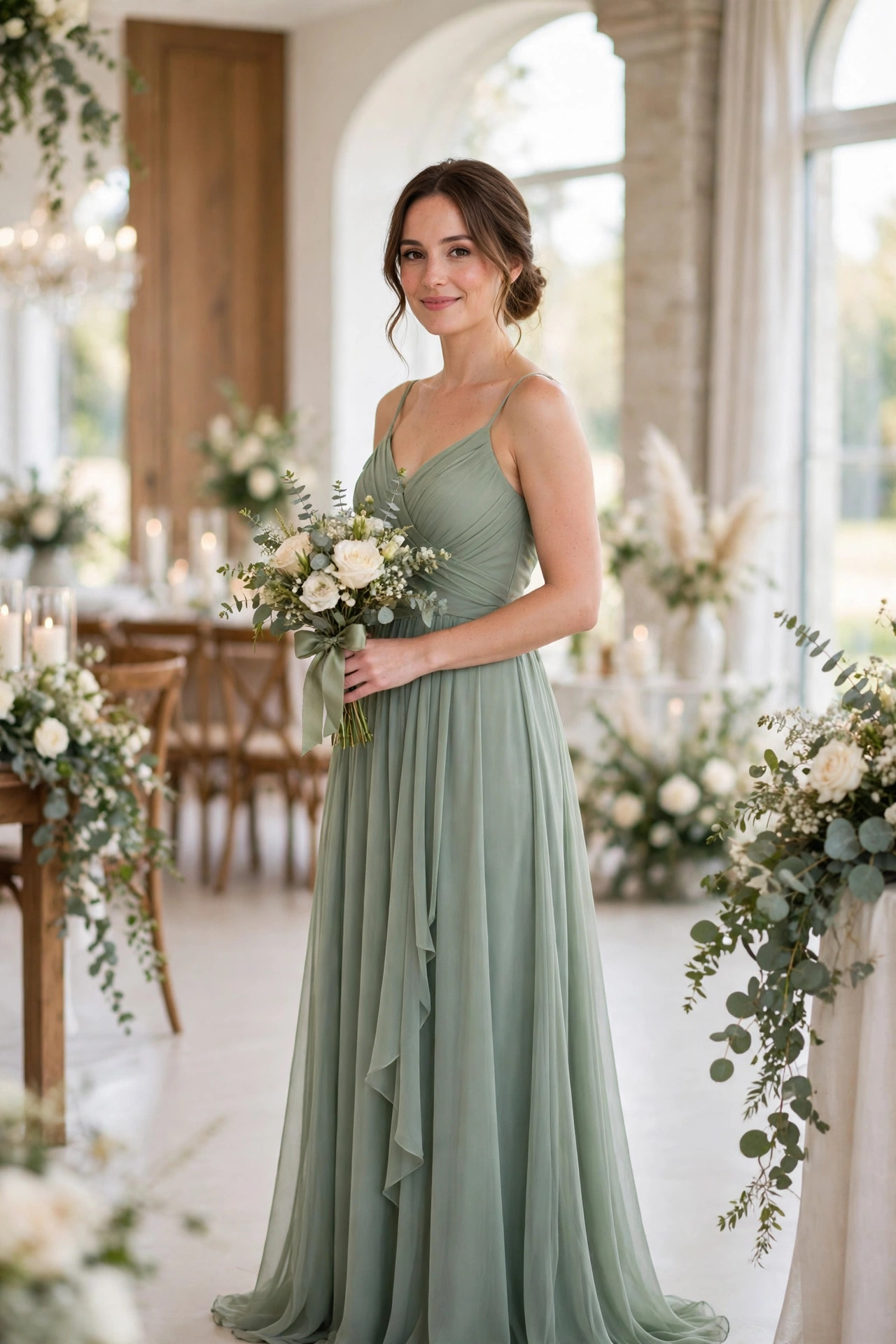
The maid of honor is the bride's right hand — and traditionally, the one bridal-party dress allowed to differ. A different shade, a different neckline, a touch more detail: the maid of honor's dress signals her role in the photographs while staying inside the bridal party's palette and fabric story.
How far the difference goes is the bride's call, not the maid of honor's. This guide covers the usual ways the distinction is made, how to coordinate it with the bride and the bridesmaids, and the practical side of a dress you will work in all day.
How the Dress Differs
The common distinctions are small and deliberate: the same dress as the bridesmaids in a deeper or lighter shade of the palette; the same fabric with a different neckline or sleeve; a version with added detail such as lace, beading or a sash; or a longer length where bridesmaids wear midi. In mismatched bridal parties, the maid of honor often carries the palette's anchor color or the largest print, with the other dresses arranged around hers.
What the distinction is not: a different style universe. A maid of honor in a sequinned gown beside bridesmaids in chiffon sundresses reads as a guest who missed the brief. Keep fabric family, formality and length in conversation with the group.
By Formality, Season and Venue
Black tie: floor-length, in satin, crepe or chiffon, with the distinction carried by shade or neckline. Cocktail and garden: midi or floor-length both work; chiffon and floral prints suit outdoor ceremonies, and a wrap or the bride-approved cover-up handles cool evenings and covered-shoulder venues. Beach: breathable fabrics, a hem that clears the sand, and shoes — often flats or wedges — chosen for the terrain.
You will also be working: holding the bouquet, arranging the train, carrying the emergency kit and dancing. Choose a dress you can bend, reach and move in, with straps or structure that stay put without adjustment, and pockets are a genuine blessing if the style allows them.
Shopping and Coordination
Shop with the bridesmaids' order, usually five to seven months before the wedding for ordered dresses, and confirm your distinguishing detail with the bride before ordering — send photographs, not descriptions. Order by your largest measurement and alter down, and schedule fittings with the actual shoes and undergarments.
Do coordinate your bouquet size and accessories with the bride's plan. Don't choose white, ivory or anything that reads bridal at a glance, and don't let your distinction creep dress by dress fitting — settle it once, with the bride, and stop.
Common Questions
How should the maid of honor's dress differ from the bridesmaids'?
By one clear detail chosen by the bride: a deeper or lighter shade of the palette, a different neckline, added lace or beading, or a different length — while keeping the same fabric family and formality as the group.
Who chooses the maid of honor's dress?
The bride sets the palette, fabric and the distinction she wants; the maid of honor chooses within that brief for fit and comfort, and confirms the final dress with the bride before ordering.
When should the maid of honor order her dress?
With the bridesmaids' order, typically five to seven months before the wedding for made-to-order dresses, leaving time for shipping and two rounds of alterations with the wedding shoes.
More Occasion & Wedding Guides on Apparel Search
Dress codes, wedding-party guides and outfits for the other big occasions in the diary:
- Wedding Guest Attire
- Mother of the Bride Guide
- Mother of the Groom Guide
- Black Tie Optional Guide
- Festive Attire Guide
- Dressy Casual Guide
- Women's Concert Outfit Guide
- Women's Date Night Outfit Guide
- Women's Beach Wedding Guest Outfit Guide
- Women's Courthouse Wedding Guest Outfit Guide
- Women's Winter Wedding Guest Outfit Guide
Keep planning the occasion wardrobe with our next guide.
Next: Beach Wedding Guest Outfit Guide »Looking for Women's Clothing Stores?
This guide helps you plan what to wear. To browse where to buy, visit our women's clothing store directory, where you can find retailers that carry occasion clothing.