Dressy Casual Dress Code Guide
More polished than smart casual, less formal than semi-formal: dressy casual is the dinner-party, date-night and upscale-restaurant code — neat, considered, and never a suit unless you want one.
Shop Dressy Casual Outfits Now
Shop Dressy Casual Outfits on Amazon Shop Dressy Casual Outfits on eBayThe Amazon and eBay links on this page are affiliate links. If you make a purchase through them, Apparel Search may earn a commission.
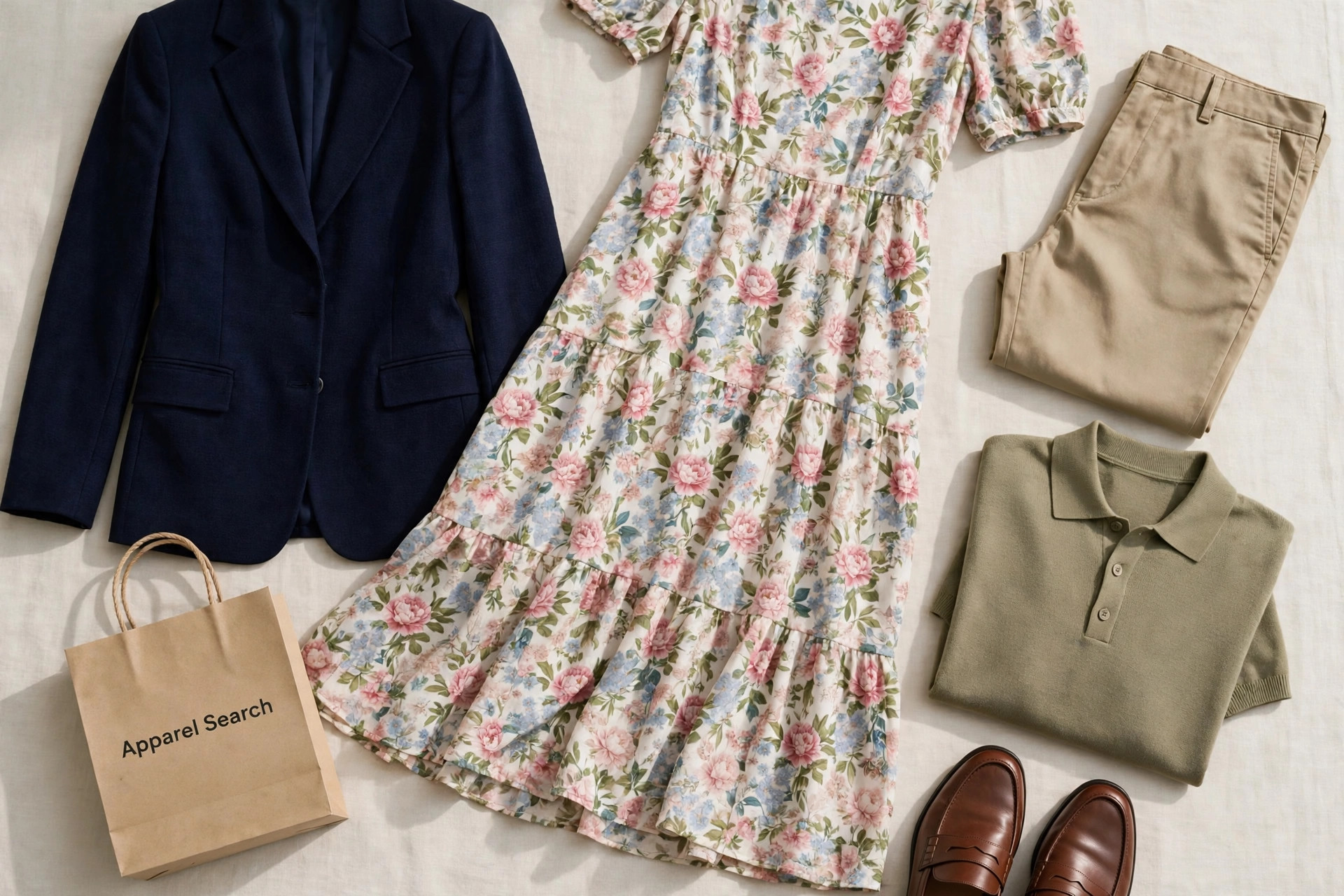
Dressy casual is the dress code for occasions that deserve effort without formality: dinner parties, date nights, upscale restaurants, theatre evenings, christenings, engagement parties and relaxed celebrations. It asks for clothes that are neat, coordinated and a clear step above everyday wear — a blazer without a tie, a dress without a heel being mandatory, trousers that are not jeans in spirit even when denim is technically allowed. If smart casual is a tidy version of your normal wardrobe, dressy casual is your wardrobe dressing up on purpose.
Dressy casual sits above smart casual and business casual on the polish scale, and below semi-formal, where a suit and a cocktail dress become the expectation. It overlaps with festive attire during the holidays, when the same outfit plus seasonal sparkle qualifies for both. This guide sets out what women and men should wear, how the neighbouring codes differ, and the details — shoes, grooming, fit — that make the difference between dressy casual and just casual.
Dressy Casual vs Business Casual vs Smart Casual
Business casual is an office code: chinos or dress trousers, button-down shirts, blouses, knitwear, loafers — designed to look competent at work, with no party intent. Smart casual is its social cousin: dark jeans can appear, trainers in clean minimal leather can pass, and the goal is tidy rather than dressed. Dressy casual raises both: the fabrics get richer, the outfit gets more deliberate — a blazer is common, shoes are proper shoes, and at least one piece in the outfit should feel like an occasion piece rather than a weekday staple.
A useful test: if you could wear it to a routine Tuesday at the office unchanged, it is probably business casual, not dressy casual. Swap in one elevated element — the blazer over the knit, the silk blouse for the cotton shirt, the loafer for the trainer — and you have crossed over. At a wedding, dressy casual is the most relaxed code you will meet, and even there it means dressing for a celebration.
For Women: Dresses, Elevated Separates and the Blazer Formula
A midi or knee-length dress in a good fabric — crepe, a quality floral, a knit dress with structure — is the easiest dressy casual answer, worn with heeled sandals, pumps, elegant flats or dressy boots. Day dresses in thin cotton need elevating with a blazer, real jewellery and a proper shoe before they qualify. Sundresses, beach dresses and anything with a T-shirt feel stay below the line.
Separates work beautifully: tailored trousers or a satin or pleated skirt with a silk blouse, a fine knit or a camisole under a blazer. The blazer formula — blazer, simple top, tailored bottom, good shoe — is the dressy casual uniform for a reason: it photographs polished at any venue. Dark, well-fitting jeans are the borderline case: acceptable at relaxed venues with a blazer and heels, risky everywhere else; tailored trousers are always safe. Finish with a considered bag and grooming — dressy casual is judged on finish more than on any single garment.
For Men: Blazer and Trousers, No Tie Required
For men, dressy casual centres on a blazer or sport coat with trousers: navy, charcoal or textured jackets over chinos in stone, navy or grey, or over dress trousers for the dressier end. Under the blazer, a button-down shirt is the classic; a fine knit polo, a merino crew or a roll-neck are the modern alternatives. A tie is not required and usually not expected — an open collar is part of the code's relaxed polish — but a pocket square or a good watch earns its place.
Without a blazer, raise everything else: dress trousers, a tucked shirt, a belt that matches the shoes, and knitwear with a clean, fine finish. Shoes decide more outfits than any other item — loafers, suede Derbies, Chelsea boots or clean minimal dress shoes pass; running trainers, sandals and scuffed anything fail. Dark jeans follow the same rule as for women: possible at relaxed venues with a blazer and proper shoes, never the safe default. And fit is the code's quiet foundation — dressy casual in clothes that fit reads twice as dressed as the same outfit a size off.
Common Questions
What is dressy casual dress code?
Dressy casual is polished, deliberate dressing without formal pieces: no suit or tie is required for men, and no cocktail dress for women, but everything is neat, coordinated and elevated — blazers, good fabrics, proper shoes. It sits above smart casual and business casual in polish, below semi-formal, and is the standard code for dinner parties and date nights.
What is the difference between dressy casual and smart casual?
Polish and intent. Smart casual is a tidy version of everyday clothes — dark jeans and clean trainers can pass. Dressy casual dresses up on purpose: a blazer or an occasion piece is expected, fabrics are richer, and shoes are proper dress shoes, loafers or heeled sandals rather than trainers. If the outfit contains nothing you would not wear on a normal day, it is smart casual at best.
Can you wear jeans for dressy casual?
Only dark, well-fitting jeans with no fading or distressing, and only at relaxed venues — and they must be carried by the rest of the outfit: a blazer, a good shirt or blouse, and proper shoes. Tailored trousers, chinos or a skirt are always the safer choice, because jeans are the single most common reason a dressy casual outfit reads as simply casual.
More Dress Code Guides
The other guides in this cluster — black tie optional, festive attire, dressy casual and semi-formal, the four codes that cover nearly every invitation:
More to Explore on Apparel Search
One rung up, the suit and the cocktail dress become the standard. Continue to the semi-formal guide.
Next: Semi-Formal Dress Code Guide: Suits, Cocktail Dresses & the Classic Definition »Looking for Clothing Stores?
This guide helps you choose a dressy casual outfit that is polished and relaxed in the right proportions. To browse where to buy, visit our clothing shopping directory and the Shopzilla shopping hub, where you can find retailers that carry occasion and party clothing.