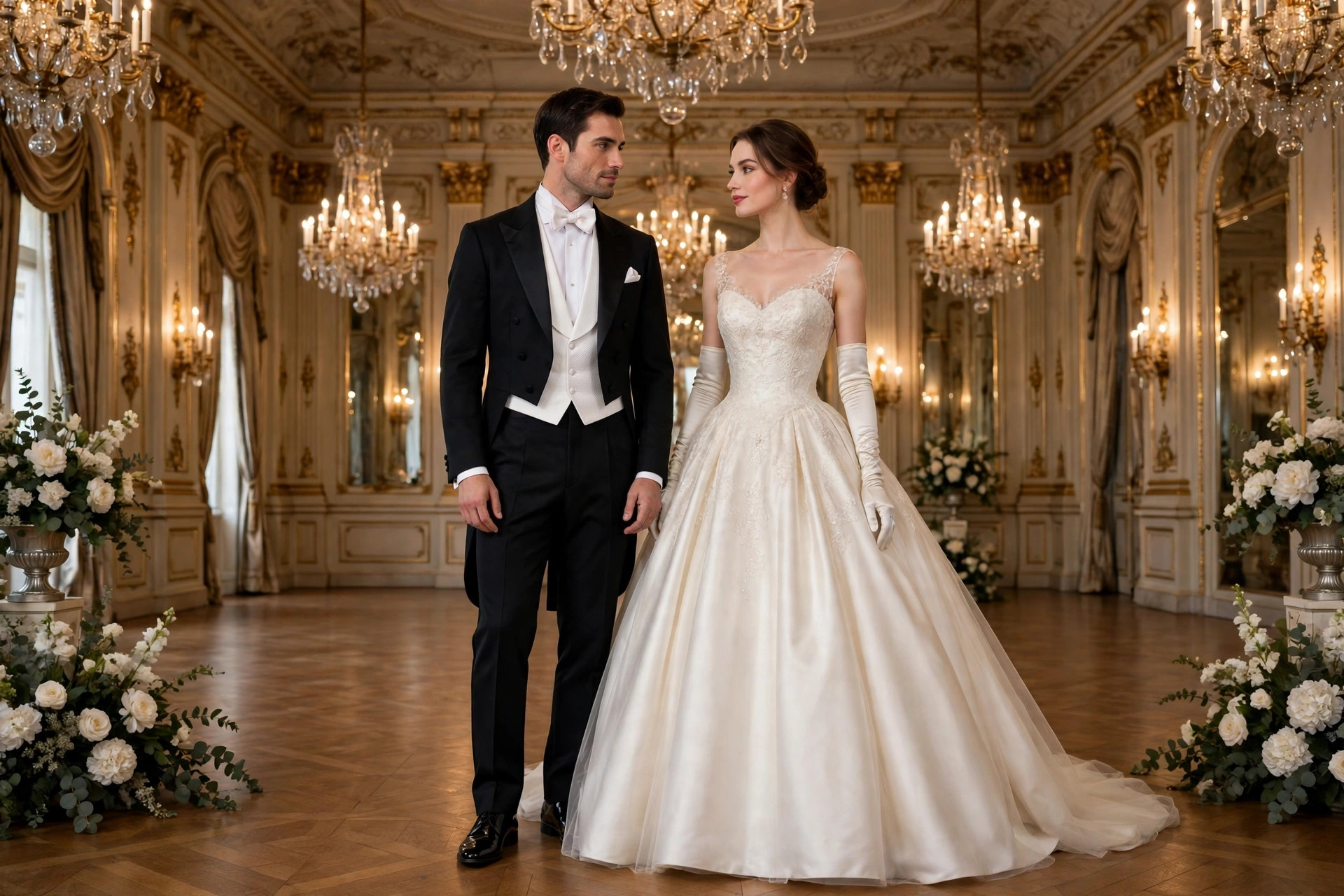
White tie, also called full evening dress, is the most formal dress code in civilian life — the code of state banquets, formal balls, and the grandest evening ceremonies. For men it prescribes a black tailcoat, a white waistcoat, and a white bow tie; for women, a full-length gown. Nothing about it is approximate, and that is its character: where black tie is a uniform with some give, white tie is a uniform without it. Our white tie evening dress definition gives the code's formal components and history; this guide explains what to wear, piece by piece, and the surprisingly short list of occasions that still require it. Its place at the top of the ladder is shown in Dress Codes Explained.
White Tie for Men: The Tailcoat Uniform
Every element is specified. The coat is a black tailcoat — cut away at the front, with tails behind reaching roughly to the back of the knee — with silk-faced peaked lapels, worn unbuttoned. Beneath it, a white low-cut waistcoat, traditionally of piqué cotton, whose points should not show below the front of the coat. The shirt is white with a stiff front, a stiff wing collar, and studs; the bow tie is white, in the same piqué weave, and tied by hand. Trousers are black with two rows of braid down each leg — one row is black tie's stripe, two are white tie's — held up without a belt. Shoes are black patent leather oxfords or, in the most traditional dress, court shoes with a bow; socks are black silk or fine wool, worn long.
Details follow the same discipline: a white pocket square; cufflinks and studs in mother-of-pearl, white metal, or gold; a pocket watch rather than a wristwatch in strict rooms. Decorations, orders, and miniature medals belong to white tie more than to any other code and are worn at state and official occasions by those entitled to them, following the event's own instructions. There is no casual version of any of this: a black waistcoat, a black bow tie, or a dinner jacket converts the outfit into black tie, a different and lesser code.
White Tie for Women: The Full-Length Gown
The women's counterpart is the full-length evening gown — to the floor, without exception; cocktail and midi lengths have no place at white tie. Ball gowns with full skirts are the traditional silhouette, and column and A-line gowns in formal fabrics are equally correct; the requirement is length and formality, not volume. Long gloves are the classic accompaniment to a sleeveless or strapless gown, traditionally removed or turned down for eating and drinking. Jewellery is at its most splendid here: this is the code for significant pieces, and a tiara — worn by married women by the old convention — belongs to white tie occasions alone. Hair is worn up or formally dressed, shoes are evening shoes, and the bag is a small evening clutch. As with the men's uniform, the discipline is the elegance: nothing short, nothing casual, nothing that would also serve at a lesser code.
The White Tie Outfit Checklist
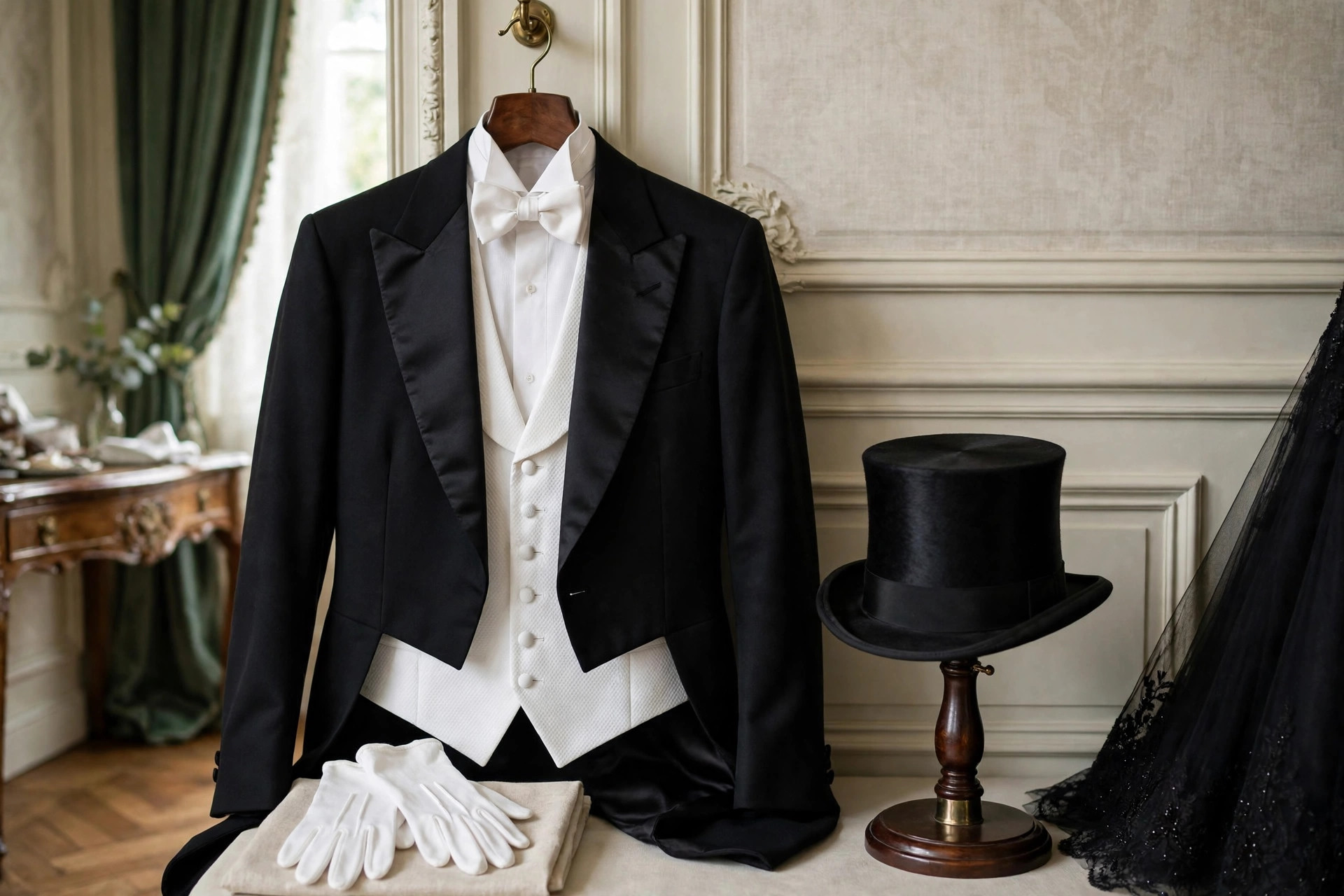
The most prescribed outfit in menswear and the grandest in womenswear — at white tie, the list is not advice, it is the code itself.
For Women
- A full-length evening gown that sweeps the floor — no shorter length is correct
- Formal evening fabrics: silk, satin, chiffon, velvet, or fine beading
- Evening heels worn under the gown's hem
- A small evening clutch
- Significant jewellery; a tiara only where the occasion and custom call for one
- Long gloves where tradition demands them, and an evening wrap or coat
For Men
- A black evening tailcoat with satin-faced lapels — not a dinner jacket
- A white piqué (Marcella) waistcoat, cut low
- A white dress shirt with a stiff front and a wing collar
- A white piqué bow tie — always white, always tied by hand if possible
- Black formal trousers with a braided side stripe
- Black patent leather court shoes or polished Oxfords; white gloves where required
When White Tie Is Actually Required
Modern guests can go years without meeting this code, which is precisely why it unsettles people when it appears. It survives at state banquets and official dinners, diplomatic and royal occasions, certain university and civic balls with long traditions, formal charity balls that keep the old standard, and a small number of very formal weddings and evening ceremonies. It is also specified in some countries' official and academic dress traditions for their grandest events. The invitation will say white tie or full evening dress in so many words — hosts do not imply this code, because they know guests may need to hire the clothes. Hiring is entirely proper: tailcoat outfits are among the most commonly rented garments in formalwear, and a well-fitted hired uniform is correct in a way that an improvised substitute never is.
White Tie vs Black Tie
The differences are systematic, and comparing the two uniforms is the quickest way to learn both. The coat: a tailcoat against black tie's short dinner jacket. The waistcoat: white against black. The tie: a white bow tie against a black one. The shirt: a stiff front and wing collar against black tie's softer pleated front and turn-down collar. The trousers: two rows of braid against one. For women the difference is simpler: black tie accepts a formal shorter dress at many events, white tie never does. If an invitation says white tie, none of the black tie wardrobe can be promoted into it by accessories — the garments themselves are different, and the room will know.
Common Questions
- Can you wear a tuxedo to a white tie event?
- No. A tuxedo is black tie, one full level below white tie. White tie requires the tailcoat, white waistcoat, and white bow tie. At a white tie event a tuxedo is visibly underdressed, in the same way a suit would be at a black tie event. Hiring the correct outfit is the normal solution.
- Are gloves required for women at white tie?
- Long gloves are the traditional accompaniment to a sleeveless or strapless full-length gown, and they complete the classic white tie look. They are customary rather than compulsory at most modern events; if worn, they are removed or turned down when eating and drinking.
- Can women wear a short dress for white tie?
- No. White tie requires a full-length gown — floor length without exception. Unlike black tie, where a formal cocktail-length dress is accepted at many modern events, white tie admits no shorter alternative.
- What does it mean if an invitation says white tie optional?
- It is rare, and it means the host expects white tie from those who can manage it while accepting black tie from those who cannot. Wear white tie if you possibly can — the option exists for guests without access to the uniform, not as a suggestion to dress down.
Dress Codes Decoded
This page is part of the Apparel Search Dress Codes Decoded series — every invitation and workplace code explained on its own page, from white tie at the top of the ladder to smart casual at the everyday end. Browse the full series below.
More to Explore on Apparel Search
- Consumer Fashion Guide — fashion guidance for shoppers, from fit and fabrics to dressing well for every occasion.
- Shopping Directory — shop for clothing, shoes, and accessories by category, style, and store.
- Retail Clothing Stores — the Apparel Search directory and guide to clothing retailers, from boutiques to department stores.