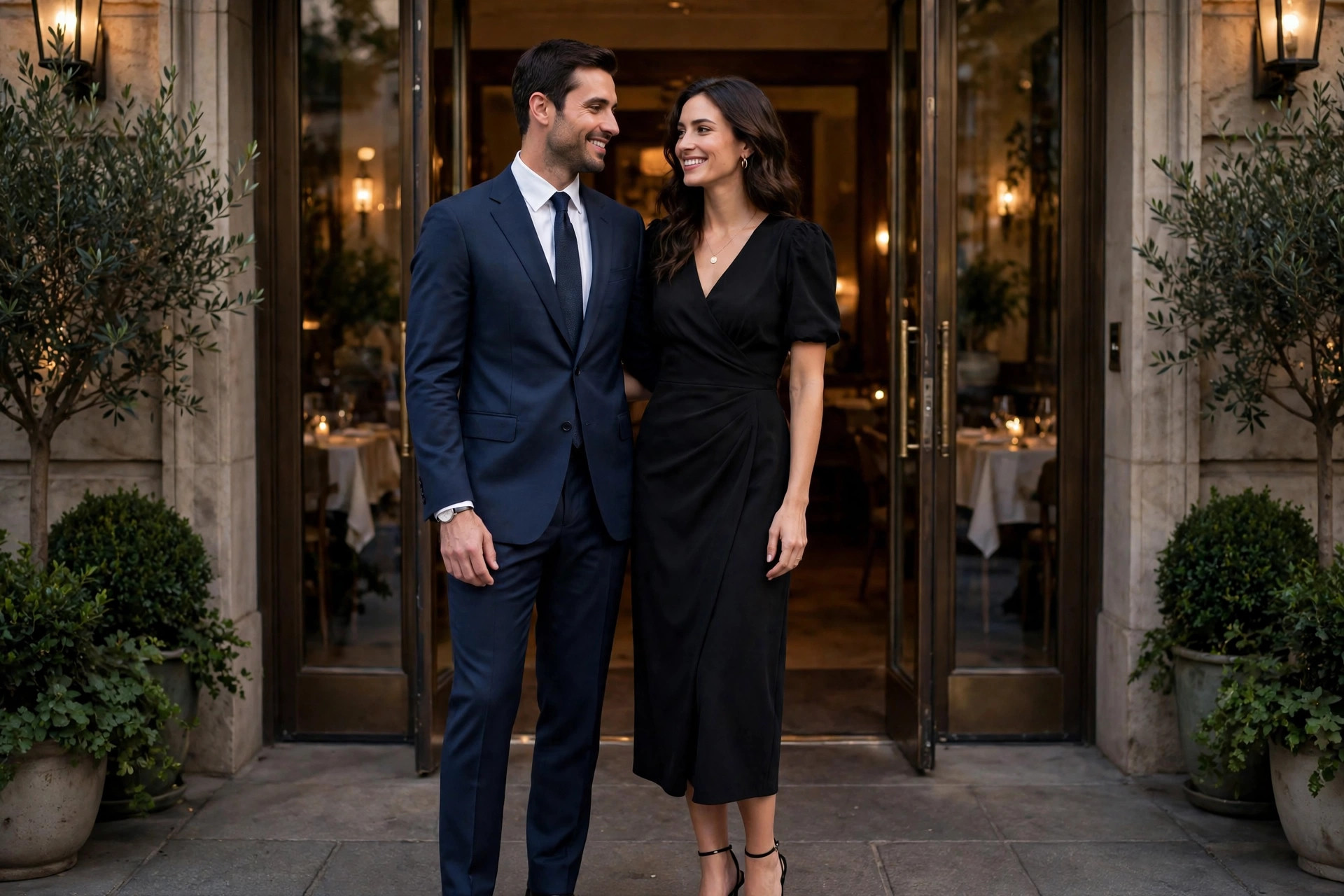
Semi-formal is the code that causes the most confusion, because it lives in the gap between two clearer ideas: it is dressier than cocktail attire's relaxed end and clearly below black tie. For men the code is simple — a suit and tie. For women it means a cocktail dress, a dressy skirt outfit, or elegant separates. The word formal in its name misleads people into gowns and tuxedos; the word semi is the part to listen to. Our semi-formal fashion definition gives the term's background, and Dress Codes Explained places it on the full ladder.
Semi-Formal for Men: The Suit Is the Code
A suit, a dress shirt, and a tie: that is semi-formal for men, in one sentence. In the evening the suit should be dark — navy or charcoal — with polished leather shoes. In the afternoon the palette can lighten: a mid-grey or even a tan suit in warm weather, with the tie still present. The tie is the detail that separates semi-formal from cocktail's relaxed end, where an open collar is common; if you are choosing between wearing one and not, semi-formal says wear it. A three-piece suit is a handsome option in winter, and a pocket square is welcome, but novelty prints, jeans with a blazer, and anything without a jacket fall below the code.
Semi-Formal for Women: Dresses and Dressy Separates
The cocktail dress is the centre of women's semi-formal dressing too — knee-length or midi, in a fabric with some polish. Semi-formal leans slightly more covered and more classic than cocktail at its glitziest: a little less sparkle at an afternoon event, necklines and lengths a touch more conservative for ceremonies and work occasions. Dressy separates work just as well: a satin or crepe skirt with a fine blouse, tailored wide-leg trousers with an elegant top, or a well-cut dressy jumpsuit. Heels are customary but an elegant flat is fine; the bag should be small and structured rather than a daytime tote. A full-length dress is more than the code asks for — save the gown for black tie, unless the event is an evening wedding where a simple long dress will blend in.
The Semi-Formal Outfit Checklist
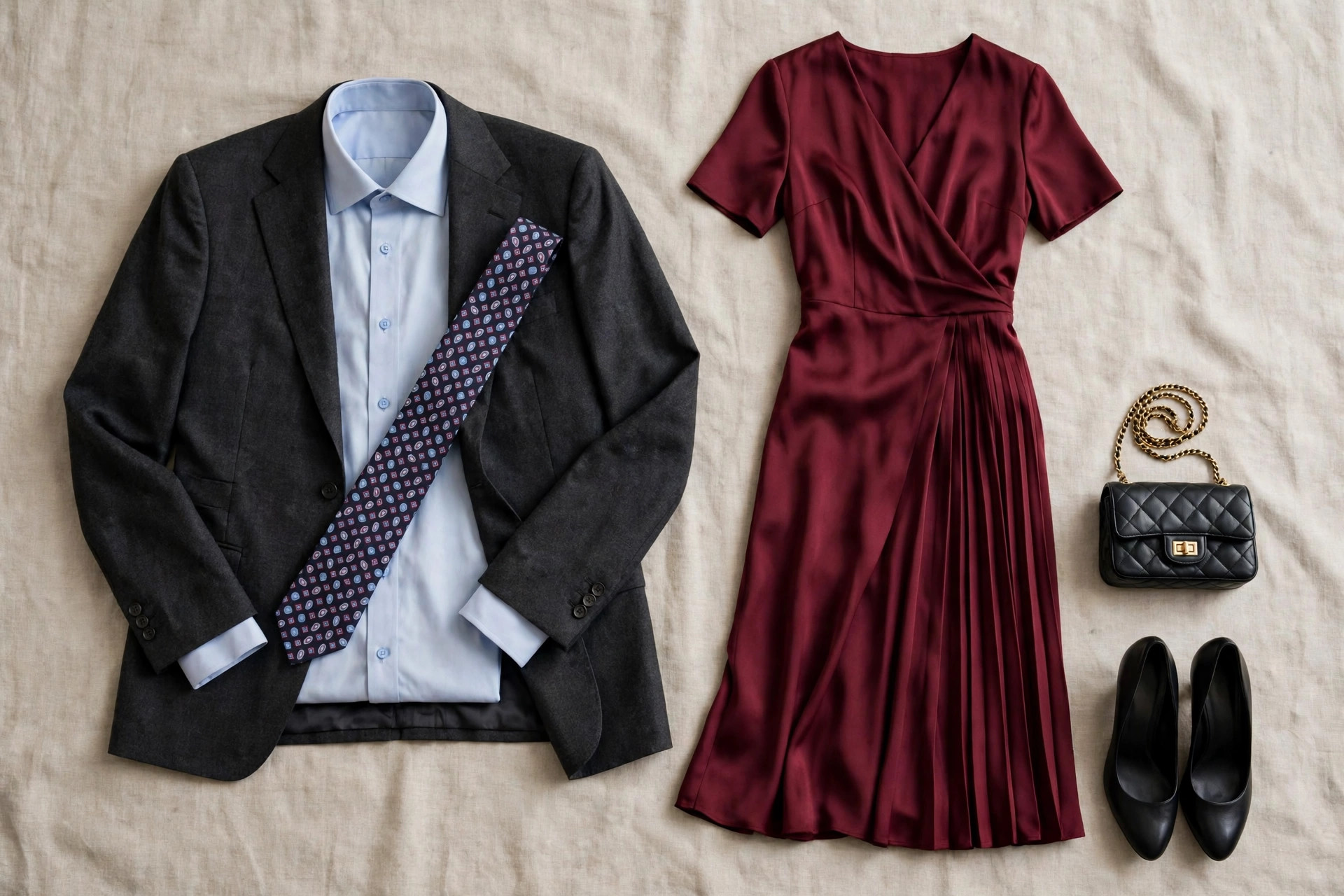
Semi-formal is the suit-and-dress code with the ceremony turned down one notch from cocktail — here is the working list.
For Women
- A cocktail dress at knee or midi length, a shade more conservative than party cocktail
- Or dressy separates: a satin or crepe skirt or tailored trousers with a fine top
- Evening-leaning fabrics — nothing with a daytime, cotton or jersey feel
- Heels or genuinely dressy flats
- A small bag and polished jewellery, kept one step quieter than cocktail sparkle
- In the afternoon, lighter colours and fabrics are welcome; in the evening, richer ones
For Men
- A suit — charcoal or navy in the evening, lighter sober shades acceptable by day
- A dress shirt, with a tie in the evening and whenever the event is formal-leaning
- Leather dress shoes, polished — Oxfords or Derbies
- A pocket square is welcome but never required
- No tuxedo — that is black tie, a full code above
- No blazer-and-jeans combinations — the suit itself is the code
How Semi-Formal Differs from Cocktail
In practice the two codes overlap so much that the same outfit — a cocktail dress, a dark suit — satisfies both at an evening event. The differences are of emphasis. Cocktail is a party code: it invites colour, shine, and a celebratory mood, and it relaxes the tie rule for men. Semi-formal is an occasion code: it appears on wedding, ceremony, theatre, and dinner invitations, keeps the tie, and reads a shade more sober. Time of day also separates them: cocktail is almost always evening, while semi-formal spans the afternoon as well, and afternoon semi-formal is noticeably lighter in colour and fabric than its evening version.
How Semi-Formal Differs from Formal
Formal, without qualification, means black tie or beyond: tuxedos, gowns, the full uniform. Semi-formal was coined precisely to release guests from that uniform while keeping the occasion dressed. No tuxedo is expected, no gown is required, and renting formalwear for a semi-formal event is unnecessary money. The practical test when an invitation is ambiguous: look at the venue and hour. An evening event at a grand venue labelled semi-formal still wants your best suit and a proper cocktail dress; a daytime semi-formal garden wedding wants the same outfits in lighter colours. Either way, jeans, shorts, trainers, and sportswear are below the line — semi-formal is forgiving about the top of the range, never about the bottom.
Common Questions
- Is semi-formal the same as cocktail attire?
- They overlap heavily at evening events — a cocktail dress and a suit satisfy both. Cocktail leans more festive and relaxes the tie for men; semi-formal is a little more classic and conservative, keeps the tie, and is also used for afternoon occasions, where colours and fabrics lighten.
- Do men need a tie for semi-formal attire?
- Yes, by the traditional reading of the code. A suit with a tie is the semi-formal standard for men; an open collar belongs to cocktail's relaxed end and to dressy casual. If the room turns out to be tie-free, a tie can be removed in a moment — the reverse is not true.
- Can you wear a long dress for semi-formal attire?
- A full gown is more formal than semi-formal requires, but a simple, unfussy long dress or maxi in an elegant fabric is commonly worn to evening semi-formal events, especially weddings. The safe centre of the code is knee-length to midi.
- Are jeans acceptable for semi-formal attire?
- No. Jeans sit several rungs below semi-formal, in the smart casual and dressy casual range. Semi-formal requires a suit for men and a dress or dressy separates for women — denim never crosses into it, however it is styled.
Dress Codes Decoded
This page is part of the Apparel Search Dress Codes Decoded series — every invitation and workplace code explained on its own page, from white tie at the top of the ladder to smart casual at the everyday end. Browse the full series below.
More to Explore on Apparel Search
- Consumer Fashion Guide — fashion guidance for shoppers, from fit and fabrics to dressing well for every occasion.
- Shopping Directory — shop for clothing, shoes, and accessories by category, style, and store.
- Retail Clothing Stores — the Apparel Search directory and guide to clothing retailers, from boutiques to department stores.