Semi-Formal Fashion
Fashion Definitions — fashion history, brands and industry terms from Apparel Search
Semi-formal is a dress code in the European tradition. It is more presentational than semi-casual, but offers more room for personal expression than full formal wear. Semi-formal wear usually indicates a suit with trousers for men, and a dress or a suit with either trousers or a skirt for women. Brooks Brothers are famous purveyors of the former, while Coco Chanel pioneered the feminine suit in the early twentieth century. A modern semi-formal occasion, such as an evening wedding, a dinner or a ceremony, is read from those two garments outward: matched tailoring for men, and a dressy dress or tailored suit for women.
For a guest-focused walk-through of this same code — outfits for women and men, dress lengths, and how semi-formal differs from cocktail attire — see our semi-formal attire guide.
The classic definition, expanded into a full modern guide: suits and cocktail dresses, the rules for weddings and evening events, and how semi-formal differs from black tie optional and dressy casual.
Shop Semi-Formal Dresses & Suits Now
Shop Semi-Formal Dresses & Suits on Amazon Shop Semi-Formal Dresses & Suits on eBayThe Amazon and eBay links on this page are affiliate links. If you make a purchase through them, Apparel Search may earn a commission.
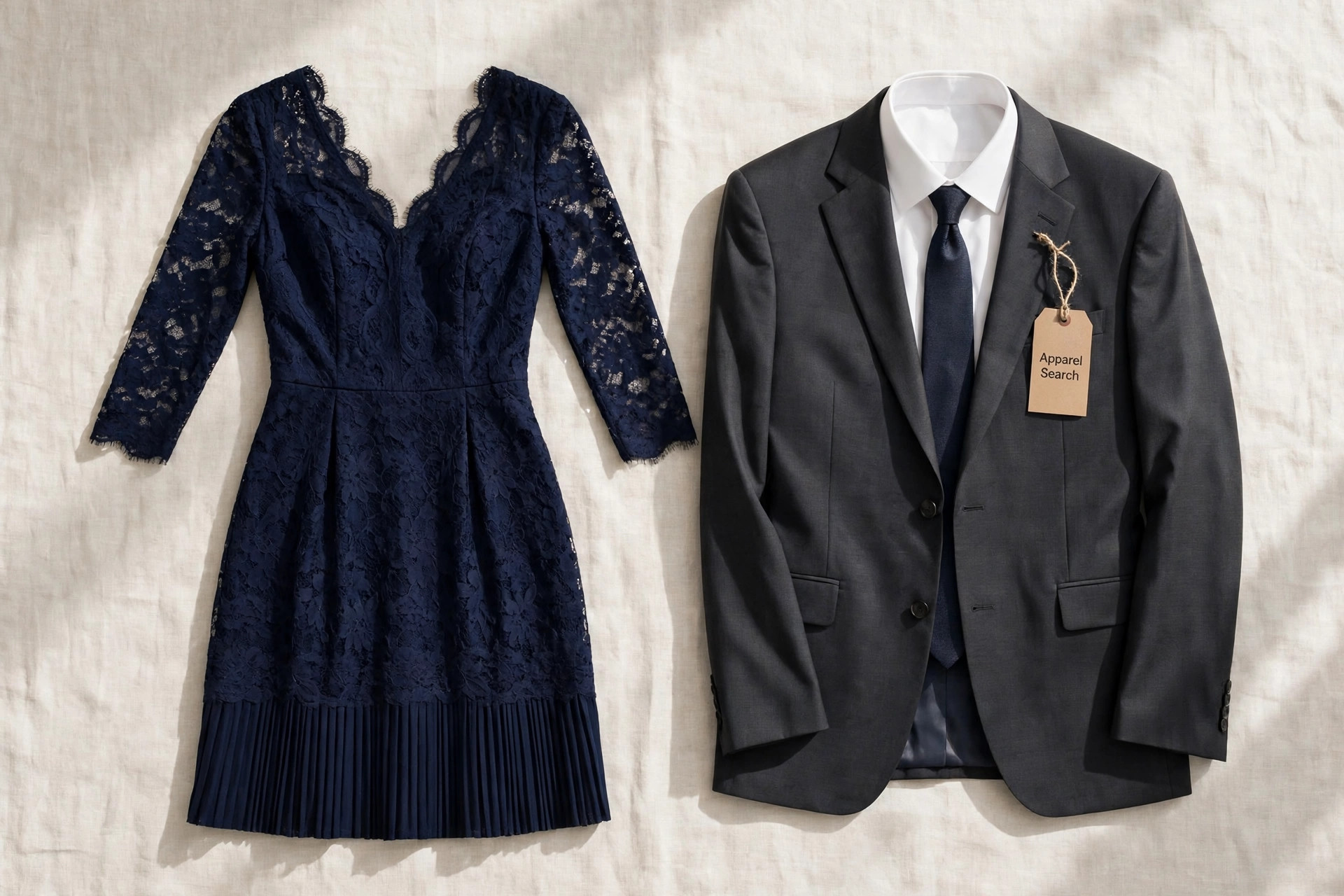
Semi-formal is a dress code in the European tradition. It is more presentational than semi-casual, but offers more room for personal expression than full formal wear. Semi-formal wear usually indicates a suit with trousers for men, and a dress or suit with either trousers or a skirt for women. Brooks Brothers are famous purveyors of the former, while Coco Chanel pioneered the feminine suit in the early 20th century.
That is the classic Apparel Search definition of semi-formal, and it still holds: a suit for men, a dress or a suit for women. What the definition cannot carry is everything a modern invitation expects you to know — lengths, colours by time of day, what changes at a wedding, and where semi-formal stops and black tie optional begins. This expanded guide keeps the definition at its heart and builds the full modern picture around it, with our wedding guest attire hub covering the wedding-specific cases.
Semi-Formal for Men: The Suit Is the Code
For men, semi-formal means a suit — a matching jacket and trousers — with a dress shirt and, at evening events, a tie. A dark suit (navy, charcoal, black) is the evening standard; a lighter suit in grey, blue or tan is acceptable for daytime and summer semi-formal events, where the code softens with the light. The shirt should be a proper dress shirt, white or pale, and the shoes polished Oxfords or Derbies in black or dark brown — never trainers, loafers without socks, or boots with a suit at this level.
The tie follows the clock: expected in the evening, optional at daytime events in warm weather, where a suit, dress shirt and pocket square carry the formality. A blazer with odd trousers — however smart — is business or dressy casual, not semi-formal, because the matched suit is the definition's whole point. Fit and grooming do the rest: a mid-priced suit that fits, with clean shoes and a pressed shirt, out-dresses an expensive suit worn carelessly at every event on the calendar.
Semi-Formal for Women: Cocktail Dresses, Dressy Suits and Lengths
For women, the semi-formal standard is a cocktail dress — knee-length to midi, in a dressy fabric such as crepe, satin, lace, chiffon or a good beaded cloth — worn with heels or elegant dressy flats and evening accessories. Floor-length gowns are not required and can overshoot the code at all but the grandest semi-formal events; very short or casual dresses undershoot it. Colour is freer than at black tie: jewel tones, pastels by day, and prints with a formal fabric all work.
The definition's second option — a suit with either trousers or a skirt — is the tradition Coco Chanel pioneered, and it remains fully correct: a tailored pantsuit or skirt suit in a dressy fabric, styled with heels and jewellery, is semi-formal at weddings, dinners and ceremonies. It is a favourite of mothers of the couple for exactly that reason — see our mother of the bride guide and mother of the groom guide. A dressy jumpsuit in crepe or satin follows the same logic. What to avoid: sundresses, day cotton, denim, casual sandals, and white or ivory at weddings.
Semi-Formal vs Black Tie Optional vs Dressy Casual
The three codes form a ladder. Black tie optional stands above semi-formal: tuxedos invited, gowns expected-length, dark suit the minimum for men. Semi-formal is the middle rung: a suit in any sober colour for men, a cocktail dress or dressy suit for women, no tuxedo expected and a gown usually too much. Dressy casual stands below: the suit comes apart into a blazer and trousers, the tie disappears, and dresses relax into elevated day-to-evening pieces.
Time of day refines every rung: evening events dress darker and richer, daytime events lighter and softer, and a 6 p.m. wedding in summer sits between the two. When an invitation is ambiguous, dress to the dressier reading of semi-formal — dark suit, cocktail length, real shoes — because semi-formal's classic definition has always rewarded the guest who took 'presentational' seriously. For seasonal sparkle at the same events, our festive attire guide covers the holiday version of dressing up.
Common Questions
What does semi-formal mean?
Semi-formal is a dress code in the European tradition: more presentational than semi-casual, with more room for personal expression than full formal wear. For men it means a suit with trousers, a dress shirt and usually a tie in the evening. For women it means a cocktail-length dress, or a dressy suit with either trousers or a skirt. It sits below black tie optional and above dressy casual.
Can women wear a long dress to a semi-formal event?
A long dress is not required, and a full evening gown can overshoot the code — the semi-formal standard for women is a cocktail dress at knee to midi length in a dressy fabric. A long dress in a lighter, less formal fabric, such as a chiffon maxi styled simply, can work at evening or wedding events, but the cocktail dress is always the safe reading.
Is a blazer and trousers semi-formal for men?
No — a blazer with separate trousers is dressy casual or business dress, not semi-formal. The semi-formal definition calls for a suit: a matching jacket and trousers, worn with a dress shirt, a tie at evening events, and polished dress shoes. The matched suit is what separates semi-formal from the codes below it.
More Dress Code Guides
The other guides in this cluster — black tie optional, festive attire, dressy casual and semi-formal, the four codes that cover nearly every invitation:
More to Explore on Apparel Search
Complete the ladder at its top rung: continue to the black tie optional guide, where the tuxedo is invited but the dark suit survives.
Next: Black Tie Optional Guide: What 'Optional' Really Means for the Tuxedo and the Gown »Looking for Clothing Stores?
This guide helps you choose a semi-formal outfit — suit or cocktail dress — that hits the classic code exactly. To browse where to buy, visit our clothing shopping directory and the Shopzilla shopping hub, where you can find retailers that carry occasion and party clothing.
A Code Built on Two Garments
Semi-formal is unusually easy to state and unusually often misunderstood, because its whole content is two garments. For men, a suit with trousers: a matched jacket and trousers worn as one outfit, which is what separates the code from every arrangement of separates below it. For women, a dress, or a suit with either trousers or a skirt: two legitimate routes to the same level of presentation. Most errors with this code are attempts to negotiate with those definitions, substituting a blazer for the suit, or a day dress for the dress, and hoping the occasion will not notice. Occasions do notice, because the other guests who followed the code are the comparison. Dressing to the definition, in a suit that fits and is cleanly pressed, or in a dress or tailored suit in a dressy fabric, places a guest correctly without any need for expense beyond care.
Presentation Without Uniformity
The code's position between semi-casual and full formal wear is a position between freedom and prescription. Semi-casual prescribes a level of effort and leaves the garments open. Full formal wear prescribes the garments almost completely, so that correctness is a matter of following a known uniform. Semi-formal prescribes the garment category and leaves the rest open: the colour and weight of a suit by season and time of day, the length and fabric of a dress, the choice between a trouser suit and a skirt suit, and the jewellery, shoes and bag that finish the outfit. That openness is why the code survives across so many kinds of event, from weddings and dinners to award ceremonies and evening receptions. It gives a host a reliable standard to name on an invitation, and gives guests room to dress as themselves within it.
The two names attached to the code mark its twin traditions. Brooks Brothers represents the men's tailoring trade that made the suit the standard garment of respectable public life, produced to a consistent pattern that a customer could buy with confidence. Coco Chanel represents the redesign of women's tailoring in the early twentieth century, when the feminine suit became a deliberate alternative to the dress rather than an imitation of men's clothing. A woman in a well-cut trouser or skirt suit at a semi-formal event is using that second tradition directly, and the code recognises it as fully equal to the dress. Between them, the purveyor and the pioneer explain why the definition has remained stable while the clothes inside it have changed with every decade's fabrics, shoulders, lengths and shoes.
Common Questions
What does semi-formal mean?
Semi-formal is a dress code in the European tradition, more presentational than semi-casual and more expressive than full formal wear. It usually means a suit with trousers for men, and a dress or a suit with either trousers or a skirt for women.
Who are the names associated with semi-formal dress?
Brooks Brothers are famous purveyors of the men's suit that anchors the code. Coco Chanel pioneered the feminine suit in the early twentieth century, giving women a tailored option that stands alongside the dress within the same code.
How much personal expression does semi-formal allow?
More than full formal wear allows. Formal codes prescribe a uniform, such as black tie, in which variation is narrow. Semi-formal fixes the category of garment, the suit or the dress, and leaves colour, fabric, cut and accessories to the wearer's judgement and the time of day.