1990s Fashion
Fashion Definitions — fashion history and style definitions from Apparel Search
Search Apparel Search
At a Glance
Definition: 1990s fashion was characterised by a rejection of 1980s fashion and by many overlapping, often contradictory trends, of which the most significant was the rise of grunge in 1992 — earning the decade its popular label as the decade of anti-fashion.
Category: Fashion Definitions
The 1990s in popular culture is typically referred to as the decade of anti-fashion. In reality, anti-fashion was only one of many trends in fashion in the 1990s; however, the fashion of the 1990s was characterised by a rejection of the fashion of the 1980s, and by many overlapping, often contradictory trends. The most significant event in 1990s fashion was the rise of grunge fashion in 1992. Retro clothing inspired by the 1960s and 1970s was popular for much of the decade, and in the late 1990s there was a move away from grunge.
On This Page
Early 1990s: Fluorescent Colour and Denim
The acid washed denim fad of the late 1980s ended in 1990. Varying shades of stonewashed denim became popular, and remained popular through 1998. Denim jackets continued to be popular; slim fit jeans continued to be worn until 1994 but became less popular, and relaxed fit jeans replaced slim fit jeans as the most popular denim pants. White and black t-shirts were popular with boys and men. Hairstyles also moved away from the 1980s: the high, hairspray-heavy styles favoured by girls in the 1980s were replaced by long, straight hair, often with bangs; the bowl cut became popular with teenage and pre-teen boys in 1991; and the mullet survived in modified form as a male hairstyle through 1992.
The dominant clothing fad at the beginning of the 1990s was fluorescent clothing, in fluorescent blue, green, orange, pink and yellow. It was especially popular with teenage and pre-teen girls, although some boys wore fluorescent t-shirts, and the items included fluorescent t-shirts, sweatshirts, socks, shoelaces, hair scrunchies and fanny packs. In 1991 fluorescent colours were replaced by colours such as coral, hot pink and turquoise, and the popularity of bright colours declined through 1995. Hoop earrings were also a popular accessory for teenaged girls and women in the first years of the 1990s. A major fad in 1991 was parachute pants — relaxed fit, tapered leg pants with a drawstring waist, in bright colours such as neon pink, green and white — and a fad of 1992 was heat-sensitive shirts that changed colour depending on the wearer's body temperature.
Grunge and the Retro-Hippie Revival
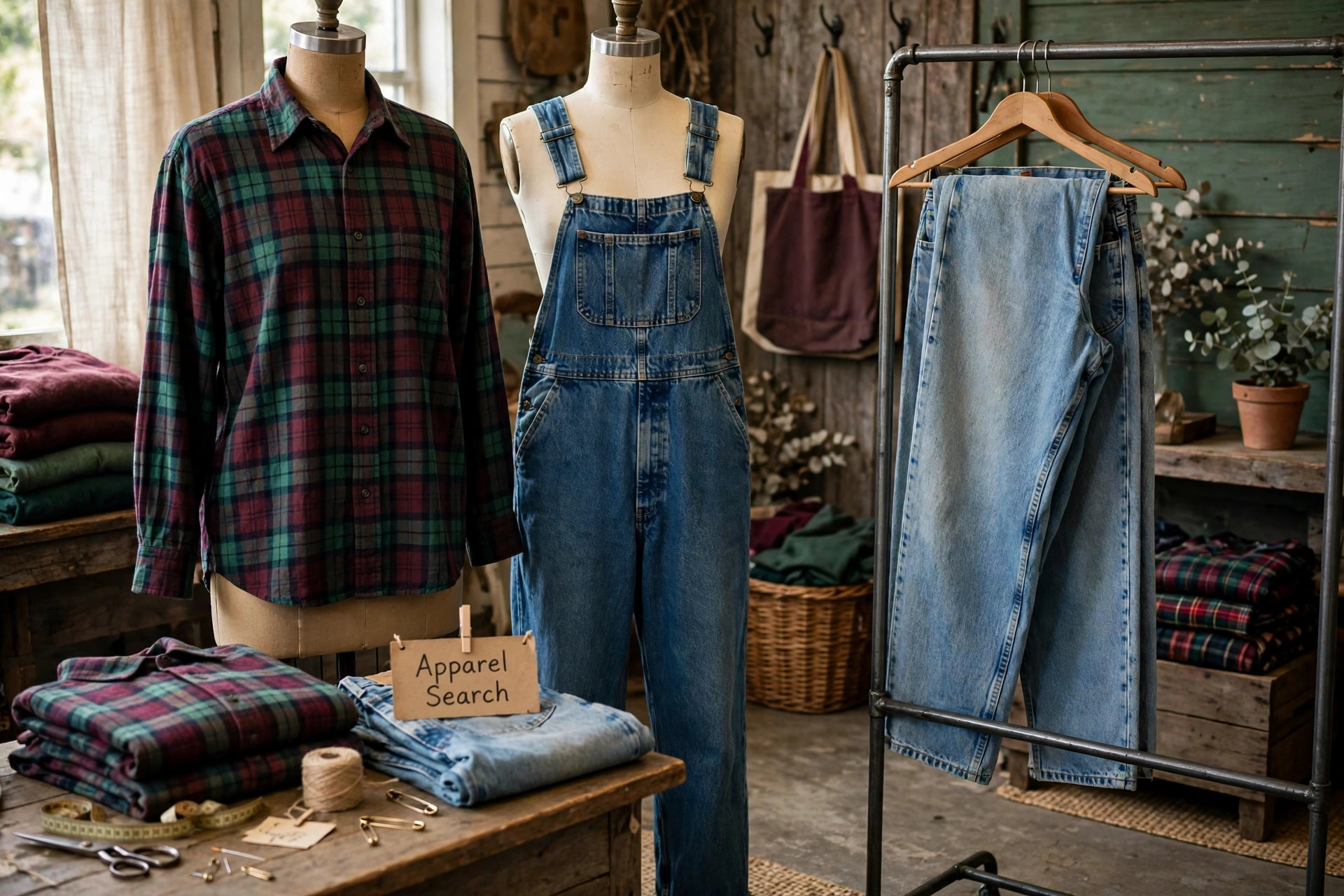
The most important event in 1990s fashion was the rise of the grunge style into the mainstream in 1992. Grunge fashion was influenced by grunge music, which achieved mainstream popularity in 1992, and it resulted in a decline in the popularity of bright colours. Grunge fashion was dominated by plaid flannel shirts, stonewashed blue jeans, and dark colours like maroon, forest green, indigo and brown, with white and black also popular. It popularised Doc Martens style shoes and boots, and high top sneakers in red, indigo, forest green and black, and it emphasised long, straight hair. Grunge fashion was a unisex phenomenon, and although the grunge look was considered anti-fashion, the fashion industry turned it into a distinct fashion style, selling such items as plaid hooded sweatshirts, plaid sweatshirt vests, plaid long sleeved t-shirts and plaid shorts.
The grunge look coincided with the revival of hippie fashion, which had begun to re-enter the fashion world in 1990 with the return of tie-dye shirts, followed in 1991 by sunglasses shaped like the granny glasses of the late 1960s. The full-blown revival began in 1992 with the return of bell-bottom jeans, and crocheted vests, also considered part of the hippie revival, became popular among teenaged and pre-teen girls in 1993; most fashion critics considered the grunge and neo-hippie looks complementary. Denim overalls regained popularity in 1992 and remained popular through 2000, adapted to fit the changing styles; denim shorts became fashionable in 1992, denim shortalls were popular from 1991 to 1994, and white denim became popular among girls in 1992 and remained popular through 1998.
Mid-1990s: Rap, Sport and the Post-Grunge Turn
Not all fashion during the grunge era was dominated by the grunge and neo-hippie looks. Fashion styles drawn from rap music and from sports were also popular: baseball caps worn backwards, baseball jerseys and basketball jerseys among certain teenage and pre-teen boys, high top running shoes in black, sagging, and black hooded sweatshirts from 1992. In 1993, red Guess? denim became popular among teenage girls, often complemented with red or forest green shirts from The Body Shop, and Mondetta t-shirts also became popular among both teen and pre-teen boys and girls. There was also a navel piercing fad in 1993 among teenaged girls and young women, which led to the adoption of belly shirts that left the belly uncovered to expose the navel.
Grunge and neo-hippie fashions began to decline in the fall of 1994. Plaid and flannel gradually lost their appeal amidst a backlash against grunge; bell-bottom jeans were replaced with wide-leg jeans; white denim became fashionable among guys as well as girls; tie-dyed shirts and granny sunglasses became unfashionable; and wraparound sunglasses became popular, remaining so through the rest of the decade. Bowling shirts became popular after Green Day wore them in their Basket Case video, golf shirts became part of the new post-grunge style in 1995, and skater shoes became popular, coinciding with a rise in the popularity of skateboarding. The bowl cut went out of fashion, and most teenaged and pre-teen boys moved towards shorter hair.
Mod fashion made a return in the fall of 1995. Bootcut jeans and Levis 501 style jeans superseded wide leg jeans, teenaged girls and women began wearing black boots with chunky high heels, and t-shirts became more form fitting, especially for women, with the advent of the baby doll t-shirt. Teenaged girls began wearing colours such as pink, baby-blue and plum, short skirts became popular once again, and the Rachel haircut, named after the cut worn by Jennifer Aniston on the sitcom Friends in her role as Rachel, became popular. In 1996, colours such as orange and yellow became popular amidst what was characterised as a 1970s revival; fads of 1996 included the happy face and peace sign necklaces, and hip hugger flare-leg jeans became popular among teenaged and pre-teen girls in 1996. The Mod and 1970s retro fashions of 1995–96 set the tone for much of teenaged girls' fashion through the remainder of the decade.
Late 1990s: Punk, Goth, Preppy and New Denim
Punk fashion and alternative styles were common by 1996: short, spiky hair, black t-shirts, black work pants, wraparound sunglasses and skater shoes were part of these styles, and many punk and alternative teenagers dyed their hair colours like blue, green and fuchsia. In 1997 a Goth fad developed, featuring long black hair, black shirts, black work pants, black work boots and black trench coats. Both the punk and Goth styles survived into the 2000s, albeit in modified forms.
The preppy look made a comeback in 1997 among teenaged males, at first closely associated with the Tommy Hilfiger clothing line, whose t-shirts and jeans were staples of the preppy look that year; short hair, often dyed blonde, was popular among the preppy crowd. In 1998 khaki pants became popular among teenaged boys, owing to the popularity of golfer Tiger Woods. Aloha shirts, also called Hawaiian shirts, became a major fad in 1999.
Corduroy fabric became popular in 1997, used to make corduroy pants and corduroy overalls, sometimes abbreviated to cords, in colours including black, tan and grey, and it continued as a trend into the 2000s, though inconsistently. Spaghetti strap tank tops became a popular female clothing item in 1997, and the skort, a half skirt, half short, also became popular in 1997 before losing popularity in 1998 amid the rise of long wraparound skirts. Colours popular among teenaged girls in 1997 and 1998 included lemon yellow, lime green, olive green, violet and grey; a colour fad of 1998 was army camouflage on pants, baby t-shirts and spaghetti strap tank tops; the low rise jean phenomenon began in 1998; in 1999 capri pants became popular with girls and women, and pink became the dominant women's clothing colour. Two denim washes became popular at the end of the decade: rinsewash, popular in the 1950s and 1970s, and sandblasted denim, which replaced stonewash denim as the most popular denim wash.
Common Questions
What was grunge fashion and when did it rise?
Grunge fashion rose into the mainstream in 1992, influenced by grunge music, which achieved mainstream popularity that year. It was dominated by plaid flannel shirts, stonewashed blue jeans and dark colours like maroon, forest green, indigo and brown, and it popularised Doc Martens style shoes and boots as a unisex phenomenon.
What replaced fluorescent clothing in the early 1990s?
Fluorescent clothing in blue, green, orange, pink and yellow was especially popular with teenage and pre-teen girls at the start of the decade. In 1991 fluorescent colours were replaced by colours such as coral, hot pink and turquoise, and the popularity of bright colours declined through 1995 as grunge brought darker tones.
What happened as grunge declined in the mid-1990s?
Grunge and neo-hippie fashions began to decline in the fall of 1994 amid a backlash against grunge. Plaid and flannel lost appeal, bell-bottom jeans were replaced with wide-leg jeans, wraparound sunglasses became popular, and by 1995 golf shirts, skater shoes, bootcut jeans and form-fitting baby doll t-shirts shaped the post-grunge style.