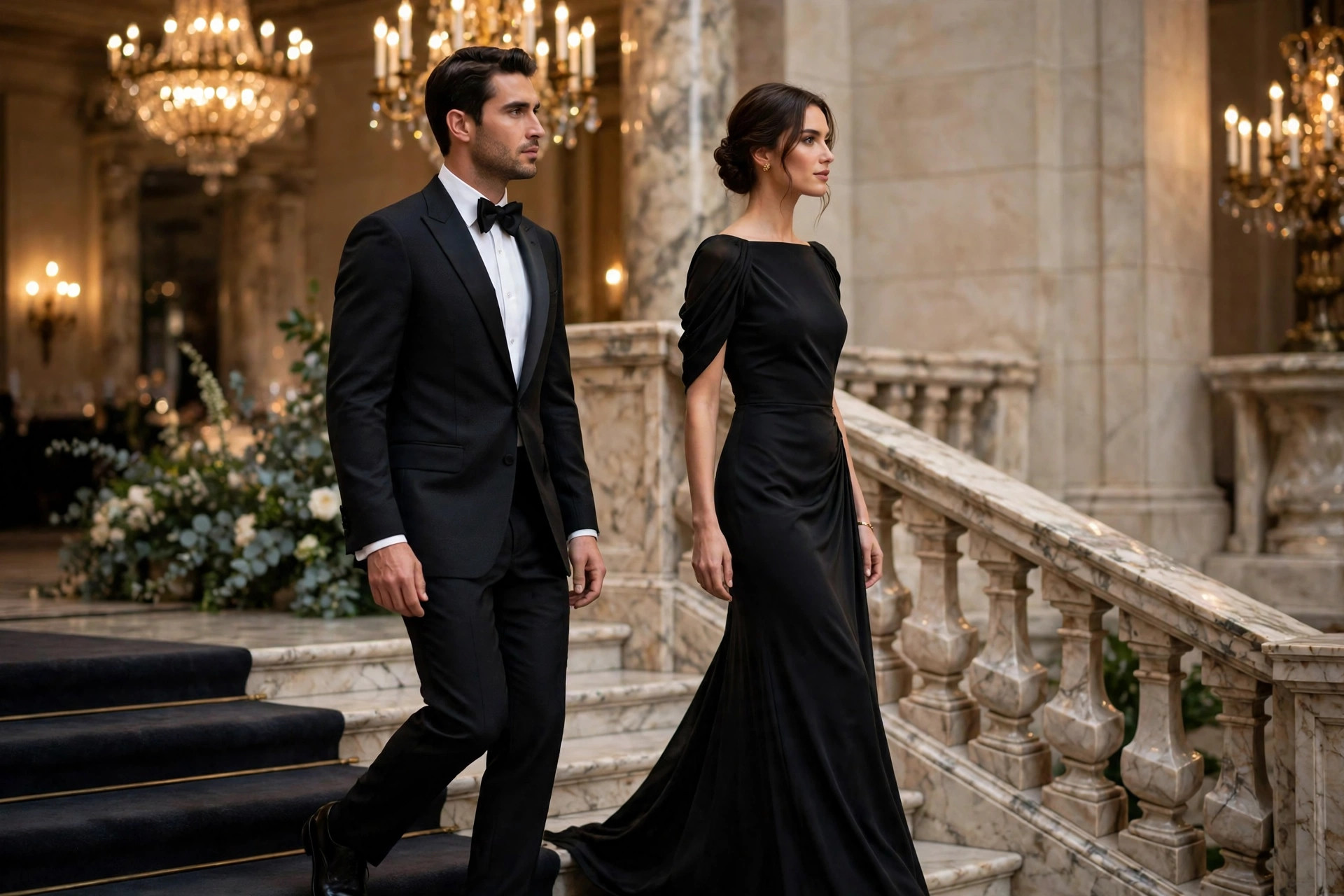
Black tie is the standard formal code for evening events: galas, formal weddings, opening nights, and award ceremonies. For men it means a tuxedo — known as a dinner jacket in the United Kingdom — with a black bow tie. For women it means a long evening gown or, at many modern events, a formal dress of cocktail length or longer. It sits one step below white tie on the formality ladder, and one step above black tie optional, where the tuxedo is welcomed but a dark suit may stand in for it. The dictionary history of the code is in our black tie definition; this page is about wearing it well.
Black Tie for Men: The Tuxedo
The tuxedo is a uniform, and its pleasure is that the decisions are made for you. The jacket is black (midnight blue is the connoisseur's traditional alternative) with silk-faced lapels — peaked or shawl — and a single button. Trousers match, with a silk stripe down the outer leg, and are worn without a belt: braces, side adjusters, or a proper fit do the work. The shirt is white with a pleated or piqué front, worn with cufflinks and, traditionally, studs. The bow tie is black silk, and it should be tied by hand if you possibly can — the slight imperfection of a self-tied bow is part of its charm.
Around the waist goes either a black low-cut waistcoat or a cummerbund with its pleats facing up. Shoes are black patent leather oxfords, or impeccably polished black calf; socks are black and long enough that no skin shows when you sit. A white pocket square is the one flourish. Everything else — novelty bow ties, coloured waistcoats, sneakers worn as a statement — belongs to party dressing, not to black tie.
Black Tie for Women: The Gown
The full-length evening gown is the classic answer to black tie, and still the safest: a floor-length dress in an evening fabric — silk, satin, chiffon, velvet, crepe, or fine lace — in a colour with some depth. At many contemporary events a formal cocktail-length or midi dress in a luxurious fabric is also accepted, particularly for younger guests and less ceremonial occasions; the deciding test is whether the dress reads as evening wear, not day wear made longer. When the invitation is for a state, royal, or very traditional occasion, stay with full length.
Shoes are evening shoes: heeled sandals or pumps in satin, silk, or a metallic finish, with an evening bag small enough to hold in one hand. Jewellery is where black tie lets women be splendid — this is the code for the good earrings, the bracelet, the family pieces — but one focal point at a time still applies. A wrap or evening coat matters more than guests expect: arriving at a formal venue in a ski jacket over a gown undoes the entrance entirely.
The Black Tie Outfit Checklist
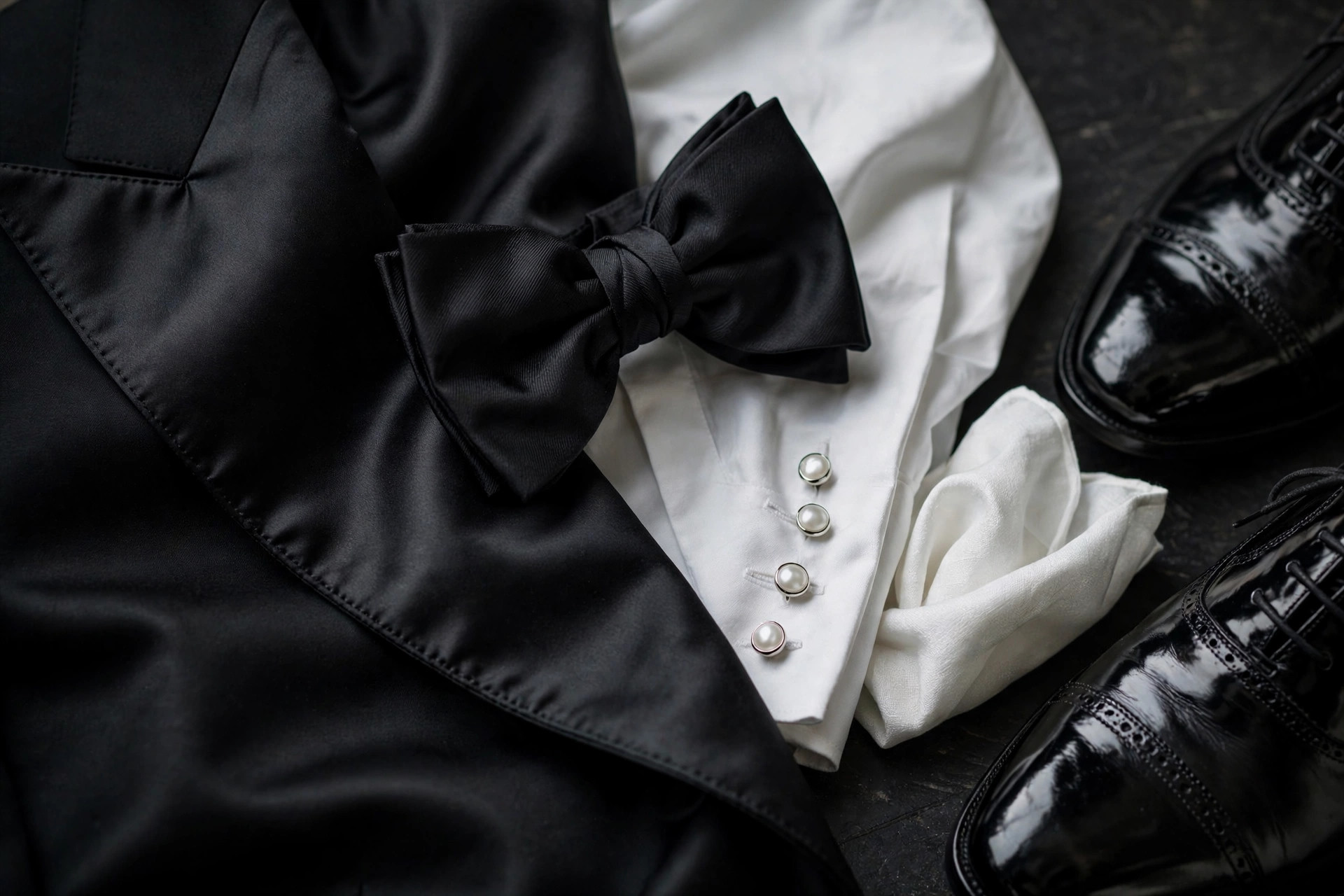
Black tie is a uniform: the list is short, fixed, and the same for every guest. Deviations read as errors, not style.
For Women
- A floor-length evening gown — the default and the safest reading of the code
- Evening fabrics: silk, satin, chiffon, velvet, or beaded cloth
- Heeled evening sandals or pumps
- An evening clutch — no daytime handbags
- Formal jewellery, worn as one considered set
- A wrap or evening coat that works with the gown, not over it as an afterthought
For Men
- A black or midnight-blue dinner jacket (tuxedo) with satin or grosgrain lapels
- Matching tuxedo trousers with a satin side stripe
- A white dress shirt — plain, pleated or Marcella front
- A black bow tie, self-tied if you possibly can
- A cummerbund or a low-cut waistcoat — never a bare shirt waistband
- Black patent leather or highly polished Oxford shoes, with dress studs and cufflinks
Required vs Optional Elements
- Required for men: black or midnight dinner jacket with silk lapels; matching trousers with a silk stripe; white dress shirt; black bow tie; waistcoat or cummerbund; black leather evening shoes and black socks.
- Optional for men: shirt studs, a white pocket square, braces, and — at genuinely grand occasions — decorations and miniature medals, worn correctly or not at all.
- Required for women: a formal evening dress, full-length by default; evening shoes; an evening bag.
- Optional for women: long gloves with a sleeveless gown, fine jewellery, a wrap — and the modern option of an evening trouser suit in a formal fabric, which many hosts now accept in place of a gown.
- Not part of the code: a long necktie in place of the bow tie, a coloured bow tie at a formal event, brown shoes, or a belt with formal trousers.
Common Black Tie Mistakes
The most frequent error is the ordinary business suit asked to impersonate a tuxedo: a black suit, white shirt, and black necktie looks close in a mirror and clearly different in a room full of dinner jackets — the silk lapels and the bow tie are what the eye reads. Second is timing: black tie is evening dress, properly worn for events beginning around six or later; a morning wedding with a black tie code is the host's call to make, but guests should simply follow the invitation. Third is proportion — trousers puddling over shoes, a bow tie sized for a clown, a gown that cannot be walked or danced in. Formal clothes are worn for hours, often standing; fit and comfort are etiquette, not vanity. Finally, renting is no disgrace and dressing well within it is a skill: a rented tuxedo that fits beats an owned one that does not, every time.
Common Questions
- Is a black suit the same as a tuxedo for black tie?
- No. A tuxedo has silk-faced lapels, a silk stripe on the trousers, and is worn with a bow tie, a formal shirt, and a waistcoat or cummerbund. A black business suit with a necktie reads clearly as a suit in a black tie room. If you cannot wear a tuxedo, check whether the event is black tie optional, where a dark suit is properly accepted.
- Can women wear a short dress for black tie?
- Traditionally black tie means a full-length gown. At many modern events a formal cocktail-length or midi dress in an evening fabric is accepted, especially at less ceremonial occasions. For state, royal, or very traditional events, wear full length.
- What shoes should men wear with black tie?
- Black patent leather oxfords are the classic choice; highly polished black calf oxfords are the accepted alternative. Loafers in patent leather appear at relaxed black tie events, but brown shoes, suede, and trainers are never part of the code.
- Can you wear a regular necktie instead of a bow tie with a tuxedo?
- No — the black bow tie is what gives the code its name. A long tie with a dinner jacket mixes two different uniforms. Coloured or patterned bow ties suit festive parties, but a formal black tie event calls for black silk, tied by hand if you can.
Dress Codes Decoded
This page is part of the Apparel Search Dress Codes Decoded series — every invitation and workplace code explained on its own page, from white tie at the top of the ladder to smart casual at the everyday end. Browse the full series below.
More to Explore on Apparel Search
- Consumer Fashion Guide — fashion guidance for shoppers, from fit and fabrics to dressing well for every occasion.
- Shopping Directory — shop for clothing, shoes, and accessories by category, style, and store.
- Retail Clothing Stores — the Apparel Search directory and guide to clothing retailers, from boutiques to department stores.