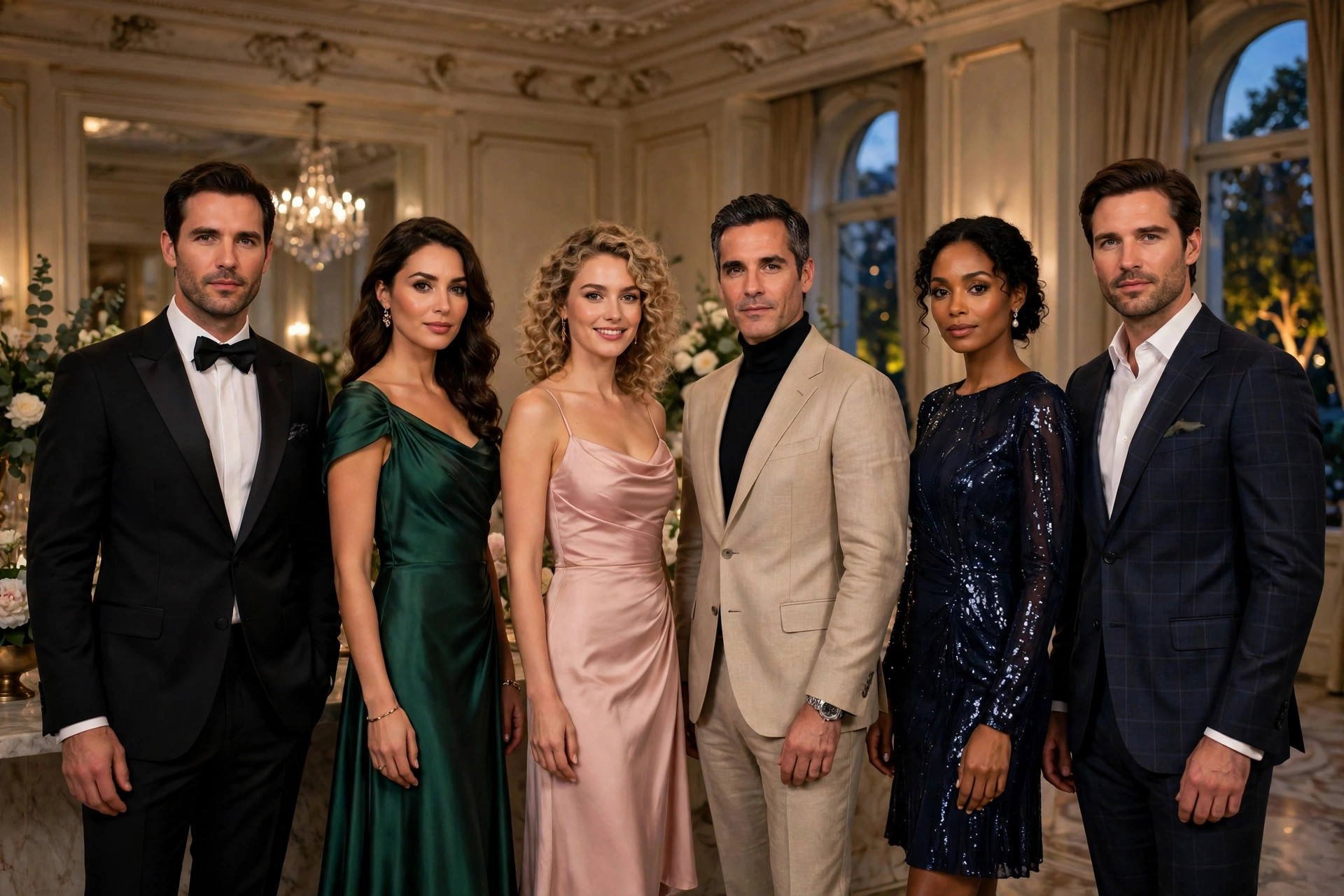
A dress code is the host's or employer's shorthand for how formal an occasion will be. Two or three words on an invitation — black tie, cocktail, smart casual — tell you the length of dress, the cut of suit, and even the shoes that will look right in the room. The trouble is that the shorthand is rarely explained, the codes overlap, and neighbouring codes can mean outfits a whole level apart. This page walks the complete formality ladder from the top, white tie, down to everyday smart casual, with a short guide to each code and a link to its full Apparel Search guide. For the dictionary treatment of the term itself, see our dress code definition.
How to Read the Ladder
Read the ladder from the top down: each step down removes one layer of ceremony. At the top, the uniform is prescribed almost piece by piece — a tailcoat is not a suggestion at a white tie event, it is the code. In the middle, the code fixes the level but leaves the outfit to you: cocktail attire names a length and a mood, not a single dress. At the bottom, codes such as smart casual describe a standard of neatness rather than a uniform at all.
Three clues refine any code. Time of day: evening codes are dressier than the same words in the afternoon; black tie belongs after dark. Venue: a ballroom, a garden, and a boardroom pull the same code in different directions. The host: when in doubt, dress one step more formally than your best guess — at almost every event it is easier to be the best-dressed guest than the one person in jeans. If the invitation gives no code at all, the wedding and party conventions in our wedding guest dress codes guide are a reliable fallback.
The Formality Spectrum at a Glance
All ten codes on one spectrum, most formal at the top. Each step down removes roughly one layer of ceremony — a tailcoat becomes a tuxedo, a tuxedo becomes a suit, a suit loses its tie, and at the bottom the code stops prescribing garments at all and prescribes only neatness.
- 1White TieTailcoat, white waistcoat, floor-length gown
- 2Black TieTuxedo, long evening dress
- 3Black Tie OptionalTuxedo or dark suit; gown or cocktail dress
- 4Cocktail AttireCocktail dress and a suit
- 5Semi-FormalSuit and tie; dressy dress or separates
- 6Festive AttireCocktail polish plus seasonal sparkle
- 7Dressy CasualBlazer and elevated separates
- 8Business FormalMatched suit and tie
- 9Business CasualTailored separates, no tie
- 10Smart CasualNeat everyday clothes, deliberately finished
The Formality Ladder, Top to Bottom
- White Tie — the most formal code of all. Men wear a black tailcoat, a white piqué waistcoat, a wing-collar shirt and a white bow tie; women wear a full-length evening gown, with gloves and significant jewellery where tradition calls for them. It survives at state banquets, formal balls and the grandest evening occasions — when an invitation says white tie, there is no substitute outfit.
- Black Tie — the classic formal evening uniform. A tuxedo — a dinner jacket with satin lapels, a dress shirt and a black bow tie — for men, and a long gown or formal evening dress for women. It is the standard for galas, formal weddings, awards nights and opening nights, and the most formal code most people will ever actually meet.
- Black Tie Optional — black tie is welcomed but not required. A tuxedo or a dark suit and tie both fit for men; a gown, a long dress, or a formal cocktail dress for women. The word optional covers only the tuxedo and the gown — everything else about the evening, from the white shirt to the polished shoes, stays formal.
- Cocktail Attire — the party code, and the most common dressy code on modern invitations. Women wear a knee-length, midi or tea-length dress, or dressy separates or an evening jumpsuit; men wear a suit, with a tie traditional and optional only at relaxed social parties. Dressy, polished, and made for standing, talking and celebrating — deliberately short of the gown and the tuxedo.
- Semi-Formal — a step below cocktail in the evening and close to it in the afternoon. Men wear a suit, darker for the evening and in lighter sober colours by day, usually with a tie; women wear a cocktail dress or dressy separates a shade more conservative than full cocktail. It is the code most often confused with its neighbours on both sides of it.
- Festive Attire — cocktail's holiday-season cousin: the same dressy polish, plus the colours and textures of the season — velvet, sequins, jewel tones, tartan and one joyful statement piece. It rules office holiday parties and December invitations from late November to New Year's Eve. Festive means dressing up with celebration built in, never costume.
- Dressy Casual — elevated everyday dressing for occasions that deserve effort without formality: dinner parties, date nights and theatre evenings. Women wear a dress, or tailored trousers or a skirt with a silk blouse and a blazer; men wear a blazer and trousers with an open collar and proper shoes. No tie and no suit — but no jeans-and-t-shirt casualness either.
- Business Formal — the boardroom standard, also called business professional. A matched suit, a formal shirt, and a tie for men; a suit or a tailored dress with a jacket for women. It is the code of conservative workplaces, formal interviews, client pitches and courtrooms — here the suit is not a suggestion, it is the uniform.
- Business Casual — the modern office default: no suit and no tie required, but collared shirts, tailored trousers or chinos, blouses, knitwear, skirts and neat leather shoes. It sits a clear step above smart casual in most workplaces and a clear step below business formal — the boundary between the two is exactly the matched suit and the tie.
- Smart Casual — the broadest code, and the most misread: neat, pulled-together everyday clothes rather than a uniform. Clean dark jeans can pass in many settings when the rest of the outfit is deliberate — a blazer, a good knit, proper shoes — while trainers, shorts, and sportswear usually cannot. When an invitation says smart casual, it is asking for effort, not formality.
Two codes on this ladder are workplace codes — business formal and business casual — while the other eight belong to invitations and social life. That is why a suit appears at three different levels: the suit is constant, but its colour, its shirt, its tie, and its shoes move it up or down the ladder.
The Ten Dress Codes, Illustrated
Open the picture for the code on your invitation — each one leads to that code's own Apparel Search page, with what the code means, what women and men wear, and what to avoid.
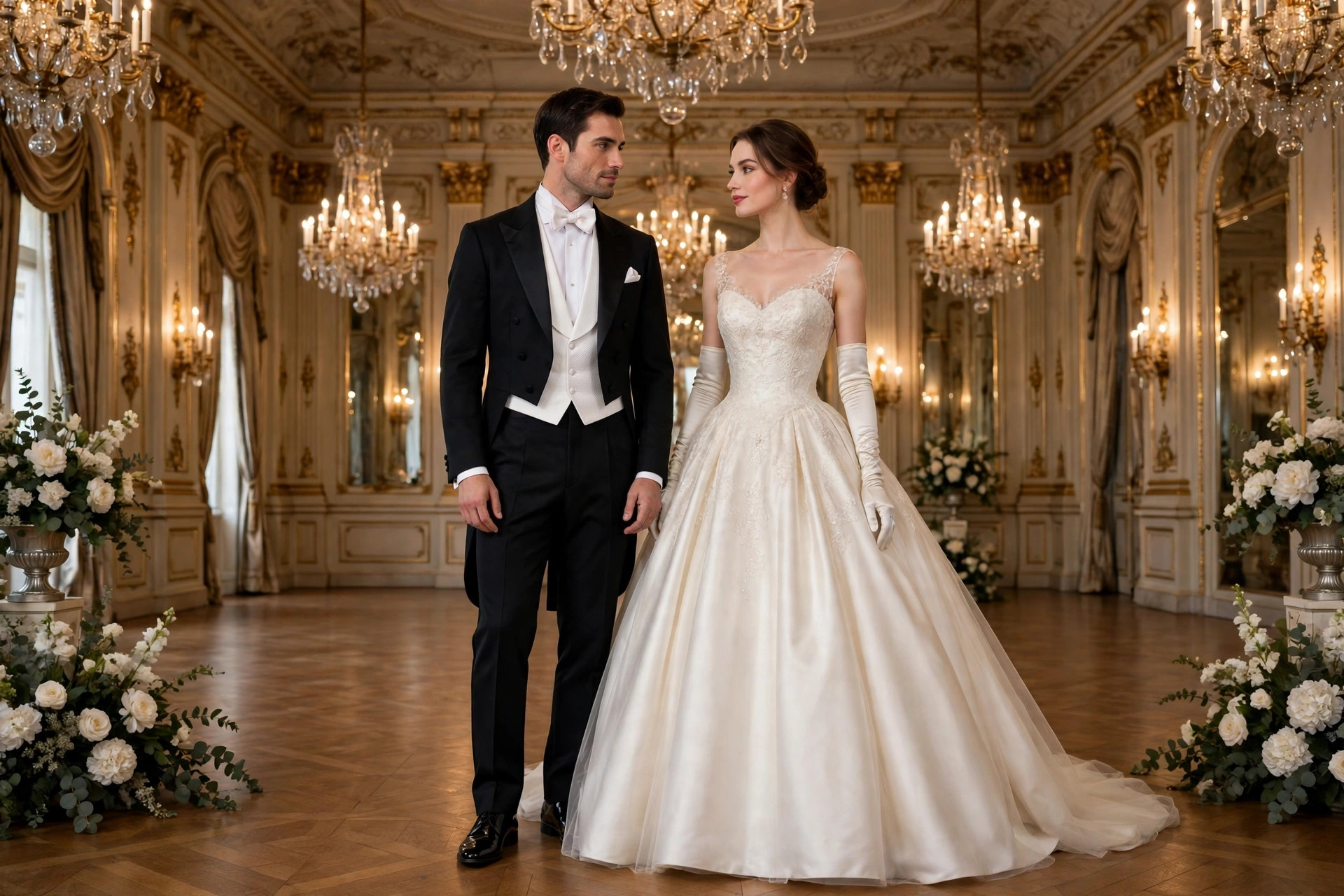 White TieTailcoat and full-length gown
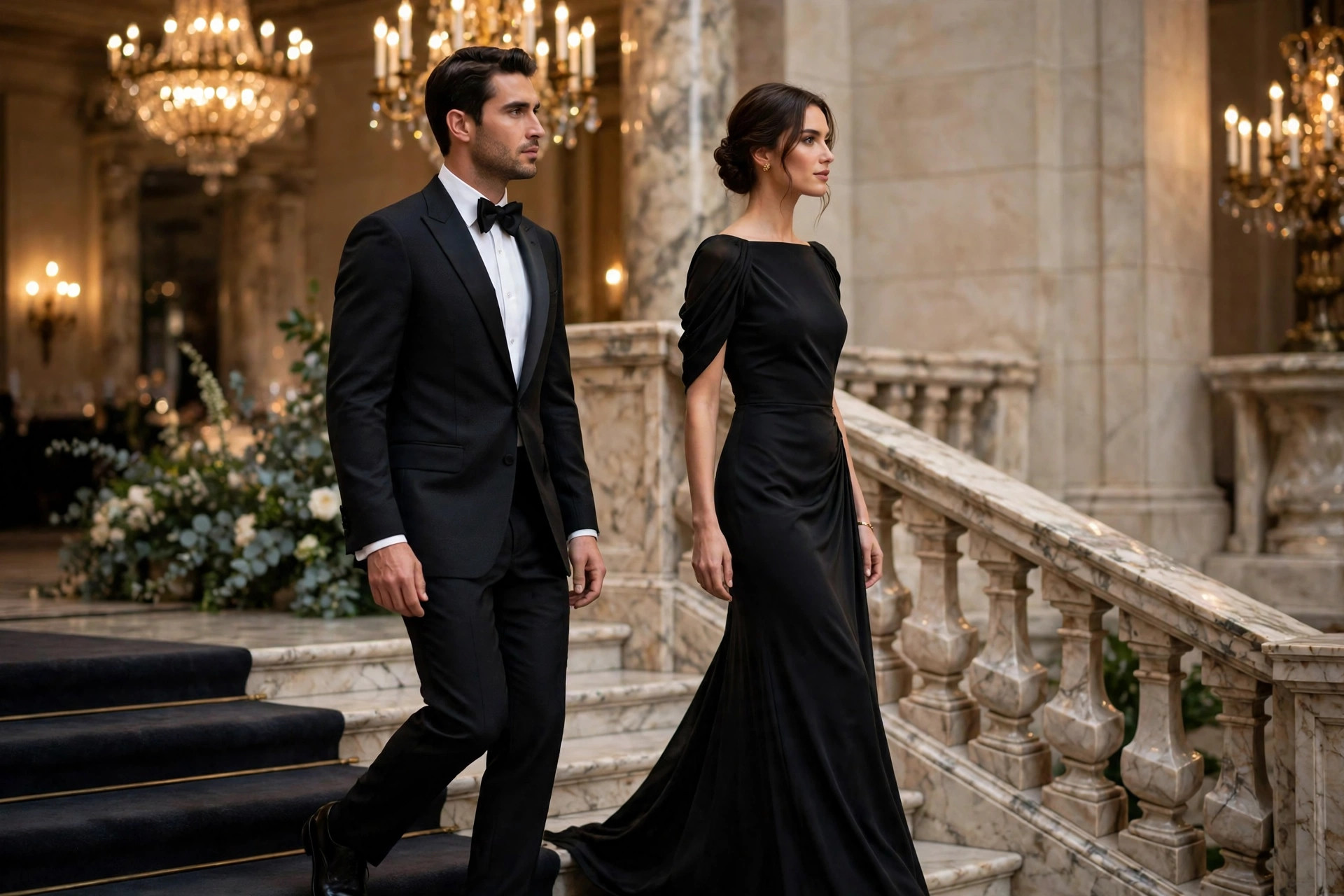 Black TieTuxedo and long evening dress
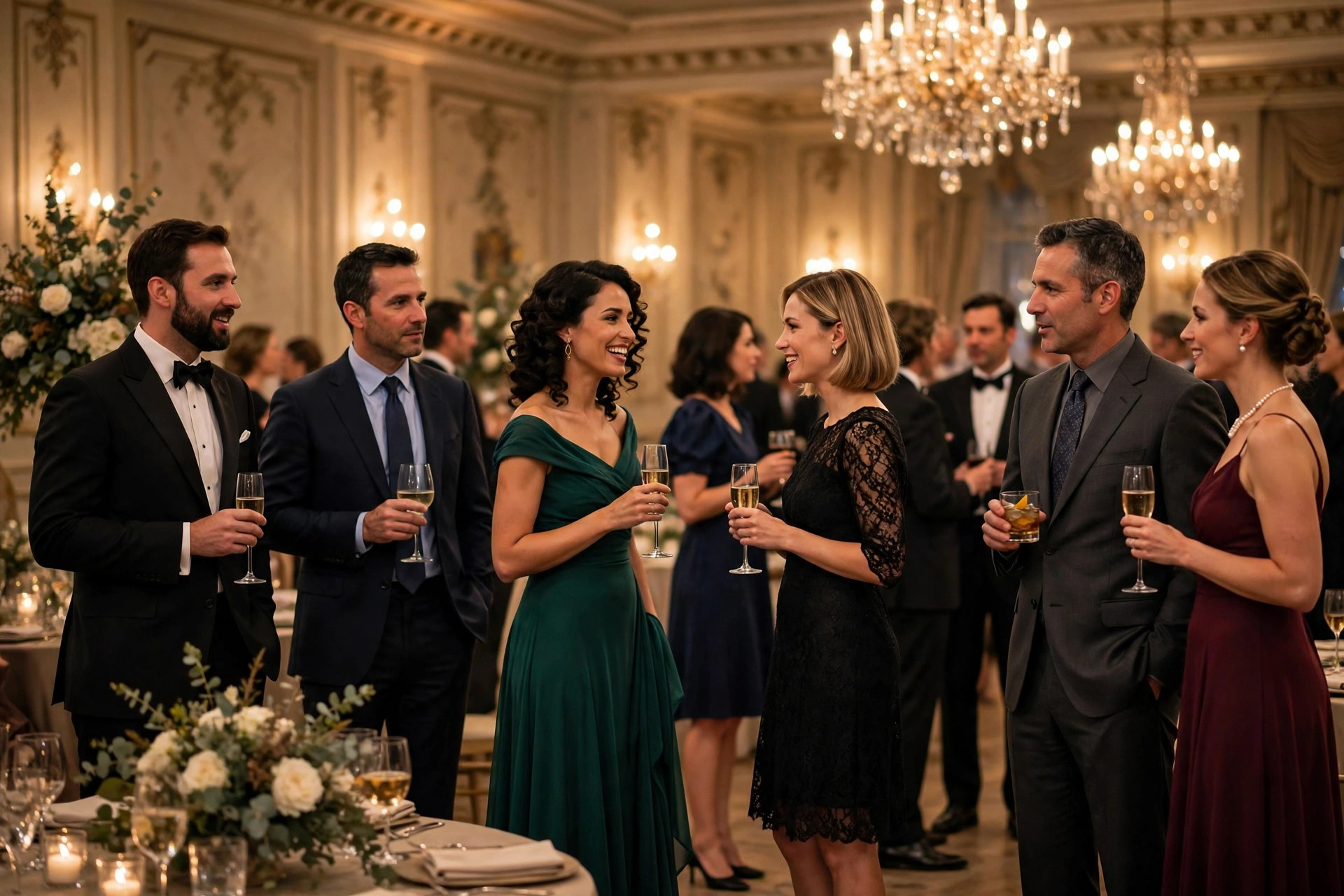 Black Tie OptionalTuxedo or dark suit
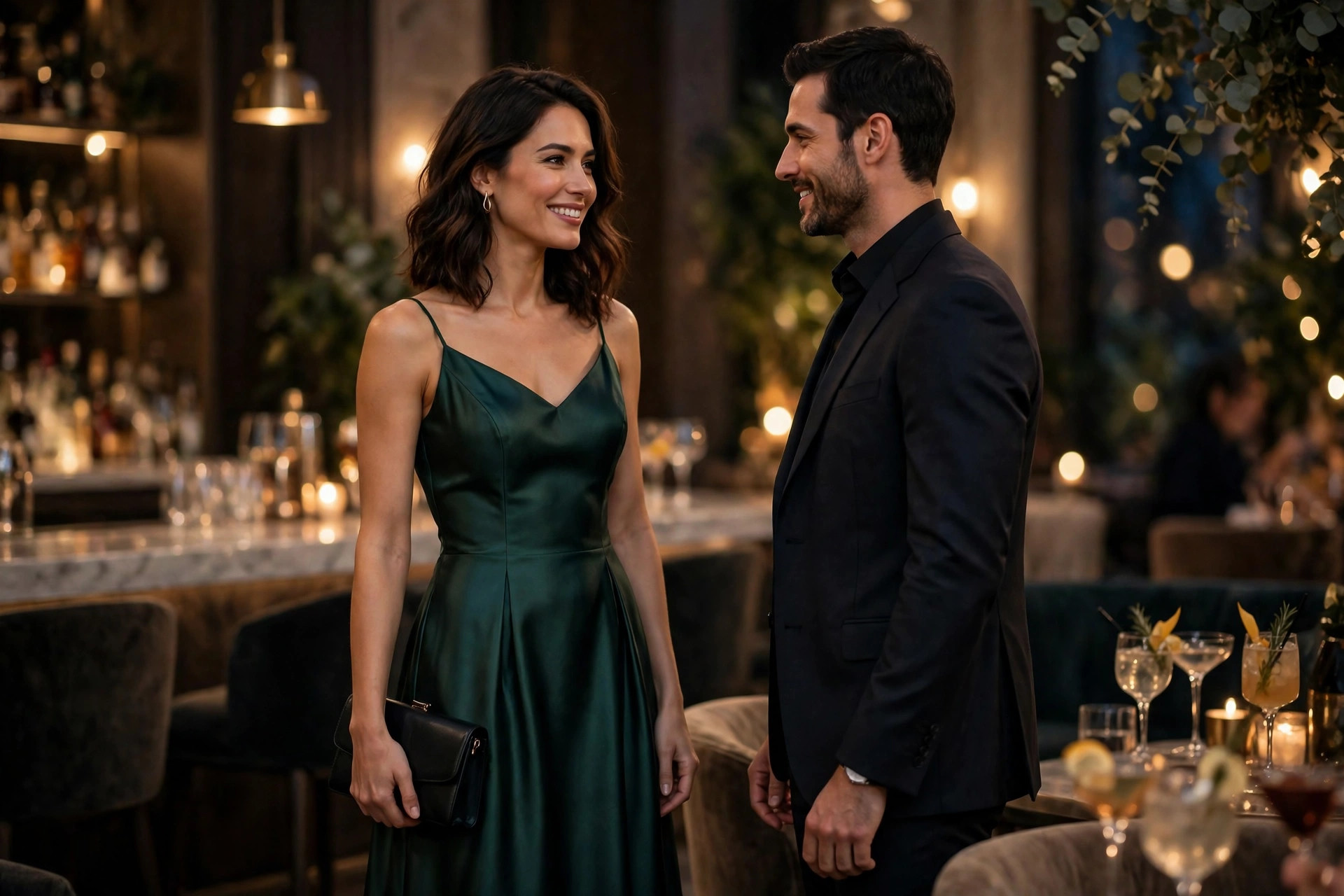 Cocktail AttireCocktail dress and a suit
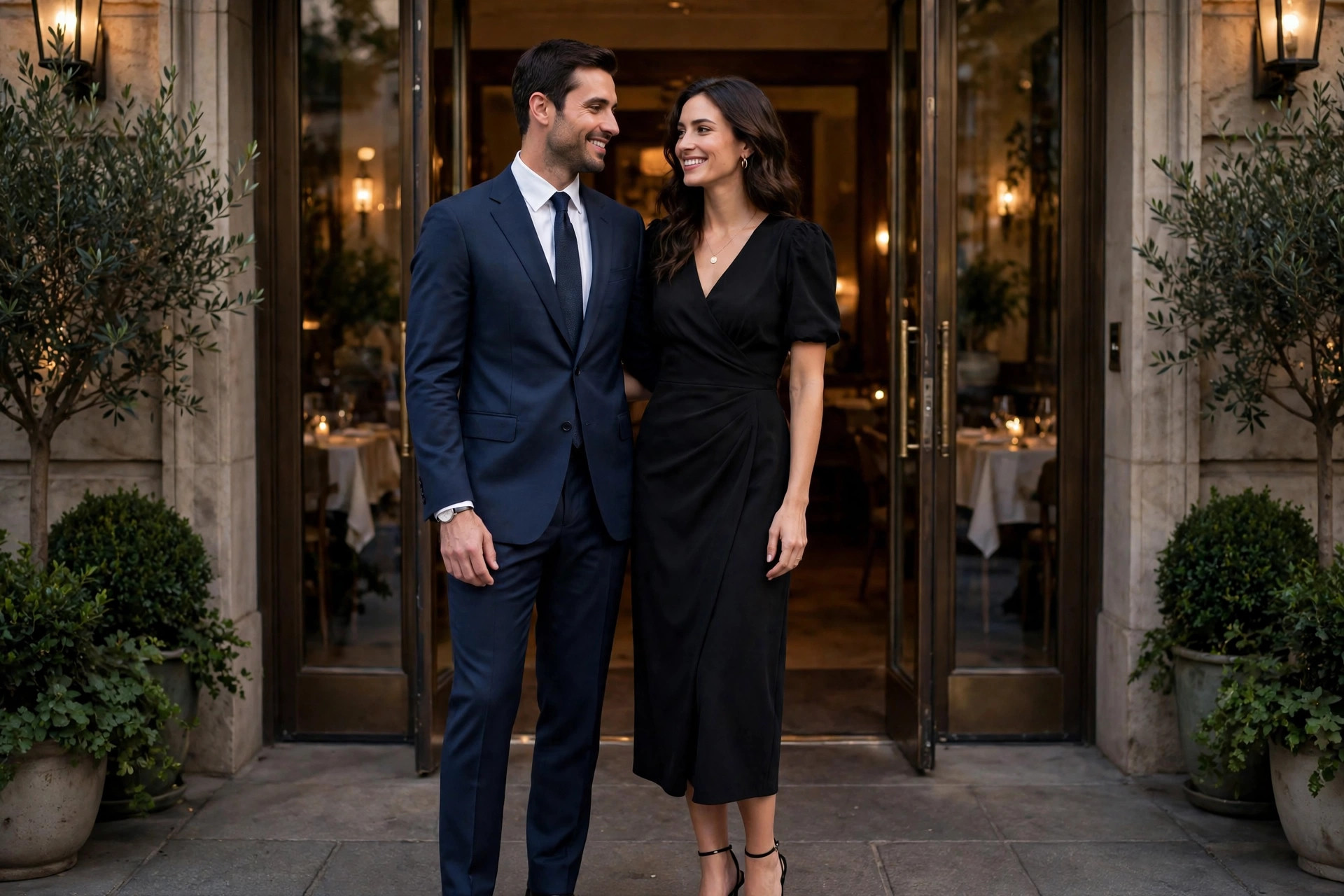 Semi-FormalSuit and dressy separates
 Festive AttireCocktail polish plus sparkle
 Dressy CasualBlazer and elevated separates
 Business FormalMatched suit and tie
 Business CasualTailored separates, no tie
 Smart CasualNeat everyday polish
Choosing Between Neighbouring Codes
Black tie vs black tie optional. The outfit ceiling is the same; the floor is what changes. Optional lets a dark suit stand in for a tuxedo and a formal cocktail dress stand in for a gown. If most guests will wear black tie, follow them — optional is permission, not a direction to dress down.
Cocktail vs semi-formal. In the evening these two nearly meet: a cocktail dress and a suit satisfy both. Semi-formal leans a shade more conservative and, in the daytime, a shade lighter — afternoon semi-formal allows lighter colours and fabrics that evening cocktail dressing would avoid.
Dressy casual vs smart casual. Dressy casual is smart casual with the polish turned up for an occasion: a dress instead of trousers, a blazer instead of a knit, a heel or a loafer instead of a clean trainer. When an invitation bothers to say dressy, it is asking for that extra step.
Business casual vs smart casual. The same garments can serve both; the setting and the finish decide. Business casual is judged by workplace standards — collars, tailored trousers, leather shoes — while smart casual is the social version, where dark jeans and clean minimal trainers may pass. If the event is at an office, read the words as business casual even when the invitation shortens them.
Business formal vs business casual. The matched suit and tie are the whole difference. Business formal keeps them; business casual drops first the tie, then the jacket, then the suit itself, replacing them with separates that still look deliberate.
When the Invitation Says Nothing
No code printed? Work from the evidence. An evening event at a formal venue, with a seated dinner, sits near the top of the ladder even when the invitation is silent. A daytime garden or beach celebration sits near the bottom. Weddings follow their own conventions — covered in our wedding guest dress codes guide — and cultural or religious venues may add requirements of their own that outrank any printed code. And the oldest rule still holds: it is almost always better to arrive slightly overdressed and relax into the room than to spend the evening underdressed.
Common Questions
- What is the most formal dress code?
- White tie is the most formal dress code. For men it means a black tailcoat, a white waistcoat, and a white bow tie; for women, a full-length evening gown. Black tie — the tuxedo — sits one step below it.
- What does cocktail attire mean?
- Cocktail attire is a dressy party code between semi-formal and black tie. Women wear a knee-length, midi, or tea-length dress; men wear a suit, with a tie optional at many events. It is polished evening dressing without the gown or the tuxedo.
- Is it better to be overdressed or underdressed?
- Slightly overdressed, in almost every case. A guest one step too formal looks careful; a guest one step too casual looks careless. If you realise you have overshot, removing a tie or a jacket on arrival usually brings you level with the room.
- What should I wear if an invitation gives no dress code?
- Judge by the venue, the hour, and the occasion. Evening events at formal venues call for cocktail or semi-formal dressing; daytime and outdoor events sit lower. When the clues conflict, choose the middle of the ladder — a suit or a cocktail dress rarely looks wrong.
Dress Codes Decoded
This page is part of the Apparel Search Dress Codes Decoded series — every invitation and workplace code explained on its own page, from white tie at the top of the ladder to smart casual at the everyday end. Browse the full series below.
- Dress Codes Explained — The Full Formality Ladder
- White Tie Attire
- Black Tie Attire
- Black Tie Optional Guide
- Cocktail Attire
- Semi-Formal Attire
- Festive Attire Guide
- Dressy Casual Guide
- Business Formal Attire
- Smart Casual
- Winter Work Outfits
- Wedding Guest Dress Codes
More to Explore on Apparel Search
- Consumer Fashion Guide — fashion guidance for shoppers, from fit and fabrics to dressing well for every occasion.
- Shopping Directory — shop for clothing, shoes, and accessories by category, style, and store.
- Retail Clothing Stores — the Apparel Search directory and guide to clothing retailers, from boutiques to department stores.