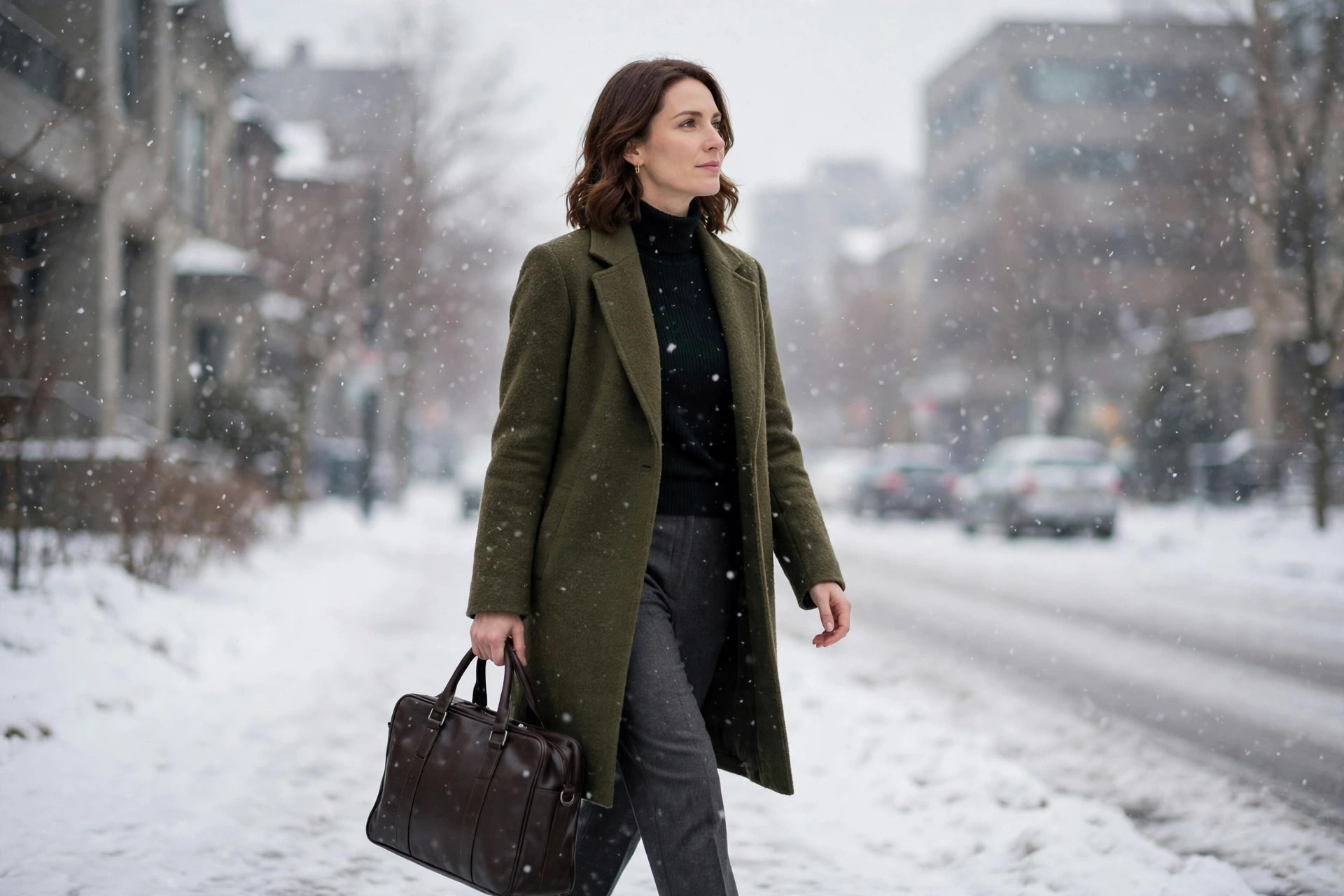
Winter work outfits have to solve two climates in one morning: below-freezing air, wind, and slush on the way in, then a heated office that may run warm all day. The answer is not a single heavier outfit but a set of removable layers — a real coat, an adjustable middle, and office-appropriate pieces underneath — so you arrive neither frozen nor already overheating, and you can tune your temperature at your desk without changing clothes.
Five Outfit Formulas That Work All Winter
- Sweater dress + knee boots. A fine-gauge knit dress over opaque or fleece-lined tights, with knee boots covering the gap. One piece, no waistband to fight a coat, and warm from collar to calf.
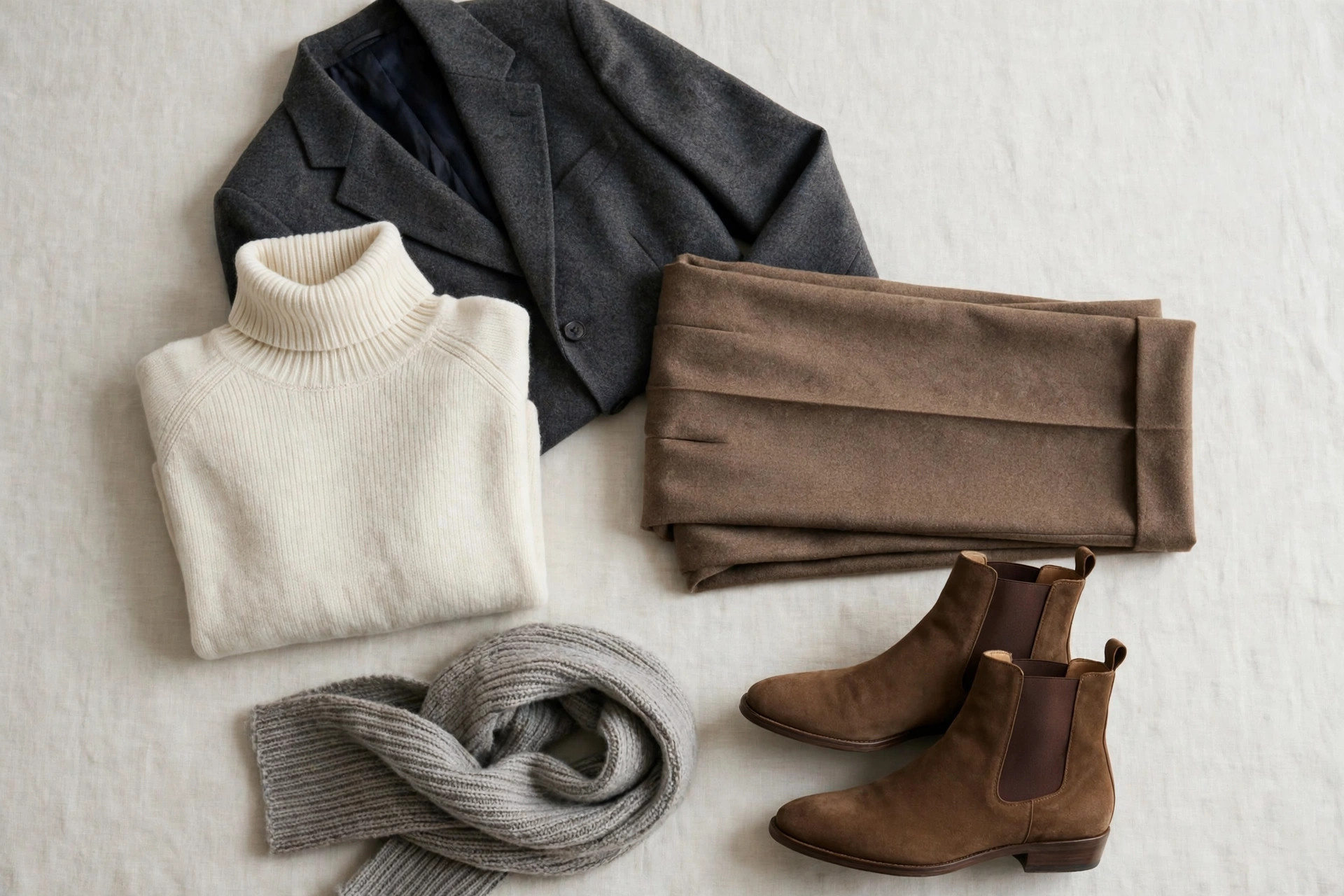
- Wool trousers + turtleneck + blazer. The most reliable formula in this guide. The turtleneck replaces both sweater and scarf indoors; the blazer sharpens it for meetings and comes off at a warm desk.
- Midi skirt + fleece-lined tights + ankle boots. The tights do the real work — they look like ordinary sheer-to-opaque tights but carry a brushed lining. Works with most skirts you already own for autumn.
- Suit + thermal base layer. A thin merino or synthetic base layer under the shirt or blouse disappears under a suit and adds the warmth a suit alone never has. Finish with an overcoat, not a thicker suit.
- Dark denim + knit + structured jacket, where the dress code allows it. Dark, plain, well-fitting denim with a cashmere or merino sweater and a blazer reads as intentional in business-casual offices — and fails completely in formal ones, so check the calibration section below.
The Commute Layer
Your coat is commuter equipment first and a style statement second. It should close fully, cover the seat of your trousers or the top of your skirt, and leave room for the blazer or sweater beneath. A tailored wool overcoat suits formal offices; in casual workplaces a plush teddy coat is warm, light, and forgiving over knits. Keep the coat plain enough to wear five days a week without anyone noticing a rotation.
The adjustable layer is an oversized scarf: wrapped twice at the station, worn as a shawl over your shoulders in a cold meeting room, folded away when the heating catches up. Choose a hat that protects your hairstyle rather than flattening it — a loose beret, a soft beanie worn for the walk only, or the hood of the coat — and gloves slim enough to handle a travel card and phone, kept in the same coat pocket every day so they are never the thing you forgot.
Fabrics and Footwear Strategy
Some fabrics earn their place every winter. Wool insulates even when slightly damp and appears in the trousers, skirts, and coats that carry a winter wardrobe. Cashmere gives the most warmth for its weight in sweaters, which matters when a layer must fit under a blazer. Flannel — wool or heavy cotton — makes shirts and trousers that feel noticeably warmer than smooth weaves. Corduroy adds texture and real warmth to trousers and skirts in casual offices. Thin cotton and unlined polyester, by contrast, look the same on the hanger and feel very different at a bus stop in January.
Footwear is a two-pair system. Wear waterproof winter boots with genuine tread for pavements, platforms, and slush, and keep office shoes — loafers, heels, clean ankle boots — in a desk drawer, changing on arrival. Salt and slush destroy good leather in a few weeks, and no fashionable boot survives a mile of icy pavement as safely as a boot built for it. A spare pair of socks at the desk rescues the days the slush wins anyway.
Dress-Code Calibration and a Morning Checklist
The same knit reads differently under different codes, so start from our overview of dress codes explained. In a business formal office, winter changes fabrics, not silhouettes: suits in wool or flannel, fine-gauge knits under jackets, sweater dresses only in dark, structured forms, and denim never. In smart casual and business-casual offices, the range widens — chunky knits, corduroy, dark denim, and teddy coats all fit, provided each outfit still has one tailored piece to hold it together.
Morning checklist
- Check the temperature at commute time and at midday — dress for both
- Base or thermal layer on if the office outfit alone would be thin
- Removable middle layer: blazer, cardigan, or fine sweater
- Coat, oversized scarf, hat, and gloves from their usual pockets
- Winter boots on; office shoes waiting at the desk
- Lip balm and tissues in the coat — winter commutes demand both
Common Questions
- How do I dress warm for work without overheating indoors?
- Put the warmth in layers you can remove: a coat, scarf, and cardigan or blazer over a lighter top, rather than one heavy sweater you are stuck in all day. A thin thermal base layer under a normal blouse or shirt adds surprising warmth and comes off easily if the office runs hot.
- Are leggings appropriate for winter work outfits?
- In most offices, leggings on their own are too casual, whatever the season. The winter exceptions are fleece-lined tights under a dress or skirt, and thick ponte leggings styled like trousers in a business-casual office that already accepts them in summer. When in doubt, choose wool trousers instead.
- What shoes work for a snowy commute and the office?
- Use two pairs. Wear waterproof winter boots with real tread for the street, train, and slushy pavements, and keep your office shoes in a desk drawer to change into on arrival. Trying to make one pair do both jobs usually ruins the good shoes and still leaves your feet cold.
- Can I wear a sweater dress to a formal office?
- Yes, if the dress itself is formal in character: a fine-gauge knit, a structured shape, a knee-length or longer hem, and dark, plain colors. Add a blazer, opaque tights, and knee boots or closed shoes. Save chunky, oversized sweater dresses for business-casual offices.
- How do I layer under a suit in winter?
- Start with a thin merino or synthetic thermal top under the shirt; it adds warmth without bulk if it fits close and the neckline hides under the collar. Add a fine-gauge sweater or waistcoat under the jacket on the coldest days, and let the overcoat, scarf, and gloves carry the rest of the commute warmth.
Winter Warmth and Style Series
This guide is part of the Apparel Search winter warmth and style series: the coats, layers, and cold-weather pieces that make winter dressing work. Browse the full series below.