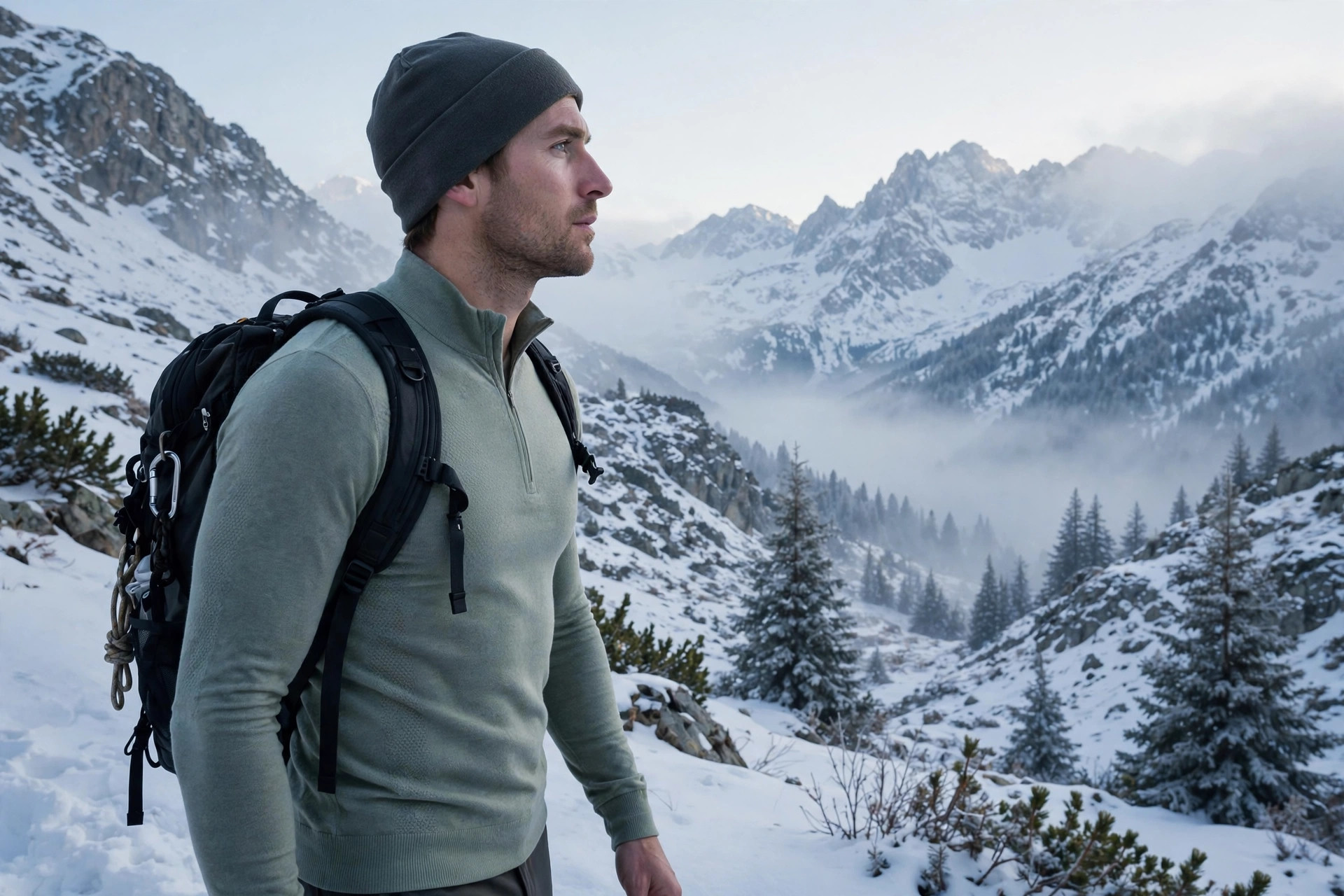
A base layer is the garment worn directly against the skin as the foundation of an outdoor clothing system. Its primary job is moisture management: moving sweat away from the skin so it can evaporate or pass outward, rather than sitting cold against the body. Warmth matters, but a base layer that stays wet will chill the wearer even in mild cold, which is why material choice matters more here than at any other layer.
Materials: Merino, Synthetics, Silk — and Why Cotton Fails
Merino wool is prized because fine merino fibers absorb moisture vapor, release a small amount of heat as they do so, resist odor over multiple days, and still insulate when damp. It dries more slowly than synthetic fabric and costs more, but for multi-day trips and stop-and-start activity its comfort range is hard to beat. Modern merino is often blended with nylon or polyester to improve durability and drying speed.
Synthetic base layers, usually polyester or nylon, wick liquid sweat quickly, dry fastest of all, and are generally the least expensive and most durable option. Their drawback is odor: synthetics tend to retain smell after hard use, although many are treated to reduce it. Silk is lightweight, soft, and adequate for low-output activity such as resort skiing or cold-weather sightseeing, but it is fragile, slower to wick, and loses insulation when wet.
Cotton fails as a base layer for a simple reason: it absorbs many times its weight in water and holds it, losing its insulating air pockets and conducting heat away from the body. The outdoor saying that cotton kills is an exaggeration of a real risk in cold, wet conditions. A cotton T-shirt that is comfortable in town can become a cold, heavy liability on a winter trail once it is soaked with sweat.
Fit, Construction, and Choosing by Activity
A base layer should fit close to the skin without restricting movement. Fabric that hangs loose cannot wick effectively, because wicking depends on contact, while a fit that is too tight compresses the fabric and can feel clammy. Flat seams reduce chafing under pack straps, a longer back hem stays tucked when bending, and thumb loops, common on tops for cold weather, keep sleeves in place when other layers are pulled on over them.
Match the base layer to output as much as to temperature. High-output activities such as ski touring, winter running, and steep hiking generate a great deal of sweat, so a lighter, fast-drying synthetic or merino-synthetic blend usually works best even in deep cold. Lower-output activities such as lift-served skiing, ice fishing, or winter camping generate less sweat and less body heat, so a warmer, heavier base layer earns its place. Many regular winter users own both a light and a midweight set and choose between them on the day.
Base layers are sold as tops, bottoms, and one-piece suits. Bottoms matter most when legs are relatively still or exposed to wind under a shell pant. For a fuller treatment of the long-underwear form of this layer, see the thermal underwear guides linked below, which cover the same garments organized as complete sets for women and men.
Common Questions
- What does a base layer actually do?
- A base layer moves sweat away from the skin so it does not cool the body as it evaporates, and it provides a first, light layer of insulation. Moisture management is its main job; warmth is secondary and is mostly supplied by the mid layer above it.
- Is merino wool or synthetic better for a base layer?
- Merino wool resists odor, feels comfortable across a wide temperature range, and insulates when damp, but dries slowly and costs more. Synthetics wick and dry fastest and are usually cheaper and tougher, but they tend to hold odor. The better choice depends on trip length, output, and budget.
- Why should cotton not be used as a base layer?
- Cotton absorbs water and holds it against the skin, loses its insulating air pockets when wet, and dries very slowly. In cold conditions a wet cotton base layer can chill the wearer quickly, which is why outdoor base layers are made from wool, synthetics, or silk instead.
- How tight should a base layer fit?
- Close to the skin without restricting movement. The fabric needs skin contact to wick moisture, so a loose fit works poorly, while an overly tight fit can feel clammy and restrict circulation. Most wearers look for a snug, athletic fit with flat seams.
Outdoor Layering & Insulation Series
This guide is part of the Apparel Search outdoor layering and insulation series. Browse the full series below, or start from the women's winter clothing guide.